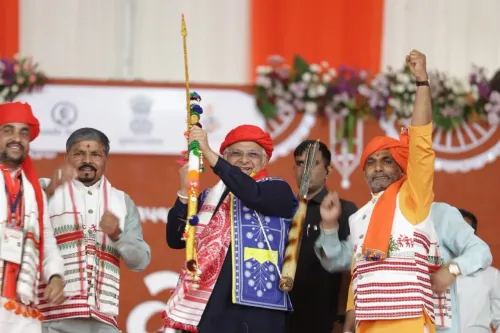
Smriti Irani marks Janjatiya Gaurav Diwas with tribal belt shift
Synopsis
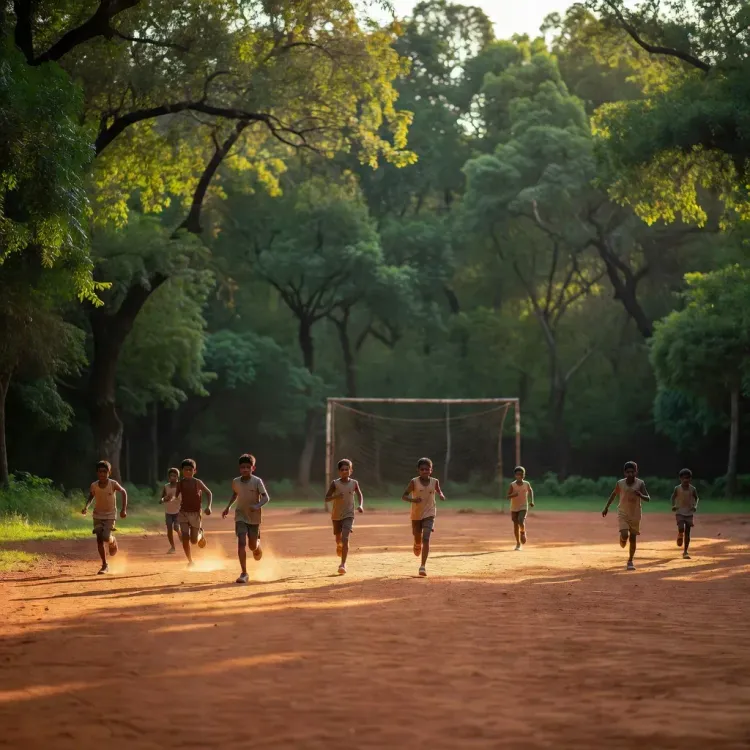
On Janjatiya Gaurav Diwas 2026, BJP leader Smriti Irani shared a pointed message on X: areas once used for weapons training in India's tribal belt now host sports grounds — a vivid symbol of the region's transformation from conflict to civilian development.
Key Takeaways
BJP leader Smriti Irani posted on Janjatiya Gaurav Diwas, 15 November 2026 , noting that former weapons-training sites in tribal areas have become sports grounds.
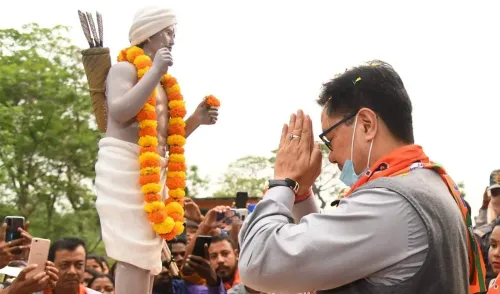
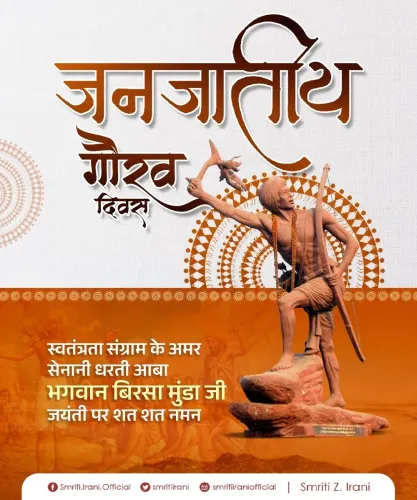
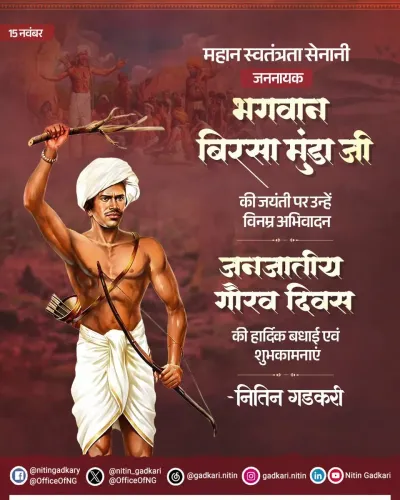
Janjatiya Gaurav Diwas was instituted by the Government of India in 2021 to mark tribal freedom fighter Birsa Munda 's birth anniversary on 15 November.
The post signals a broader state policy of converting conflict-linked infrastructure in left-wing extremism-affected districts into civilian amenities.
Sports and recreational facilities have become a key intervention for mainstreaming tribal youth in central and eastern India.
State-level observances across Jharkhand, Chhattisgarh, Madhya Pradesh and Odisha mark the day with welfare and infrastructure announcements.
Where guns were once trained, children now play. On Janjatiya Gaurav Diwas, 15 November 2026, BJP leader and former Union Minister Smriti Irani captured that transformation in a single Hindi sentence on X, pointing to the quiet but consequential reshaping of India's tribal heartland.
Irani posted: 'Jahaan kabhi bandook chalaane ki training milti thi, wahaan ab khel ke maidaan hain' — 'Where training in firing guns was once given, there are now sports grounds.' The post, accompanied by a video, was shared on the national observance honouring tribal freedom fighter Birsa Munda on his birth anniversary.
The day India honours Birsa Munda
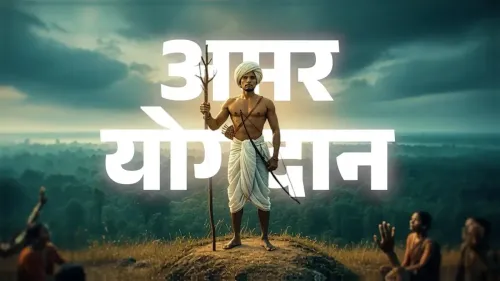
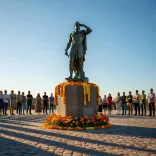
The Government of India established Janjatiya Gaurav Diwas on 15 November 2021 to mark Birsa Munda's birth anniversary and to celebrate the contributions, culture and legacy of India's tribal communities. Munda, born in 1875, led one of the most significant tribal uprisings against colonial rule and remains an iconic figure across the central and eastern tribal belts of Jharkhand, Chhattisgarh and Odisha.
The observance has since become an annual platform for governments at both the Centre and state levels to announce and showcase tribal welfare initiatives, infrastructure milestones, and cultural programmes.
From conflict infrastructure to sports grounds
Irani's imagery — training ranges converted into playing fields — speaks directly to India's decades-long effort to reclaim left-wing extremism-affected districts through civilian development. Successive governments have paired security operations with welfare programmes: road connectivity, schools, health centres, and increasingly, sports and recreational infrastructure.
Sports facilities in particular have emerged as a focused intervention for tribal youth, offering structured activity, skill development, and a pathway to national competitions. The symbolism is deliberate: the same ground that once represented conflict is now a site of aspiration.
Tribal youth at the centre of the development frame
The broader pattern Irani's post reflects is well-established. India's tribal districts — home to a young demographic — have been central to flagship schemes targeting infrastructure gaps. The pivot toward sports grounds and playfields represents a newer layer: not just survival infrastructure but opportunity infrastructure, aimed at bringing tribal youth into the national mainstream while respecting and celebrating their distinct cultural identity.
On a day dedicated to Gaurav — pride — the message is calibrated: development is not erasure, it is recognition.
As state-level Janjatiya Gaurav Diwas events unfold across Jharkhand, Chhattisgarh, Madhya Pradesh and Odisha, every sports ground built in a former conflict zone becomes its own answer to the question of what peace looks like in practice.
Point of View
Tribal pride, and youth aspiration into a single image. The BJP has consistently used this observance to reinforce its tribal outreach credentials, particularly ahead of assembly elections in Jharkhand and Chhattisgarh. Converting conflict symbolism into sports-and-opportunity messaging is a deliberate political communication choice, one that attempts to demonstrate governance dividends in areas long defined by insurgency. The long-term test, analysts would note, is whether the infrastructure on the ground matches the imagery being projected.
NationPress
15 Nov 2026
Frequently Asked Questions
What is Janjatiya Gaurav Diwas and why is it celebrated on 15 November?
Janjatiya Gaurav Diwas is a national observance established by the Government of India in 2021 to honour tribal communities, their culture and their leaders. It falls on 15 November to mark the birth anniversary of tribal freedom fighter Birsa Munda, who was born on that date in 1875 and led a landmark uprising against British colonial rule.
What did Smriti Irani post on Janjatiya Gaurav Diwas 2026?
Smriti Irani posted on X: 'Where training in firing guns was once given, there are now sports grounds' — highlighting the transformation of former conflict-linked infrastructure in India's tribal belt into sports and recreational facilities for youth.
Who was Birsa Munda?
Birsa Munda was a tribal leader and freedom fighter born on 15 November 1875 in present-day Jharkhand. He led the Ulgulan (Great Tumult) uprising against British land policies and forest laws, becoming one of the most revered figures in India's tribal history.
How have left-wing extremism-affected tribal districts changed in terms of development?
Successive governments have paired security operations in LWE-affected tribal districts with welfare programmes including roads, schools, health centres and sports infrastructure. The focus on sports grounds represents a newer layer of development aimed at providing tribal youth with structured opportunities and pathways to mainstream competitions.
Which states observe Janjatiya Gaurav Diwas with major events?
States with significant tribal populations — particularly Jharkhand, Chhattisgarh, Madhya Pradesh and Odisha — hold state-level observances on Janjatiya Gaurav Diwas, often using the occasion to announce or inaugurate tribal welfare and infrastructure projects.