ISI setting up front groups in J&K to target Kashmiri Pandits, officials warn
Synopsis
Pakistan's ISI is allegedly building a covert network of local front groups in Jammu and Kashmir to harvest personal data on Kashmiri Pandits — and the latest threat letters in circulation already carry precise home addresses and phone numbers. The shift from open intimidation to data-driven targeting marks a calculated escalation in the post-Article 370 landscape.
Key Takeaways
Pakistan's ISI is reportedly setting up local front organisations in Jammu and Kashmir to gather intelligence on residents, particularly Kashmiri Pandits .
The United Liberation Council (ULC) has been identified by Intelligence Bureau officials as one such front group.
Fresh threat letters in circulation contain precise home addresses and phone numbers of targeted Kashmiri Pandits, including those living outside J&K.
Officials link the precision of recent targeted killings in the Valley to intelligence gathered through these front networks.
Since the abrogation of Article 370 , renewed Kashmiri Pandit interest in returning to the Valley has reportedly made the community a renewed focus of ISI-backed intimidation.
Security agencies have urged residents and officials to exercise caution when sharing personal information with unknown organisations.
Pakistan's spy agency, the Inter-Services Intelligence (ISI), is reportedly planning to establish several local front organisations in Jammu and Kashmir to covertly gather intelligence on residents — with Kashmiri Pandits identified as primary targets, according to security officials. The alleged strategy, disclosed on 24 August, involves using these proxy networks to facilitate targeted killings and spread fear across the region.
How the Front Organisations Operate
According to an official briefed on the modus operandi, members of these groups make contact with local residents under the guise of routine interaction, collecting details such as workplace addresses, residential locations, and phone numbers. This information is then relayed to handlers operating from across the border in Pakistan.
An Intelligence Bureau official named one such group — the United Liberation Council (ULC) — as an example of organisations set up for this purpose. 'These organisations are dangerous as they masquerade as normal fronts, pretending to work for the society,' the official said, adding that their actual function is to covertly leak sensitive personal information to facilitate terror operations.
Threat Letters Circulating with Personal Details
Security agencies have flagged a fresh wave of threat letters currently in circulation, targeting Kashmiri Pandits who have been considering returning to the Valley and rebuilding their lives there. Notably, the latest letters reportedly contain precise personal details — including home addresses and phone numbers — of specific individuals, including those living outside Jammu and Kashmir.
Officials say this level of specificity is a direct consequence of ISI-backed front groups successfully harvesting personal data on the ground. The letters, according to officials, demand that Pandits leave, convert, or face death — echoing the terror campaign that drove the community out of the Valley beginning 19 January 1990.
Shift in Tactics After Article 370 Abrogation
Since the abrogation of Article 370, Jammu and Kashmir has been largely peaceful, encouraging a number of Kashmiri Pandits to return and reclaim properties and livelihoods abandoned during the 1990 exodus. Officials say this renewed interest in return has made the community a renewed focus of ISI-backed destabilisation efforts.
With overt threats increasingly difficult to execute in the current security environment, the ISI is reportedly pivoting to subtler tactics — circulating threat letters at regular intervals and amplifying fear through coordinated social media posts. 'The recent hit jobs in the valley were examples of its planning,' an official said, noting that the precision of recent targeted killings pointed to advance intelligence gathered through exactly such networks.
Warning to the Public and Officials
Security officials have issued a public advisory urging residents and government functionaries who interact with members of such organisations to exercise caution about sharing personal information. 'People and officials must be careful while passing on information as it would be used to carry out hit jobs and also spread panic and fear in Jammu and Kashmir,' an official warned.
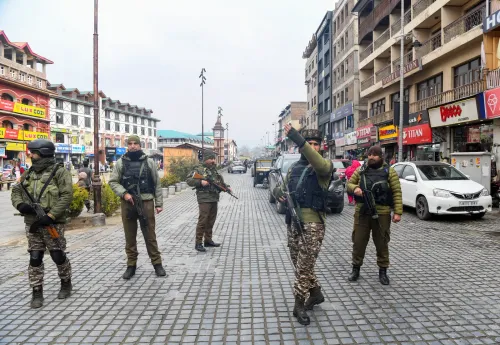
The disclosures come as agencies intensify surveillance of suspected front groups across the Union Territory, with the ULC under particular scrutiny. How effectively these networks can be dismantled before they enable further violence will be a critical test for security forces in the months ahead.
Point of View
Network-enabled targeting is a strategic evolution that deserves more scrutiny than it typically receives. Front organisations that blend into civil society are significantly harder to neutralise than armed militants — and the fact that the latest threat letters carry verified personal details suggests the intelligence pipeline is already operational, not merely planned. The Kashmiri Pandit return narrative, actively promoted as a post-Article 370 success story, now carries a security liability that authorities cannot afford to understate. The real question is whether counter-intelligence agencies have the mandate and resources to map and dismantle these networks before the next targeted killing makes headlines.
NationPress
8 Oct 2026
Frequently Asked Questions
What are the ISI front organisations reportedly being set up in Jammu and Kashmir?
According to security officials, the ISI is allegedly establishing local organisations that pose as civil society groups but covertly collect personal data on residents — particularly Kashmiri Pandits — to relay to handlers across the border. The United Liberation Council (ULC) has been named as one such group by Intelligence Bureau officials.
Why are Kashmiri Pandits being specifically targeted?
Officials say the ISI is seeking to deter Kashmiri Pandits from returning to the Valley following the relative peace that followed the abrogation of Article 370. The community, which was driven out in large numbers beginning 19 January 1990, has shown renewed interest in reclaiming property and resettling — making them a focus of ISI-backed intimidation efforts.
What do the latest threat letters contain?
The threat letters currently in circulation reportedly contain precise personal information — including home addresses and phone numbers — of specific Kashmiri Pandits, including those living outside Jammu and Kashmir. Officials say this level of detail reflects intelligence gathered through ISI-backed front organisations operating on the ground.
How are these front groups linked to recent targeted killings in Kashmir?
Security officials say the precision of recent hit jobs in the Valley — where the locations and movements of victims were known in advance — points to ground-level intelligence gathered by front organisations and relayed to ISI handlers across the border. Officials described these killings as examples of ISI operational planning enabled by such networks.
What precautions have officials advised?
Security agencies have urged both ordinary residents and government officials to be cautious about sharing personal information with unknown individuals or organisations, warning that such details could be used to plan targeted attacks and spread fear across Jammu and Kashmir.