ISI deploys SIM-powered HD cameras near Indian military zones to spy on troops
Synopsis
Pakistan's ISI has quietly upgraded its India surveillance playbook — replacing solar-powered spy cameras with SIM-powered HD cameras that route data through commercial 4G/5G towers, making them nearly invisible to conventional security monitoring. A ₹20,000 payoff to a J&K resident has cracked open a network that officials warn is being designed to scale across the entire country.
Key Takeaways
Pakistan's ISI is deploying SIM-powered HD smart CCTV cameras near Indian highways and military installations to monitor troop movements.
The cameras bypass Wi-Fi entirely, routing live feeds through commercial 4G and 5G towers , making detection far harder for security agencies.
Jammu and Kashmir police arrested a man identified as Aman after he installed one such camera outside his home, allegedly paid ₹20,000 to do so.
ISI operatives use fraudulent documentation or virtual SIM cards to activate the cameras, severing any identity link to the operator.
Officials warn the network is designed to expand beyond J&K to military zones and highways across India , building on earlier solar-powered camera operations.
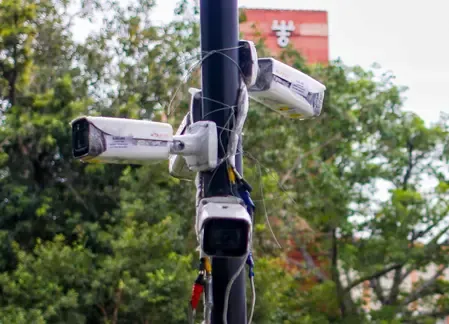
Pakistan's Inter-Services Intelligence (ISI) has shifted its surveillance strategy in India, deploying high-definition, SIM-powered smart CCTV cameras along national highways and near military installations to track Indian troop movements, according to intelligence officials. The tactical shift follows a crackdown on surveillance modules linked to Shahzad Bhatti and signals a more sophisticated, harder-to-detect espionage network taking shape across the country.
How the New Surveillance Network Works
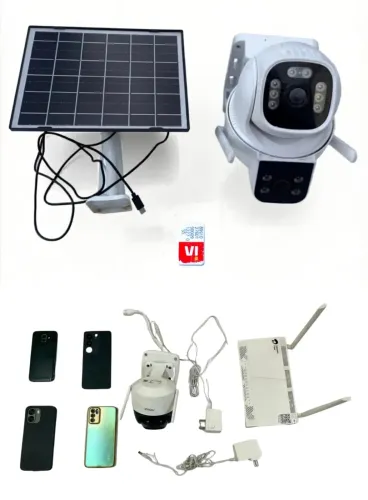
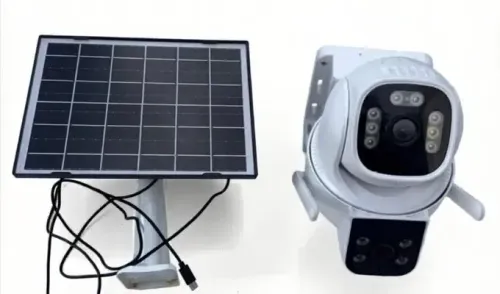
Unlike conventional CCTV systems that route footage through a local Wi-Fi network, the newly detected cameras carry a built-in cellular module and an active SIM card, allowing them to transmit live data directly over 4G and 5G commercial mobile towers — entirely off the grid. This design means the camera bypasses the target building's local network, leaving no trace on conventional network monitoring systems.
'It also blends its data traffic into the standard commercial 4G and 5G mobile towers across the country,' officials noted. The result is a feed that is operationally indistinguishable from ordinary mobile data traffic, creating a significant detection challenge for security and intelligence agencies.
Who Is Being Recruited and Where
An Intelligence Bureau (IB) official said ISI handlers have been actively scouting individuals living along highways or in the vicinity of military installations to serve as unwitting or witting operators. Once recruited, operatives are instructed to mount the cameras on the exterior of their homes.
'Those living along highways are particularly preferred by the handlers, as live feeds from the highways help the ISI gather information about the movement of Indian troops and important personalities,' the IB official said. The Jammu and Kashmir police last week arrested one individual identified as Aman, who had installed a high-definition, SIM-powered smart CCTV camera outside his residence. Investigations revealed he was paid ₹20,000 to install the device.
The SIM Card Trail — and How It Is Being Hidden
Intelligence officials say ISI recruits inside India have also been separately tasked with procuring SIM cards, which are then either sent to Pakistan or used to issue instructions to local operatives over phone calls. Because these SIM cards are registered in India, they help evade conventional detection frameworks.
Critically, the same illegally procured SIM cards are now being used to power the cameras. The ISI's operatives reportedly use fraudulent documentation or virtual SIM cards to activate cellular connections, ensuring the device cannot be tied to the real identity of the operator. This, officials warn, makes tracking the hardware a major challenge for security agencies.
Scale of the Threat and What Comes Next
Officials indicate the ISI intends to expand this model well beyond Jammu and Kashmir. 'Locations across the country that are closer to military installations or along the highways would be the preferred slot to install these cameras,' a second official said. The ISI had previously experimented with solar-powered CCTV cameras, which reportedly yielded intelligence on military installations as well as crowded civilian locations such as bus stands and railway stations. The SIM-powered variant is considered a more advanced iteration because it bypasses Wi-Fi entirely.
This is not the first documented instance of foreign intelligence leveraging commercial hardware for espionage in India, but the cellular bypass mechanism marks a qualitative upgrade in operational tradecraft. Security agencies are now believed to be working on protocols to detect unusual SIM-activated camera activity near sensitive zones.
Point of View
000 payment to a local operative in J&K underlines how cheaply the ISI can build a distributed spy network using India's own civilians and telecom grid. What is most troubling is the scalability — unlike a human agent who carries risk, a camera installed on a roadside home can run indefinitely without arousing suspicion. India's counter-intelligence doctrine, designed for a different threat era, needs a rapid upgrade in protocols for detecting SIM-activated surveillance hardware near sensitive zones before this network metastasises.
NationPress
21 Sept 2026
Frequently Asked Questions
What are SIM-powered smart cameras and why is the ISI using them?
SIM-powered smart cameras carry a built-in cellular module and an active SIM card, transmitting live footage directly over 4G or 5G networks without needing a Wi-Fi connection. The ISI is using them because they bypass conventional network monitoring, blending their data traffic into ordinary commercial mobile traffic and making detection significantly harder for Indian security agencies.
Where have these ISI spy cameras been detected in India?
Their use has been increasingly detected in Jammu and Kashmir , particularly near highways and military installations. Intelligence officials warn the ISI plans to extend the network to sensitive locations across the rest of the country as well.
Who was arrested in connection with this ISI surveillance operation?
Jammu and Kashmir police last week arrested an individual identified as Aman , who had installed a high-definition SIM-powered smart CCTV camera outside his home. Investigations revealed he was paid ₹20,000 by ISI handlers to install the device.
How does the ISI hide the identity of the camera operators?
ISI recruits reportedly use fraudulent documentation or virtual SIM cards to activate the cellular connections powering the cameras. Because the SIM card cannot be tied to the real identity of the operator, tracing the device back to a handler is extremely difficult for intelligence agencies.
How is this different from the ISI's earlier surveillance methods in India?
The ISI previously used solar-powered CCTV cameras to gather intelligence on military installations and crowded civilian locations. The SIM-powered variant is considered a more advanced and harder-to-detect upgrade because it routes data through commercial mobile towers instead of a local network, leaving no trace on standard security monitoring systems.