ISI-Hamas nexus: Pakistan links Palestine cause to Kashmir to revive terror recruitment

Synopsis
Indian security agencies have uncovered an ISI-orchestrated effort to merge the Palestine narrative with the Kashmir cause, using a February 2025 Hamas-JeM-LeT meeting in Rawalot as its launchpad. The gambit is less about immediate attacks and more about ideological recruitment — exploiting Hamas's global profile to reverse the sharp decline in Kashmiri militancy since the abrogation of Article 370.
Key Takeaways
A Hamas-JeM-LeT meeting held in Rawalot on 5 February 2025 was titled 'Kashmir Solidarity and Hamas Operation Al-Aqsa Flood' .
The ISI is orchestrating efforts to merge the Palestine cause with the Kashmir narrative to revive terror recruitment.
Videos and images from the meeting are reportedly being circulated in Jammu and Kashmir as propaganda.
An Intelligence Bureau official warned there are chances some individuals may be swayed by the Hamas-linked messaging.
Terror recruitment, overground worker networks, and separatist ideology have all declined sharply in J&K since the abrogation of Article 370 in 2019 .
The threat is currently assessed as more ideological and recruitment-focused than operational.
Security agencies have established a deepening operational nexus between Hamas and Pakistan-based terror groups, with multiple meetings held on Pakistani soil under the watch of the Inter-Services Intelligence (ISI), according to officials. The ISI's broader objective, according to intelligence assessments, is to fuse the Palestine cause with the Kashmir narrative in a bid to reignite militancy in the Union Territory.
The Rawalot Meeting and What It Revealed
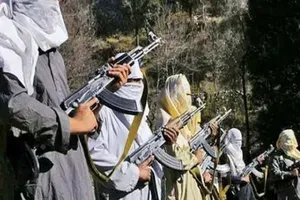
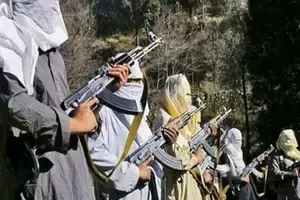
A pivotal meeting held in Rawalot on 5 February 2025 brought together operatives of Hamas, Jaish-e-Mohammed (JeM), and Lashkar-e-Taiba (LeT). Titled 'Kashmir Solidarity and Hamas Operation Al-Aqsa Flood', the gathering was aimed at sharing ideas and organisational experience, according to officials. Reportedly, operational tactics including the use of drones were also on the agenda.
An Intelligence Bureau official said the overarching intent was to project both the Palestinian and Kashmiri struggles as a unified 'resistance drive' — not merely a tactical alliance, but a concerted ideological rebranding exercise.
The Messaging Push Into Jammu and Kashmir
'The larger intention was to send a message into Jammu and Kashmir. Attempts are now being made to circulate images and videos of the meetings in Kashmir circles, with the hope that the locals in J&K may identify with the cause and join hands with these outfits,' the official said.
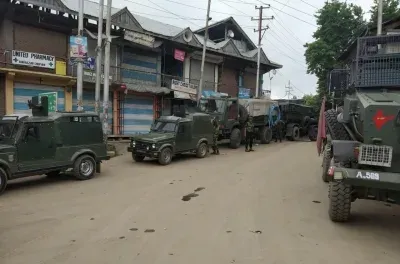
Another official noted that since the abrogation of Article 370, the separatist cause backed by Pakistan has lost considerable ground within the Valley. Recruitment into militant networks has dropped sharply and several overground worker (OGW) networks have been dismantled, making it increasingly difficult for ISI-backed elements to operate.
Why Hamas Is the ISI's New Recruitment Tool
With the traditional Kashmir narrative fading, security officials say the ISI is banking on the Hamas association to inject fresh ideological momentum. The calculation, according to an official, is that by roping in an internationally recognised militant group, the ISI hopes to signal to Kashmiris that their 'cause' carries global resonance.
'Even international terror groups are coming forward and describing the Kashmir cause as a resistance-driven movement,' an official said. 'There are chances that some may fall prey and this propaganda — with the added Hamas dimension — may work when it comes to recruitments.'
Threat Assessment: Propaganda Over Operations, For Now
Officials assess that the immediate danger is less operational and more ideological. While Hamas-style attack methodologies are reportedly being studied for possible use in Kashmir, the more pressing threat is the radicalisation of local youth through sustained propaganda.
This is described as more dangerous than the tactical changes JeM and LeT are attempting with Hamas's operational inputs. Since the abrogation of Article 370 in 2019, Jammu and Kashmir has recorded a significant decline in terror incidents, a sharp rise in tourism, and a visible retreat of separatist ideology — developments that have, according to officials, left the ISI deeply worried.
What Security Agencies Are Watching
Intelligence agencies are closely monitoring the circulation of meeting footage and propaganda material within Kashmir. The Hamas-JeM-LeT nexus is seen as an evolving threat vector that combines ideological outreach with potential operational upgrades. Officials say that while current conditions in J&K remain largely stable, the ISI's latest gambit underscores the persistent effort to keep the militancy ecosystem alive by any means available.
Point of View
And Pakistan needs a new hook. By importing Hamas's international brand equity, the ISI is attempting to re-legitimise a cause that post-Article 370 ground realities have steadily delegitimised. The propaganda-first approach — circulating meeting footage rather than launching attacks — suggests the ISI knows it cannot win operationally in J&K right now and is playing a long ideological game. The real risk is among a small, impressionable fringe; the majority of Kashmiris, by all official accounts, have moved on. That fringe, however, is exactly where terrorist movements have historically found their recruits.
NationPress
31 Oct 2026
Frequently Asked Questions
What was the Hamas-JeM-LeT meeting in Rawalot about?
The meeting held in Rawalot on 5 February 2025 was titled 'Kashmir Solidarity and Hamas Operation Al-Aqsa Flood' and brought together operatives of Hamas, Jaish-e-Mohammed, and Lashkar-e-Taiba. Its stated purpose was to share organisational experience and ideas, with operational topics such as drone use also reportedly discussed.
Why is Pakistan linking Hamas to the Kashmir cause?
According to Indian intelligence officials, the ISI wants to use Hamas's international profile to reinvigorate a Kashmir narrative that has weakened significantly since the abrogation of Article 370 in 2019. The aim is to project the Kashmir cause as a globally recognised 'resistance movement', potentially swaying local youth toward militancy.
What is the current security situation in Jammu and Kashmir?
Since the abrogation of Article 370 in 2019, Jammu and Kashmir has seen a sharp decline in terror recruitment, the dismantling of several overground worker networks, and a significant boost in tourism. Security officials say the separatist ideology propagated by Pakistan has faded considerably among the local population.
What specific threat does the Hamas-Pakistan terror nexus pose?
Officials assess the primary threat as ideological rather than immediately operational — the ISI is circulating propaganda material featuring Hamas-JeM-LeT meetings in Kashmir to encourage recruitment. Hamas-style operational tactics are also reportedly being studied by JeM and LeT for potential use in future attacks.
What are Indian security agencies doing in response?
Intelligence agencies are monitoring the spread of propaganda content linked to the Hamas-JeM-LeT meetings within Jammu and Kashmir. Agencies have also been working to dismantle overground worker networks and track ISI-backed elements attempting to exploit the Hamas association for recruitment purposes.