NIA probes Hamas-LeT link in Pahalgam terror attack, ISI angle under lens
Synopsis
The Pahalgam probe is no longer just a Kashmir terror case. The NIA is now examining whether Pakistan's ISI has begun stitching together a Hamas-LeT-JeM axis — a shift that would mark the first serious attempt to import Gaza-style tactics into the Kashmir theatre, and a direct response to the battering LeT and JeM took during Operation Sindoor.
Key Takeaways
The NIA is probing possible Hamas - LeT - JeM links as part of the Pahalgam terror attack investigation.
At least four meetings between LeT, JeM, and Hamas have reportedly taken place in PoK and Pakistan after the attack.
Hamas leaders were spotted at a public rally in Pakistan with LeT and JeM commanders nearly three months before the strike.
Officials say the ISI is pushing its proxies to adopt Hamas-style sustained warfare against India.
The NIA is also studying operational parallels in planning, coordination, and execution between Hamas attacks and the Pahalgam strike.
The National Investigation Agency (NIA) is examining possible operational, financial, and ideological links between Pakistan-backed terror outfits and the Palestinian militant group Hamas as part of its probe into the Pahalgam terror attack, officials indicated on 3 June. The agency will also explore potential ties between the attackers and Al-Qaeda, widening the scope of an investigation that increasingly points to an international footprint orchestrated by Pakistan's Inter-Services Intelligence (ISI).
What the NIA is investigating
Investigators are probing whether the Pakistan-based Lashkar-e-Taiba (LeT) and The Resistance Front (TRF) maintain operational or ideological connections with Hamas. According to officials, Indian intelligence has previously flagged the presence of several Hamas leaders in Pakistan, where they were reportedly seen interacting with members of LeT and Jaish-e-Mohammed (JeM).
“If such links are established, it would indicate that Pakistan-backed terror networks are seeking to involve internationally active extremist groups in their campaign against India,” an official said.
The ISI playbook under scrutiny
Security agencies argue that the ISI is attempting to forge ties between its proxies and battle-hardened groups abroad. Hamas, officials note, has accumulated extensive combat experience through prolonged conflict with Israel, while LeT and JeM have largely focused on sporadic strikes in Jammu and Kashmir.
“The Jaish or the Lashkar, on the other hand, have focused on specific attacks, largely in Jammu and Kashmir. They have not engaged in a continued war, unlike Hamas,” an official said.
An Intelligence Bureau official described the move as a strategic shift. “It wants its terror proxies to launch attacks on India on the scale at which Hamas does on Israel,” the official said.
Meetings before and after Pahalgam
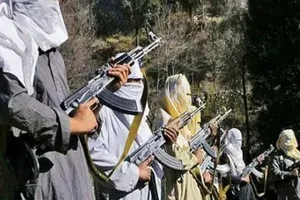
According to officials, at least four meetings between LeT, JeM, and Hamas representatives have been held in Pakistan-occupied Kashmir (PoK) and Pakistan since the Pahalgam attack. Intelligence agencies also learnt that nearly three months before the strike, Hamas leaders were seen at a public rally in Pakistan alongside LeT and JeM commanders.
Officials say interactions extended beyond ideology to include discussions on operational matters — a development that has raised concern within India's security establishment.
Why Operation Sindoor changed the calculus
Since the Pahalgam attack and the subsequent Operation Sindoor, Pakistan has reportedly been searching for ways to “continuously bleed” India without inviting a direct military confrontation. The operation, officials say, exposed the limited capability of LeT and JeM in handling a major conflict, with both groups losing significant infrastructure.
“However, when the terror group is tasked with this battle, the dynamics and optics would be different,” an official said, explaining why Islamabad is reportedly seeking to outsource escalation to non-state actors.
Operational parallels with Hamas tactics
Beyond probing links, the NIA is also studying operational similarities between Hamas's attack methods and the execution of the Pahalgam strike. An initial assessment, officials said, has drawn parallels in planning, coordination, and execution — findings expected to form a key part of the agency's investigation.
Security experts caution that if Indian groups adopt Hamas-style tactics, security forces could face a new and more complex form of warfare, particularly in its initial stages. The next phase of the NIA probe is expected to focus on financial trails and cross-border communications that may connect the dots.
Point of View
If it holds, marks a qualitative escalation rather than just a new lead. For two decades, India's counter-terror doctrine was built around LeT and JeM playbooks — episodic strikes, fidayeen squads, infiltration windows. A Hamas-style import would mean tunnels, sustained engagement, and propaganda warfare layered over the Kashmir conflict. The more revealing detail is timing: these meetings reportedly accelerated after Operation Sindoor degraded LeT and JeM infrastructure, suggesting the ISI is outsourcing escalation precisely because its traditional proxies have been blunted.
NationPress
18 Oct 2026
Frequently Asked Questions
What is the NIA investigating in the Pahalgam terror attack?
The NIA is examining whether Pakistan-based terror outfits Lashkar-e-Taiba and Jaish-e-Mohammed have operational, financial, or ideological links with Hamas and possibly Al-Qaeda. The probe was widened after intelligence inputs flagged Hamas leaders meeting LeT and JeM commanders in Pakistan.
Why is the Hamas angle significant?
Hamas is a battle-hardened group with years of sustained combat experience against Israel, unlike LeT and JeM, which have largely run episodic attacks in Jammu and Kashmir. If the ISI succeeds in linking them, Indian security forces could face Hamas-style tactics including sustained warfare and complex coordinated strikes.
What is the ISI's reported strategy?
Officials say the ISI wants its terror proxies to mount Hamas-scale attacks on India while keeping the Pakistan Army out of direct confrontation to avoid international escalation. The strategy aims to keep Indian forces continuously engaged through proxy operations.
How did Operation Sindoor change the situation?
Operation Sindoor inflicted significant infrastructure losses on LeT and JeM and exposed their inability to handle a large-scale conflict. Officials say this is why Pakistan is now seeking international extremist partners to sustain pressure on India through non-state actors.
What evidence links Hamas to the Pahalgam attack so far?
Investigators are studying operational similarities in planning, coordination, and execution between Hamas attacks and the Pahalgam strike. Officials also cite at least four meetings between LeT, JeM, and Hamas representatives in PoK and Pakistan after the attack, and a public rally featuring Hamas leaders alongside LeT and JeM commanders three months before it.