Pahalgam attack probe: NIA establishes direct Pakistan-LeT link in 26 deaths
Synopsis
The NIA's chargesheet on the Pahalgam attack reveals a textbook Pakistan playbook: orchestrate, claim credit for propaganda, then scramble to deny when India prepares to strike back. With Telegram channels traced to Rawalpindi and Khyber Pakhtunkhwa, phones sourced from Lahore and Karachi, and the operation run by a named LeT handler, the evidence trail points squarely across the border — and India's doctrine shift from counter-terror to act-of-war calculus is what forced Pakistan's hand.
Key Takeaways
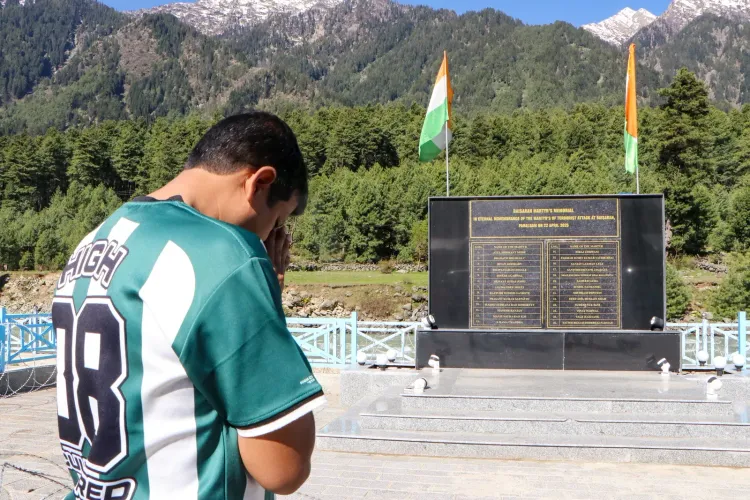
The NIA has established that the Pahalgam terror attack of 22 April 2025 , which killed 26 people , was handled from Lahore by Lashkar-e-Tayiba operative Saifullah alias Sajid Jatt .
Two Telegram channels used in the attack — 'Kashmir Fight' and 'The Resistance Front_OfFcial' — were traced to Khyber Pakhtunkhwa and Rawalpindi respectively.
Phones recovered from slain attackers were purchased from Lahore and Karachi , corroborating the Pakistan connection.
The Resistance Front claimed responsibility then withdrew it, alleging a hack, after India signalled strong military retaliation.
Pakistan Army Chief Asim Munir's pre-attack statements invoking Kashmir and the two-nation theory were cited by officials as ideological incitement.
India responded with Operation Sindoor , targeting LeT , Jaish-e-Mohammad , and Hizbul Mujahideen infrastructure.
The National Investigation Agency (NIA) has established a direct Pakistan link to the Pahalgam terror attack of 22 April 2025, in which 26 people were killed, according to findings detailed in the agency's chargesheet. Investigators concluded that the operation was planned, staged, and executed from Lahore by Saifullah, also known as Sajid Jatt or Langde, a senior operative of the Lashkar-e-Tayiba (LeT).
How the Attack Was Orchestrated
According to the NIA's findings, the groundwork for the assault began in the days before 22 April. On 15 and 16 April, three Pakistani nationals — Faisal Jatt alias Suleiman, Habib Tahir alias Chhotu, and Hamza Afghani — were reportedly sent by the Lashkar-e-Tayiba to conduct a reconnaissance of Baisaran Valley, mapping security arrangements ahead of the strike.
During the attack itself, the operatives on the ground were provided real-time information including coordinates and logistical data, according to investigators. Two Pakistani nationals, Bashir Ahmed and Parvez, were identified as local facilitators who assisted the attackers.
Telegram Channels Traced to Pakistan
The NIA's chargesheet identifies two Telegram channels used to guide and claim the attack. The channel 'Kashmir Fight' was traced to the Battagram area in Pakistan's Khyber Pakhtunkhwa (KP). A second channel, 'The Resistance Front_OfFcial', was found to be operating from Rawalpindi. Physical evidence recovered from attackers killed during Operation Mahadev corroborated these findings — one mobile phone had been purchased online and delivered to an address in Lahore's Qaid-e-Azam Industrial Estate, while a second was procured from Karachi.
Pakistan's Propaganda Reversal
A clear pattern emerged in the aftermath of the attack, according to officials familiar with the investigation. The Resistance Front, an offshoot of the Lashkar-e-Tayiba, initially claimed responsibility via the 'Kashmir Fight' Telegram channel. However, as international condemnation mounted and it became apparent that the Narendra Modi government was preparing a strong military response, the outfit abruptly withdrew its claim, alleging its channel had been hacked.
Officials say the Pakistani establishment had anticipated a propaganda dividend from the attack but was caught off-guard by the scale of India's response. The withdrawal of the claim was followed by what investigators describe as a 'false flag narrative' — an attempt to attribute the attack to other actors and sever any visible Pakistan link.
Asim Munir's Statements and the Ideological Context
Investigators pointed to remarks made by Pakistan Army Chief General Asim Munir in the days before the attack as providing ideological framing. At an Overseas Pakistanis Convention, Munir had stated: 'Kashmir is our jugular vein, it will be our jugular vein and we will not forget it.' He also invoked the two-nation theory and explicitly highlighted differences between Hindus and Muslims, according to officials. Munir had separately warned that three wars had been fought for Kashmir and 'if need be, then ten more would be fought.'
Officials characterised these statements as aimed at inciting violence and said they served as the ideological platform for the Pahalgam attack. Notably, despite Munir's public posturing about war-readiness, officials say Pakistan's military proved unwilling to sustain any confrontation once India signalled a doctrine shift — treating cross-border terror as an act of war rather than a law-enforcement matter.
India's Response and What Comes Next
India responded with Operation Sindoor, during which significant terror infrastructure belonging to the Lashkar-e-Tayiba, Jaish-e-Mohammad, and Hizbul Mujahideen was reportedly destroyed. The NIA chargesheet, which names Saifullah as the principal handler, is expected to form the basis of India's diplomatic and legal case against Pakistan-based terror networks. The investigation remains ongoing, with further identifications anticipated.
Point of View
Then disowning it the moment India invoked the act-of-war doctrine. That reversal is itself an admission of vulnerability. The Asim Munir angle is also significant: framing a military chief's public speech as ideological precursor to a specific attack is a rare prosecutorial move that India appears to be preserving for international forums. The real test is whether this chargesheet translates into sustained diplomatic and legal pressure, or remains a well-documented episode that fades without consequence.
NationPress
23 Oct 2026
Frequently Asked Questions
What did the NIA chargesheet reveal about the Pahalgam attack?
The NIA chargesheet established that the 22 April 2025 Pahalgam attack, which killed 26 people, was planned and executed from Pakistan by Lashkar-e-Tayiba operative Saifullah alias Sajid Jatt, based in Lahore. Telegram channels used in the attack were traced to Khyber Pakhtunkhwa and Rawalpindi, and phones recovered from the attackers were sourced from Lahore and Karachi.
Who is Saifullah alias Sajid Jatt, named in the Pahalgam attack chargesheet?
Saifullah, also known as Sajid Jatt or Langde, is described by the NIA as a top operative of the Lashkar-e-Tayiba based in Lahore. He is identified as the principal handler who managed, staged, and directed the entire Pahalgam operation from Pakistani soil.
Why did The Resistance Front withdraw its claim of responsibility?
The Resistance Front initially claimed the Pahalgam attack via the 'Kashmir Fight' Telegram channel but withdrew the claim after India signalled strong military retaliation and adopted a doctrine treating cross-border terror as an act of war. The outfit alleged its channel had been hacked, a claim investigators dispute.
What role did Pakistan Army Chief Asim Munir's statements play?
Officials cited General Asim Munir's pre-attack remarks — in which he called Kashmir Pakistan's 'jugular vein' and invoked the two-nation theory — as providing the ideological framing for the attack. Investigators characterised the statements as aimed at inciting violence, made days before the 22 April assault.
What was Operation Sindoor and how does it connect to Pahalgam?
Operation Sindoor was India's military response to the Pahalgam attack, during which significant terror infrastructure belonging to the Lashkar-e-Tayiba, Jaish-e-Mohammad, and Hizbul Mujahideen was reportedly destroyed. It was launched after India declared it would treat cross-border terrorism as an act of war rather than a conventional law-enforcement matter.