Hamas eyes Bangladesh via Tawhidi Janata, India on alert
Synopsis
Indian intelligence agencies have flagged concrete signals that Hamas is reaching out to Tawhidi Janata, a loosely organised Bangladeshi radical outfit with shifting allegiances between IS, Al-Qaeda, and now Hamas. The group's deliberately unstructured nature makes it hard to track — and, officials warn, an ideal vehicle for Hamas to embed its ideology in Bangladesh and eventually push it into India.
Key Takeaways
Hamas is reportedly seeking to expand into Bangladesh and Sri Lanka after establishing links in Pakistan with ISI support.
Indian agencies have flagged Tawhidi Janata , a loosely organised Bangladeshi radical group, as Hamas's likely local vehicle in Bangladesh.
The group has previously attacked Sufi shrines and Baul gatherings and has displayed Islamic State and Al-Qaeda flags publicly.
Members are reportedly linked to banned outfits including Ansarullah Bangla Team (ABT) , Jama'atul Ansar Fil Hindal Sharqiya , and HuJI Bangladesh .
Hamas's goal is reportedly ideological spread across Bangladesh, with a longer-term aim of influencing India , according to officials.
Hamas is reportedly reaching out to a loosely organised Bangladeshi radical group called Tawhidi Janata to expand its ideological footprint in Bangladesh, according to intelligence officials. Indian security agencies are closely monitoring the development, which they warn could eventually allow Hamas's influence to spill over into India.
The Hamas South Asia Push
According to officials, Hamas has been systematically building a presence across South Asia, having already established links in Pakistan with the reported support of the Inter-Services Intelligence (ISI). The Palestine-based terror group is now said to be eyeing Bangladesh and Sri Lanka as its next targets. Critically, officials say Hamas does not intend to operate directly in these countries — instead, it prefers to work through smaller, harder-to-track local outfits.
Who Is Tawhidi Janata
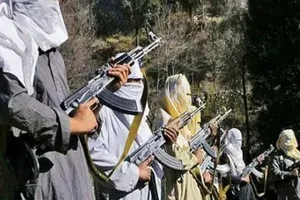
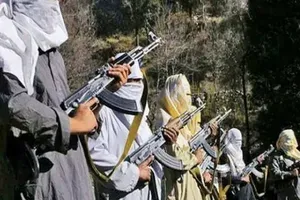
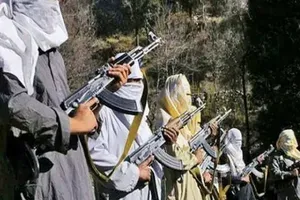
The Tawhidi Janata is an unorganised radical group operating out of Bangladesh that has been active for several years, resurfacing periodically. It claims its primary objective is to defend Islamic monotheism. The group has previously been implicated in attacks on Sufi institutions, shrines, and Baul gatherings in Bangladesh.
'There is no proper organisational structure, and the ideology it follows remains difficult for agencies to clearly define. It is essentially a loose grouping of radicalised youth who come together to preach a violent interpretation of Islam,' an official said.
The group has no fixed ideological allegiance — at various points, its members have been seen backing both the Islamic State and Al-Qaeda. In recent months, however, the outfit has increasingly propagated the Palestine cause, extending vocal support to Hamas. Officials say this ideological drift closely aligns with Hamas's current narrative, making Tawhidi Janata a convenient vehicle for the terror group's agenda.
The Intelligence Picture
An Intelligence Bureau official confirmed there is now concrete intelligence suggesting Hamas is actively reaching out to Tawhidi Janata. 'It would rely on smaller groups to spread its agenda,' the official said. The group's members are reportedly aligned with several banned outfits, including the Jama'atul Ansar Fil Hindal Sharqiya, the Ansarullah Bangla Team (ABT), and Harkat-ul-Jihadi Islami in Bangladesh (HuJI).
What makes the outfit particularly difficult to monitor, officials say, is its deliberately unstructured mode of operation. 'They do not depend on terror modules or sleeper cells, and this makes tracking their activities even harder,' officials noted. Security analysts describe this as a feature rather than a flaw — the group's amorphous nature provides plausible deniability and complicates surveillance.
On-Ground Activity and India's Concern
In recent months, flags of Al-Qaeda and the Islamic State have repeatedly been displayed openly in Bangladesh, with several incidents traced back to Tawhidi Janata members. The group has also launched a street-level and social media campaign centred on the alleged persecution of Muslims, with a particular focus on Palestine — a campaign officials say mirrors Hamas's own messaging strategy.
Indian agencies are particularly concerned because Hamas's stated objective is not to conduct routine attacks in Bangladesh but to embed its ideology across the country — and ultimately allow that influence to permeate into India. Officials describe the Tawhidi Janata–Hamas alignment as a 'dangerous development' for the national security of both Bangladesh and India.
Point of View
Unstructured group running street campaigns and social media drives is far harder to prosecute or proscribe than a conventional terror module. India's concern about cross-border ideological bleed is legitimate, but the deeper question is whether Bangladesh's own security establishment has the institutional bandwidth to monitor a group that deliberately avoids structure. The ISI-Pakistan-Hamas link, if confirmed, would also mark a significant escalation in state-linked terror facilitation in the region — a thread that warrants independent verification beyond intelligence briefings.
NationPress
5 Oct 2026
Frequently Asked Questions
What is Tawhidi Janata and why is it in the news?
Tawhidi Janata is a loosely organised radical group based in Bangladesh that has been active for several years. It is in the news because Indian intelligence officials say Hamas is reportedly reaching out to the group to use it as a vehicle to spread its ideology in Bangladesh and potentially into India.
How is Hamas trying to expand into Bangladesh?
According to intelligence officials, Hamas does not intend to operate directly in Bangladesh. Instead, it is reportedly reaching out to smaller, harder-to-track local outfits like Tawhidi Janata to propagate its ideology, using the group's existing street campaigns and social media presence focused on the Palestine cause.
Which banned terror outfits are Tawhidi Janata members linked to?
Officials say members of Tawhidi Janata are aligned with multiple banned outfits, including Jama'atul Ansar Fil Hindal Sharqiya, the Ansarullah Bangla Team (ABT), and Harkat-ul-Jihadi Islami in Bangladesh (HuJI). The group has no fixed ideology and has at various times expressed support for both the Islamic State and Al-Qaeda.
Why is India concerned about Hamas's presence in Bangladesh?
Indian security agencies are concerned because officials say Hamas's objective is to embed its ideology across Bangladesh and eventually allow that influence to spill over into India. The Intelligence Bureau is actively monitoring Tawhidi Janata's activities given this potential cross-border threat.
What makes Tawhidi Janata difficult for agencies to track?
The group's deliberately unstructured nature — it has no fixed organisational hierarchy, does not rely on terror modules or sleeper cells, and has shifting ideological allegiances — makes it extremely difficult to monitor. Officials describe it as a loose grouping of radicalised youth that surfaces periodically rather than maintaining a continuous operational presence.