ISI using TTH to falsely link India, Afghanistan to TTP: Officials
Synopsis
Indian intelligence officials have laid bare a calculated ISI operation: the Tehreek-e-Taliban Hindustan (TTH) was created not as a genuine militant outfit but as a propaganda tool — to manufacture a false narrative that both India and Afghanistan are backing the TTP, even as Pakistan faces a deepening Taliban fallout and India quietly resets ties with Kabul.
Key Takeaways
Indian intelligence agencies assess the Tehreek-e-Taliban Hindustan (TTH) as an ISI-engineered propaganda outfit, not an organic terror group.
The ISI's stated goal, according to officials, is to falsely implicate both India and Afghanistan in nurturing the Tehreek-e-Taliban Pakistan (TTP) .
The TTH is reportedly headed by Shahzad Bhatti , identified as the ISI's propaganda chief for Indian affairs.
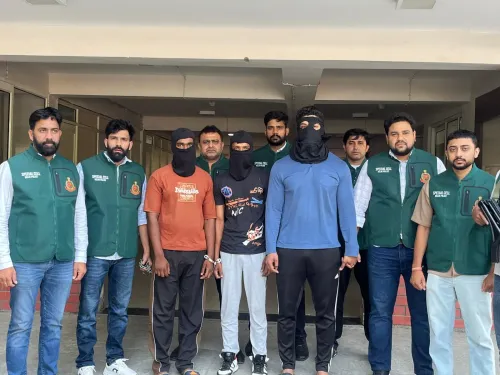
A man named Sohail , arrested by Delhi Police , revealed he was tasked by Bhatti to paint TTH graffiti across Delhi and Faridabad .
Officials say the ISI is building a TTH-linked network in Delhi-NCR with the specific aim of targeting police personnel.
The TTH's emergence coincides with a reset in India-Afghanistan ties and a sharp deterioration in Pakistan-Afghan Taliban relations.
Indian intelligence agencies have assessed that the Tehreek-e-Taliban Hindustan (TTH) is a propaganda-driven outfit manufactured by Pakistan's Inter-Services Intelligence (ISI) to create a deniable homegrown terror network in India, while simultaneously implicating both India and Afghanistan in the nurturing of the Tehreek-e-Taliban Pakistan (TTP). The assessment, shared by multiple officials, reveals a multi-layered strategy designed to serve Islamabad's regional interests at a time of shifting geopolitical alignments.
The Strategic Design Behind TTH
According to officials, the TTH is not an organically formed extremist group — it is a carefully engineered construct. 'There is a larger agenda behind the creation of the group,' an official said, explaining that while the TTH is aimed at driving propaganda inside India, it is simultaneously being positioned as an offshoot of the TTP to serve Pakistan's broader narrative goals.
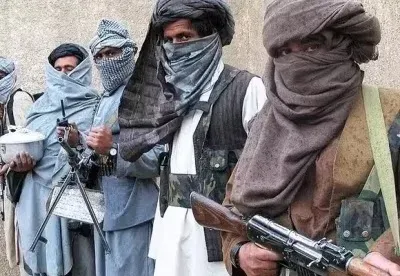
The TTP has inflicted serious damage on Pakistani security forces, and Islamabad has repeatedly — and falsely, according to Indian officials — claimed that the Afghan Taliban is responsible for sheltering and nurturing the TTP. Pakistan has used this claim as a pretext for military action against Afghanistan. By creating the TTH and linking it to the TTP, the ISI now seeks to extend that blame to India as well.
India-Afghanistan Reset Complicates Pakistan's Position
The timing of the TTH's emergence is significant. Since the Afghan Taliban's return to power, Islamabad has found itself increasingly sidelined — the Taliban has refused to act as a Pakistani proxy and has explicitly stated it will not permit Pakistan to interfere in Afghan affairs. This represents a major strategic setback for Islamabad, which had long treated Afghanistan as a sphere of influence.
Simultaneously, India has reset its diplomatic ties with the Afghan Taliban, and bilateral engagement between the two countries is, according to officials, currently on a stable footing. This convergence — a cooling Taliban-Pakistan relationship and a warming India-Afghanistan one — has unsettled Islamabad. The ISI's response, officials say, has been to fabricate a narrative that both India and Afghanistan are jointly backing the TTP to destabilise Pakistan.
The Shahzad Bhatti Connection
The TTH is reportedly headed by Shahzad Bhatti, identified by officials as the individual in charge of the ISI's propaganda wing for Indian affairs. His role came to light following the arrest of a man named Sohail, who had a prior criminal history. During questioning, Sohail told Delhi Police that Bhatti had tasked him with painting 'TTH' on walls across multiple locations in Delhi and Faridabad. He was also instructed to paint a small 'S' beneath the 'TTH' graffiti — a signature indicating the work was Shahzad's, according to police findings.
Bhatti's ambitions through the TTH extend well beyond graffiti and propaganda. Officials say he has been systematically building a network in Delhi and its surrounding areas, with a specific operational objective: targeting police personnel. 'This is a module in the making with this specific agenda,' an official said.
ISI's Three-Pronged Agenda Through TTH
Officials have outlined three distinct objectives the ISI seeks to achieve through the TTH. First, to establish a false narrative linking the TTP and TTH to both India and Afghanistan, thereby deflecting international scrutiny of Pakistan's own role in harbouring militant groups. Second, to spread disinformation within India suggesting that New Delhi is actively backing outfits like the TTP to target Pakistani security forces.
Third — and perhaps most consequentially — the ISI aims to use the TTH as the foundation for a durable homegrown terror infrastructure in India, enabling future attacks while maintaining plausible deniability. This, officials say, has been a longstanding strategic goal of Pakistani intelligence.
What Comes Next
Indian intelligence and law enforcement agencies are closely monitoring TTH-linked activities, particularly in the Delhi-NCR region. The arrest of Sohail has provided investigators with a thread into the network, but officials caution that Bhatti's recruitment and radicalisation efforts are ongoing. The broader geopolitical context — continued India-Afghanistan engagement and Pakistan's deteriorating internal security situation — suggests that ISI pressure through proxy narratives and covert modules is likely to intensify in the near term.
Point of View
Assign blame outward, and build a deniable domestic module simultaneously. What is notable is the granularity of what Indian agencies have reportedly uncovered — down to a graffiti operative and a signature code. That level of penetration suggests either strong HUMINT or a deliberate leak to signal awareness. Either way, the TTH gambit appears to have been called out before it could fully operationalise.
NationPress
9 Oct 2026
Frequently Asked Questions
What is the Tehreek-e-Taliban Hindustan (TTH)?
The Tehreek-e-Taliban Hindustan (TTH) is, according to Indian intelligence officials, an ISI-created propaganda outfit designed to simulate a homegrown terror group in India. Its purpose is to give Pakistan plausible deniability in the event of a terror attack on Indian soil, while also serving as a vehicle to falsely link India and Afghanistan to the Tehreek-e-Taliban Pakistan (TTP).
How is the ISI using TTH to implicate India and Afghanistan?
According to officials, the ISI is positioning the TTH as an offshoot of the TTP and spreading a narrative that both India and Afghanistan are backing the TTP against Pakistani security forces. This mirrors Pakistan's earlier tactic of blaming the Afghan Taliban for sheltering the TTP — a claim Indian officials describe as false.
Who is Shahzad Bhatti and what is his role in TTH?
Shahzad Bhatti is identified by Indian officials as the head of the ISI's propaganda wing for Indian affairs and the reported head of the TTH. His role was exposed after the arrest of an operative named Sohail, who told Delhi Police that Bhatti had directed him to paint TTH graffiti in Delhi and Faridabad, with a coded signature to mark the work as Bhatti's.
Why has TTH emerged now, given the India-Afghanistan diplomatic reset?
Officials say the TTH's creation is directly linked to two simultaneous developments: India's diplomatic reset with the Afghan Taliban, and the Afghan Taliban's refusal to act as a Pakistani proxy. Pakistan, unsettled by both shifts, is reportedly using the TTH to fabricate a narrative that India and Afghanistan are jointly destabilising Pakistan through the TTP.
What threat does the TTH pose beyond propaganda?
Beyond its narrative role, the TTH is reportedly being used to build an operational network in Delhi and surrounding areas, specifically targeting police personnel. Officials describe it as 'a module in the making' — an early-stage but deliberate effort to establish a functional terror infrastructure inside India with ISI backing and deniable cover.