Pakistan's ISI plots graffiti war, fake TTH narrative to target India: Intel
Synopsis
With infiltration routes choked after Operation Sindoor, Pakistan's ISI is reportedly betting on a graffiti war and a manufactured outfit — the Tehreek-e-Taliban Hindustan — to paint India as the aggressor. Intelligence officials say impressionable, drug-addicted youth in border states are being recruited for paint-and-pay propaganda, even as Asim Munir scrambles to deflect domestic anger over TTP losses.
Key Takeaways
Pakistan's ISI is reportedly shifting to 'soft terror' after Operation Sindoor blunted cross-border infiltration.
A non-existent outfit — Tehreek-e-Taliban Hindustan (TTH) — is being promoted to mirror the TTP and brand India as its creator.
ISI is allegedly recruiting youth, including drug addicts, in border states for a graffiti campaign on Kashmir , Khalistan and human rights.
Field Marshal Asim Munir faces internal pressure over TTP and BLA losses, including attacks on Chinese assets.
Indian agencies have busted spying rings and an ISI-linked solar-powered CCTV surveillance operation in recent months.
Pakistan's Inter-Services Intelligence (ISI) is reportedly pivoting to a 'soft terror' playbook against India, banking on a coordinated graffiti campaign and a fabricated outfit called the Tehreek-e-Taliban Hindustan (TTH) to sustain its anti-India offensive after the setbacks of Operation Sindoor, according to Indian intelligence officials. With cross-border infiltration drying up and multiple terror modules busted, Islamabad is said to be shifting from kinetic strikes to narrative warfare aimed at radicalising impressionable youth in India's border states.
Why the shift to 'soft terror'
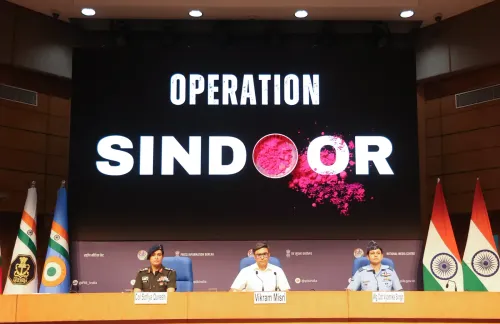
Indian agencies assess that Pakistan, and particularly Field Marshal Asim Munir, is under acute pressure to recover face after Operation Sindoor — launched to avenge the Pahalgam terror attack. An Intelligence Bureau official said infiltration attempts have 'virtually dried up', forcing a tactical reset toward propaganda, radicalisation and low-cost optics rather than armed cross-border action.
The TTH fabrication explained
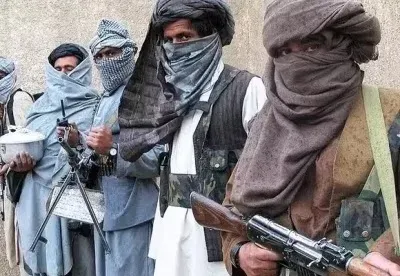
At the centre of the new campaign, officials say, is the promotion of a non-existent group — the Tehreek-e-Taliban Hindustan — designed to mirror the Tehreek-e-Taliban Pakistan (TTP). The intent, the official said, is to pass off the TTH as an Indian intelligence creation and project India as the aggressor in the region. The narrative is also meant to deflect domestic anger inside Pakistan, where the TTP has inflicted heavy casualties on security forces.
This mirrors an earlier Pakistani tactic in Afghanistan, where Islamabad accused the Afghan Taliban — without public evidence — of sheltering the TTP, eventually escalating to military strikes.
How the graffiti war is being engineered
Officials say the ISI is recruiting youth in border states, paying small sums to paint graffiti at railway stations, college buildings, bus stands and government offices. The messaging is expected to focus on the TTH, Kashmir and Khalistan, alongside allegations about India's human rights record.
'This is not about bombing properties or attacking them with guns. This is to attack the mindset of the youth, particularly those in colleges who are impressionable,' an official said. Drug-addicted youth are being specifically targeted, the official added, because they need money and view painting graffiti as a low-risk task.
Why the timing matters for Munir
The push comes as Munir contends with mounting losses to the TTP and the Balochistan Liberation Army (BLA), and growing irritation from Beijing over repeated attacks on Chinese investments in Pakistan. By amplifying the TTH and tying it to alleged Indian backing, officials argue, Pakistan is attempting to manufacture a counter-narrative that explains away its internal security collapse.
What Indian agencies are watching
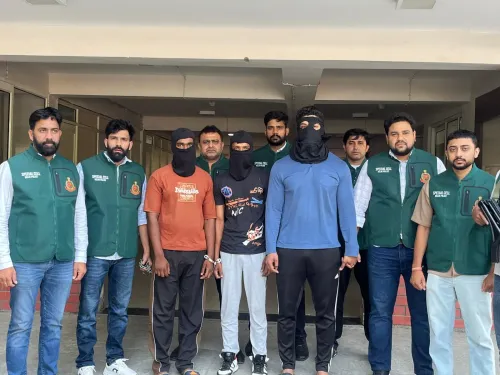
Indian agencies have, in recent months, dismantled underworld-linked terror modules, broken up spying rings, and uncovered an ISI operation involving solar-powered CCTV cameras installed at key locations to enable live surveillance. With those plans foundering, the graffiti and propaganda track is reportedly Islamabad's fallback. Surveillance on recruitment activity in border states has been intensified, officials said, with the months ahead expected to see further attempts to seed the TTH narrative.
Point of View
Not abandoned. Manufacturing a phantom outfit like the TTH is classic deflection: it gives Rawalpindi a rhetorical shield against domestic anger over real TTP losses while attempting to script India as the regional villain. The danger is not the paint on a wall but the slow normalisation of an alternate narrative among college-age youth, where repetition substitutes for evidence. India's counter cannot be purely kinetic; it has to be informational, local, and faster than the lie.
NationPress
18 Oct 2026
Frequently Asked Questions
What is the Tehreek-e-Taliban Hindustan (TTH)?
According to Indian intelligence officials, the TTH is a non-existent outfit being promoted by Pakistan's ISI to mirror the Tehreek-e-Taliban Pakistan (TTP). The aim is to project it as an India-backed group and build a narrative that New Delhi is sponsoring terror inside Pakistan.
Why is Pakistan shifting to a graffiti and propaganda campaign?
Officials say cross-border infiltration has virtually dried up after Operation Sindoor and multiple terror modules have been busted. With kinetic options narrowing, the ISI is reportedly turning to 'soft terror' — propaganda, graffiti and radicalisation — to keep the anti-India campaign alive.
Who is the ISI allegedly recruiting for this campaign?
Indian agencies say the ISI is targeting youth in border states, with a particular focus on drug-addicted individuals who can be paid small sums to paint graffiti at railway stations, colleges, bus stands and government offices. Painting graffiti is being pitched to them as a low-risk activity.
How does this link to Asim Munir's domestic problems?
Field Marshal Asim Munir is under pressure at home over heavy security force losses to the TTP and BLA, and over attacks on Chinese investments. By amplifying the TTH and alleging Indian backing for the TTP, officials say, Munir is trying to deflect blame and cover the Pakistan army's failures.
What counter-measures are Indian agencies taking?
Indian agencies have stepped up surveillance of recruitment activity in border states and have recently busted underworld-linked terror modules, spying rings and an ISI operation involving solar-powered CCTV cameras at key locations. The focus now is on pre-empting the graffiti and narrative campaign before it scales.