Jaishankar at ARF Manila: Zero Tolerance on Terror, UNCLOS-Compliant CoC
Synopsis
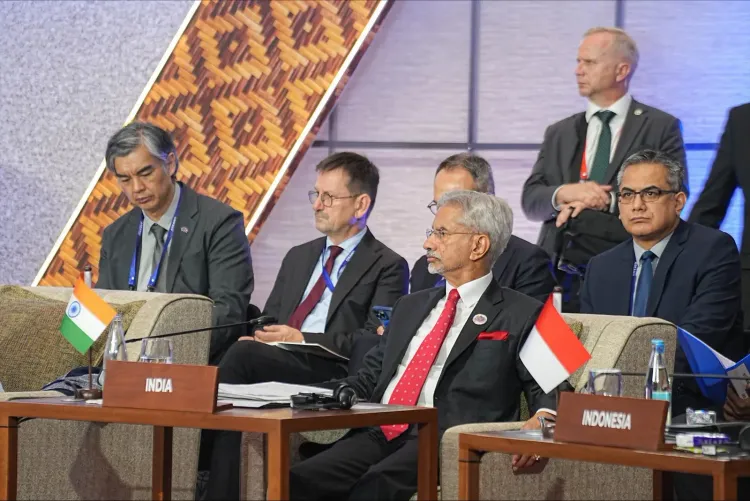
External Affairs Minister Dr. S. Jaishankar addressed the 33rd ARF Ministerial in Manila on 23 July 2026, calling for zero tolerance on terrorism, championing India's disaster resilience record, and pushing for an UNCLOS-compliant South China Sea Code of Conduct across a wide-ranging Indo-Pacific security agenda.
Key Takeaways
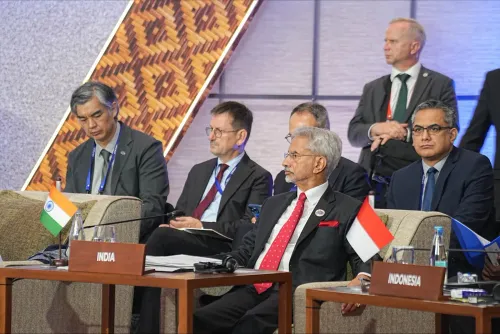
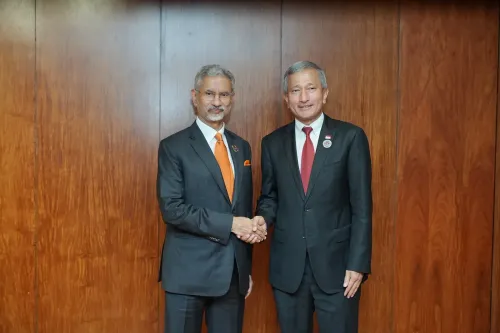
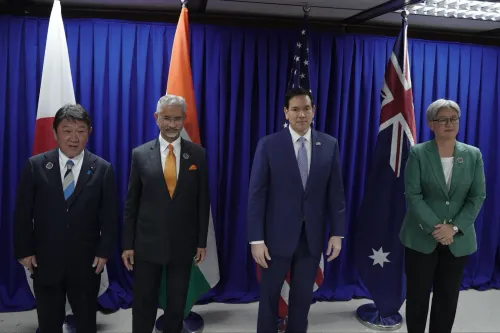
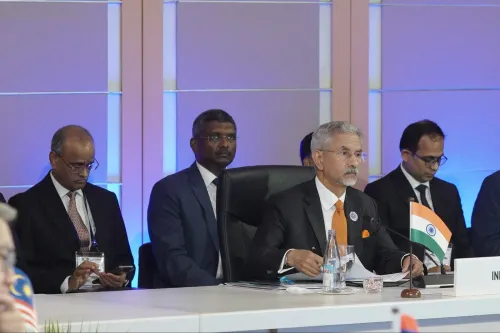
Jaishankar spoke at the 33rd ASEAN Regional Forum Ministerial Meeting in Manila on 23 July 2026 .
He welcomed the Manila Plan of Action , saying its five pillars align with India's Indo-Pacific approach.
India declared zero tolerance for terrorism and called for choking terrorist financing; India co-chairs the ADMM+ EWG on counter-terrorism with Malaysia .
India's disaster relief record was cited, including recent operations in Sri Lanka , the Philippines , Jamaica , Myanmar , Venezuela and Afghanistan .
The IFC-IOR in Gurugram and the IPMDA initiative were highlighted as active maritime security contributions across the Indo-Pacific.
India called for a legally binding South China Sea CoC fully compliant with UNCLOS 1982 that does not prejudice the rights of all users.
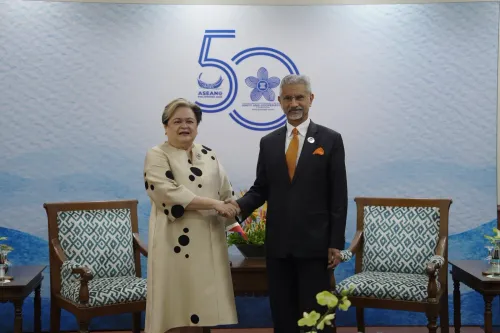
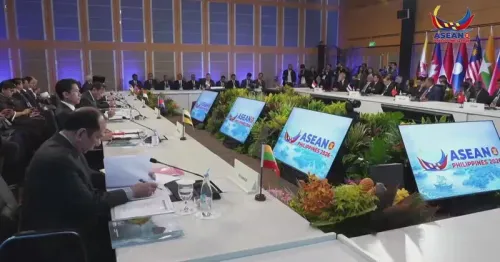
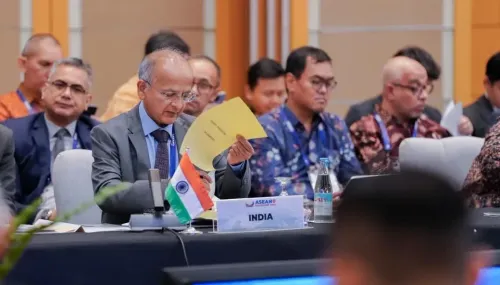
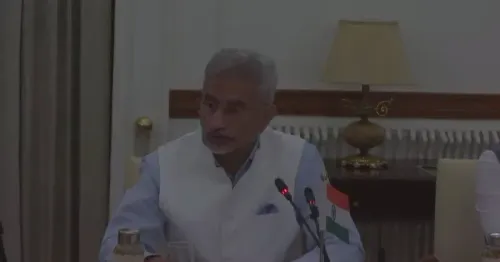
Union External Affairs Minister Dr. S. Jaishankar addressed the 33rd ASEAN Regional Forum (ARF) Ministerial Meeting in Manila on Thursday, 23 July 2026, laying out India's positions on terrorism, maritime security, disaster resilience, and the South China Sea Code of Conduct negotiations.
Context
Speaking at the annual ARF gathering — the principal multilateral security dialogue platform in the Asia-Pacific — Dr. Jaishankar welcomed the Manila Plan of Action and said its five pillars align with India's own Indo-Pacific approach. He described the forum as crucial for discussing 'political and security issues in the Indo-Pacific, especially in these complex times.'
India has participated in the ARF since 1996, consistently advocating ASEAN centrality and a rules-based regional order. This year's intervention reflects the steady expansion of India's Act East Policy into a broader Indo-Pacific strategy.
Policy Backdrop
On terrorism, the Minister was unequivocal: 'There must be zero tolerance for terrorism. Nor should there be any doubt that acts of terrorism will have consequences.' He called for prioritising the choking of financial resources that fuel terrorist activity. India co-chairs the ADMM+ Expert Working Group (EWG) on counter-terrorism with Malaysia, and is currently leading the production of a compendium of best practices.
On disaster resilience, Dr. Jaishankar highlighted India's advocacy for the Coalition for Disaster Resilient Infrastructure (CDRI) — the India-led global partnership launched at the UN Climate Action Summit in September 2019. He noted India's recent humanitarian operations spanning cyclone relief in Sri Lanka, the Philippines and Jamaica, and earthquake response in Myanmar, Venezuela and Afghanistan.
India's maritime security posture was also detailed: the Information Fusion Centre (IFC-IOR) in Gurugram, the Indo-Pacific Maritime Domain Awareness (IPMDA) initiative, and the deployment of Indian naval forces from the North Arabian Sea to the Western Pacific were cited as active contributions to counter piracy, trafficking, and narcotics trade.
Stakeholders and Impact
Dr. Jaishankar stressed that 'attacks on maritime shipping and civilian infrastructure are unacceptable, and commerce through international waterways should remain safe and unimpeded' — a statement with direct relevance to the global shipping industry and Indo-Pacific littoral states.
On the South China Sea, he underlined India's expectation of 'a substantive, effective and legally binding Code of Conduct (CoC) fully compliant with UNCLOS 1982 that does not prejudice the legitimate rights of all users.' This formulation reaffirms India's consistent diplomatic line across multilateral forums, aligning with the interests of ASEAN member states and other Indo-Pacific maritime nations.
The Minister also called for a 'responsible and human-centric approach on AI' and deeper cooperation on cybercrimes, signalling India's intent to shape norms in emerging technology domains within the ASEAN security architecture.
What's Next
Implementation of the Manila Plan of Action will be a key benchmark at the next ARF and ASEAN Summit cycles. Progress on the South China Sea CoC negotiations — particularly UNCLOS compliance — and India's ADMM+ deliverables on counter-terrorism best practices will be closely watched by regional stakeholders.
India's dual emphasis on practical security cooperation and rules-based norms positions it as an increasingly active net security provider in the Indo-Pacific, a role that will be tested in the months ahead as regional tensions and maritime disputes evolve.
Point of View
Disaster diplomacy, maritime awareness and AI governance. The explicit UNCLOS-compliance demand on the South China Sea CoC is a consistent diplomatic signal that India will not accept a code that dilutes third-party navigation rights, aligning New Delhi with smaller ASEAN claimants without directly naming China. The invocation of CDRI, IFC-IOR and ADMM+ co-chairmanship in one breath is a deliberate demonstration of institutional depth, positioning India not merely as a voice but as an operational security provider. Taken together, the intervention advances India's bid to be seen as an indispensable pillar of the regional security architecture as Quad and bilateral mechanisms continue to deepen.
NationPress
23 Jul 2026
Frequently Asked Questions
What did Jaishankar say at the ASEAN Regional Forum 2026?
Dr. Jaishankar addressed the 33rd ARF Ministerial in Manila on 23 July 2026, calling for zero tolerance on terrorism, advocating UNCLOS-compliant South China Sea negotiations, and highlighting India's disaster relief and maritime security contributions across the Indo-Pacific.
What is India's position on the South China Sea Code of Conduct?
India has called for a substantive, effective and legally binding Code of Conduct fully compliant with UNCLOS 1982 that does not prejudice the legitimate rights of all users of the South China Sea.
What is the Coalition for Disaster Resilient Infrastructure (CDRI)?
CDRI is an India-led global partnership launched at the UN Climate Action Summit in September 2019 to promote climate-resilient infrastructure standards and knowledge sharing among vulnerable nations. Jaishankar advocated for it at the ARF meeting.
What is the Information Fusion Centre IFC-IOR?
The IFC-IOR, based in Gurugram, is India's maritime domain awareness hub that provides real-time information sharing to counter piracy, trafficking and narcotics trade across the Indian Ocean Region and broader Indo-Pacific.
What is ADMM+ and what is India's role?
ADMM+ is the ASEAN Defence Ministers' Meeting Plus mechanism for practical security cooperation. India co-chairs its Expert Working Group on counter-terrorism with Malaysia and is leading the production of a compendium of best practices.