Jaishankar at IBSA meet: UNSC reform, Pahalgam, climate push
Synopsis
At the UN General Assembly High-Level Week, EAM Dr. S. Jaishankar joined Brazil and South Africa for the IBSA Foreign Ministers' Meeting, issuing a 12-point joint statement endorsing UNSC reform, condemning the Pahalgam terror attack, and backing India-led climate and digital initiatives.
Key Takeaways
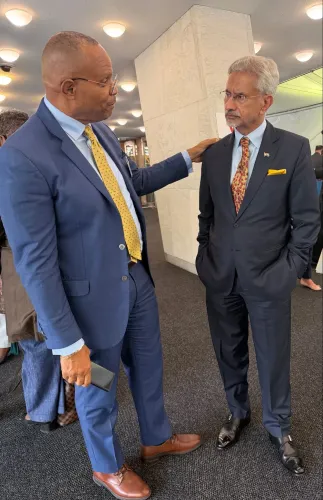
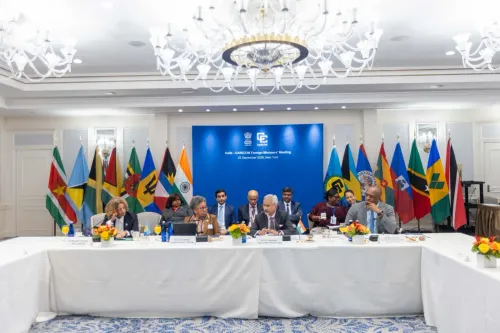
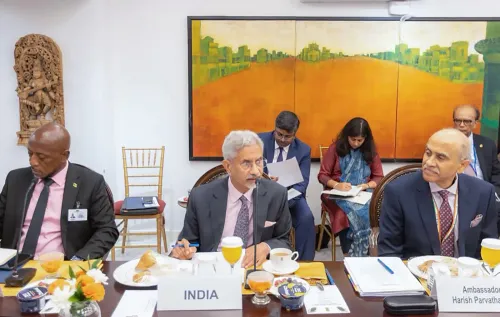
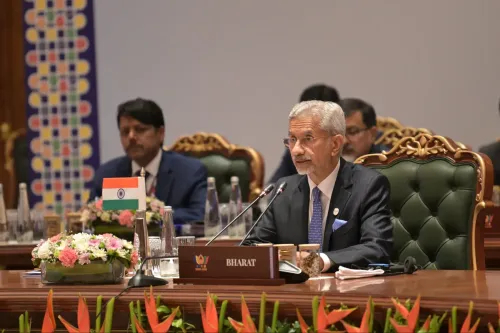
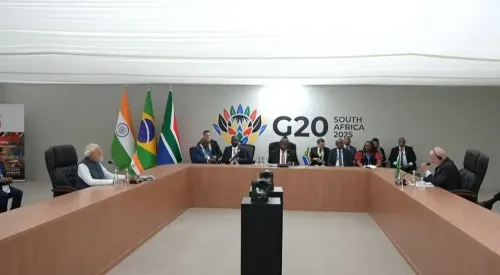
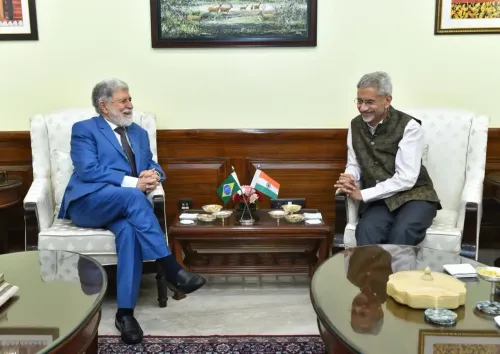
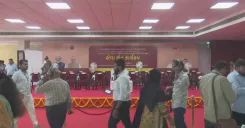
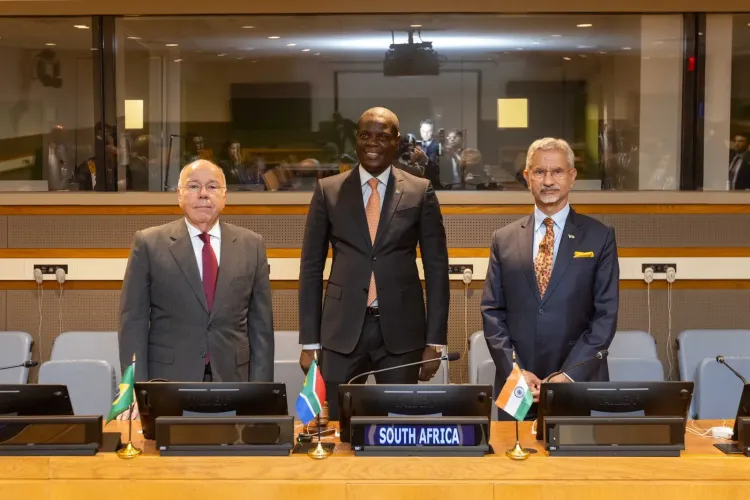
IBSA Foreign Ministers' Meeting held on the sidelines of #UNGA81 with FM Ronald Lamola (South Africa) and FM Mauro Vieira (Brazil) on 25 September 2026 .
Joint statement called for comprehensive UNSC reform to make the body more democratic, representative and reflective of contemporary realities.
All three nations issued a strong condemnation of the Pahalgam terror attack and reaffirmed zero tolerance for terrorism.
Statement backed India-led initiatives including Mission LiFE, Global Biofuels Alliance, International Solar Alliance and CDRI .
Trio committed to tripling renewable energy capacity in the Global South and expanding sustainable fuels including biofuels and low-emission hydrogen.
New commitments on digital infrastructure and AI governance mark an expanded IBSA agenda beyond traditional trade and security topics.
On the sidelines of the UN General Assembly High-Level Week, Union External Affairs Minister Dr. S. Jaishankar sat down with two of the Global South's most consequential voices — South Africa's Foreign Minister Ronald Lamola and Brazil's Foreign Minister Mauro Vieira — and walked out with a joint statement that covered everything from Security Council reform to the Pahalgam terror attack. Twelve agenda points. One clear message: the three democracies of the India-Brazil-South Africa (IBSA) forum are moving in lockstep.
IBSA's renewed voice on UNSC reform
The meeting's most structurally significant demand was a shared call for comprehensive UN Security Council reform — to make the body 'more democratic, representative, legitimate and reflective of contemporary realities,' as the Joint Media Statement put it. This is not a new ask. India has pushed for UNSC expansion since the 1990s, anchoring its case within the G4 grouping alongside Brazil, Germany and Japan. Having Brazil, itself a G4 partner, co-sign this demand from within an IBSA platform amplifies the pressure geometrically.
IBSA was founded in June 2003 in Brasilia precisely to give three large, democratic, multi-ethnic emerging economies a dedicated coordination channel. Over two decades later, its foreign ministers are using the world's highest diplomatic stage to make structural reform of global governance their centrepiece ask.
Pahalgam terror attack condemnation goes trilateral
Buried in the checklist but carrying outsized diplomatic weight: a 'strong condemnation of the Pahalgam terror attack' and a reaffirmation of 'zero tolerance for terrorism.' Securing that language from South Africa and Brazil — neither of which has a direct stake in the attack — represents a concrete diplomatic win for New Delhi. India has consistently sought to internationalise its counter-terror positions through multilateral forums, and a co-signed IBSA statement does exactly that.
Global South economics: food, fuel and fiscal pressure
The three ministers flagged 'concern over the spillover of conflicts on the Global South, particularly through energy and food insecurity, inflation and fiscal pressures.' The framing is deliberate — it positions all three nations as representatives of a broader constituency, not merely national interests. Their joint call for 'balanced, fair and mutually beneficial trade' and reform of global economic governance extends a line India has driven since its G20 presidency in 2023.
India's multilateral climate platform gets IBSA endorsement
The statement explicitly backs Mission LiFE, the Global Biofuels Alliance, the International Solar Alliance, and the Coalition for Disaster Resilient Infrastructure (CDRI) — all initiatives either led or co-anchored by India. The GBA was unveiled in September 2023 during India's G20 presidency; the ISA was co-launched with France at COP21 in Paris in November 2015. Getting both Brazil and South Africa to formally endorse these platforms inside a UN-week joint statement embeds them deeper into the multilateral architecture.
The trio also called for 'tripling renewable energy capacity in the Global South, doubling the global average rate of energy-efficiency improvements, and expanding sustainable fuels including biofuels, biogases and low-emission hydrogen' — language that tracks closely with India's clean-energy diplomatic posture heading into future climate negotiations.
Digital infrastructure and AI: a new IBSA frontier
In a sign of how the forum's agenda has evolved since its 2003 founding, the joint statement also committed to 'universal, meaningful connectivity and greater deployment of digital infrastructure,' and recognised 'AI's immense potential to drive economic growth and sustainable development.' For three nations that together represent over a billion people outside the traditional digital core, that language signals an intent to shape — not merely receive — the rules of the emerging digital economy.
Dr. Jaishankar wrapped up the meeting with a full slate of commitments that span security, economics, climate and technology — proof that IBSA, often overshadowed by BRICS, still has the diplomatic muscle to matter when its three members choose to use it.
Point of View
ISA and Mission LiFE within a UN-week communiqué is also a quiet but effective strategy to embed Indian-designed frameworks into the global institutional fabric before rival architectures crowd them out. IBSA has often been eclipsed by BRICS in headlines, but its democratic credentials give it a distinct legitimacy lane — and Jaishankar appears to be deliberately widening that lane. The digital and AI language in the statement signals that the forum's agenda is evolving in real time, positioning its three members as rule-shapers rather than rule-takers in the next wave of global governance.
NationPress
25 Sept 2026
Frequently Asked Questions
What is IBSA and why does it matter for India?
IBSA — the India-Brazil-South Africa forum — was founded in June 2003 in Brasilia as a South-South cooperation platform for three large, democratic, multi-ethnic emerging economies. It gives India a dedicated channel to coordinate global governance positions with two other influential developing nations, amplifying New Delhi's voice on issues like UNSC reform and climate finance.
What did the IBSA Joint Media Statement say about the Pahalgam terror attack?
The Joint Media Statement issued after the 25 September 2026 IBSA Foreign Ministers' Meeting included a 'strong condemnation of the Pahalgam terror attack' and a reaffirmation of 'zero tolerance for terrorism,' representing a multilateral endorsement of India's counter-terror position by Brazil and South Africa.
What is India's position on UN Security Council reform?
India has advocated comprehensive UNSC reform since the 1990s, including through the G4 initiative with Brazil, Germany and Japan. The IBSA statement calls for the Council to become 'more democratic, representative, legitimate and reflective of contemporary realities,' which aligns with India's longstanding push for a permanent seat.
Which India-led climate initiatives were endorsed at the IBSA meeting?
The IBSA joint statement endorsed Mission LiFE (a behavioural change initiative for sustainable lifestyles launched at COP26 in 2021), the Global Biofuels Alliance (unveiled at India's G20 presidency in September 2023), the International Solar Alliance (co-launched with France at COP21 in 2015) and the Coalition for Disaster Resilient Infrastructure (CDRI) .
What did the IBSA ministers say about AI and digital infrastructure?
The IBSA joint statement committed to 'universal, meaningful connectivity and greater deployment of digital infrastructure,' and recognised 'AI's immense potential to drive economic growth and sustainable development' — marking a significant expansion of the forum's traditional agenda into digital governance and emerging technologies.