Jaishankar meets Liberian MPs, shares India's welfare scheme playbook
Synopsis
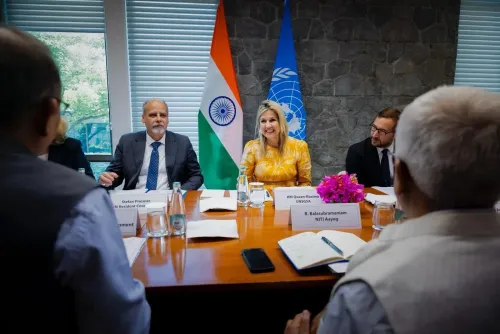
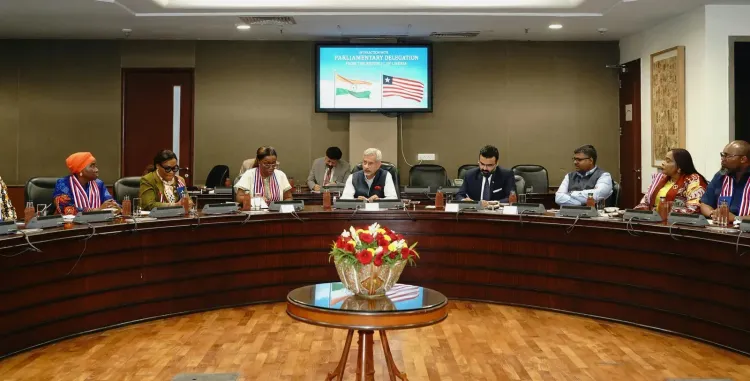
EAM Dr. S. Jaishankar met a Liberian parliamentary delegation in New Delhi on August 11, 2026, under the IBSA-funded peer-learning programme, sharing India's experience with major welfare schemes including Jan Dhan Yojana, Jal Jeevan Mission, and Beti Bachao Beti Padhao as part of India's deepening Global South outreach.
Key Takeaways
Jaishankar met a Liberian parliamentary delegation on August 11, 2026 in New Delhi.
The visit was funded under the IBSA framework — the India-Brazil-South Africa trilateral South-South cooperation forum established in 2003 .
Schemes discussed included Jan Dhan Yojana , MUDRA Yojana , SVAnidhi , Garib Kalyan Anna Yojana , Jal Jeevan Mission , Beti Bachao Beti Padhao , and Mission Amrit Sarovar .
UN Women was associated with the exchange, highlighting a gender-equity dimension to the dialogue.
Jaishankar reaffirmed India's commitment to a 'deeper Global South partnership' with Liberia and other developing nations.
India's welfare state — from zero-balance bank accounts to free grain — is now a diplomatic asset. On Tuesday, August 11, 2026, Union External Affairs Minister Dr. S. Jaishankar met a parliamentary delegation from Liberia visiting India under an IBSA-funded peer-learning programme, walking them through the architecture of some of the country's most consequential social schemes.
India's welfare schemes take centre stage as a South-South export
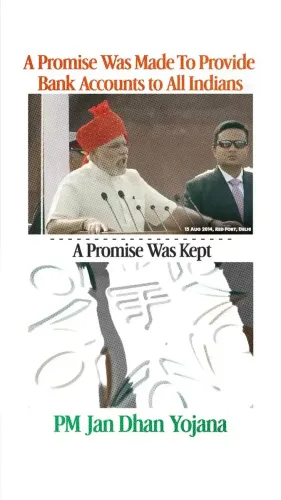
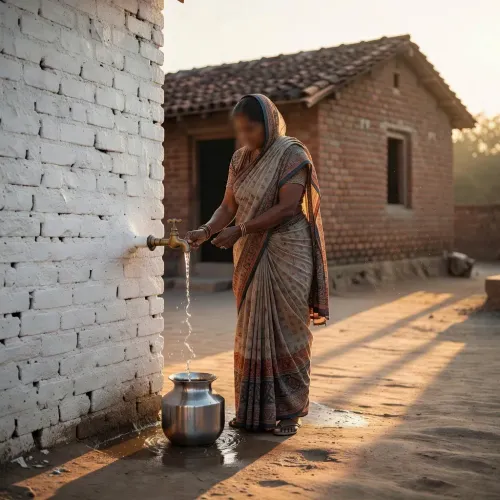
The conversation covered a striking breadth of policy: Pradhan Mantri Jan Dhan Yojana, which has brought hundreds of millions of unbanked Indians into the formal financial system since 2014; MUDRA Yojana, which extends micro-credit to small entrepreneurs; and PM SVAnidhi, designed to provide working capital loans to street vendors. The delegation also heard about Garib Kalyan Anna Yojana, India's massive free-food programme, Jal Jeevan Mission — the 2019 initiative to pipe drinking water into rural homes — and Beti Bachao Beti Padhao Yojana and Mission Amrit Sarovar, covering girl-child welfare and water conservation respectively. UN Women was also tagged in the exchange, signalling a gender-equity dimension to the dialogue.
The IBSA framework powering the exchange
The visit sits within the IBSA forum — the trilateral platform of India, Brazil, and South Africa founded in 2003 to drive South-South cooperation. While IBSA's primary membership is those three democracies, its funded programmes have historically extended to other developing nations, and Liberia's participation here reflects that outreach. For Liberia, a West African nation rebuilding institutions after decades of civil conflict, the chance to study at close range how India deployed technology and state capacity to deliver welfare at scale is a concrete policy dividend.
Africa outreach and the Global South pitch
Jaishankar 'reaffirmed India's commitment towards deeper Global South partnership' — language that has become a consistent thread in New Delhi's diplomatic messaging, particularly with African nations. India has steadily positioned itself not just as a trading partner or aid donor to the developing world, but as a peer with replicable governance solutions. Hosting parliamentary delegations for peer-learning is a quieter but durable form of that influence — legislators who return home having studied Jan Dhan or Jal Jeevan are potential advocates for India-modelled policy back in their own legislatures.
The Liberian delegation's visit is a small but telling data point in that larger pattern — and the list of schemes Jaishankar chose to highlight amounts to a curated pitch for what Indian state capacity, at its best, can look like.
Point of View
New Delhi is not merely sharing notes — it is building a constituency of policymakers familiar with, and potentially receptive to, the Indian development model. The IBSA framework gives this outreach institutional legitimacy beyond bilateral goodwill. As India competes with China for influence across Africa, peer-learning diplomacy of this kind is a low-cost, high-credibility tool.
NationPress
26 Sept 2026
Frequently Asked Questions
What is the IBSA peer-learning programme?
The IBSA peer-learning programme is an initiative under the IBSA forum — the trilateral grouping of India, Brazil, and South Africa founded in 2003 — that funds exchanges of governance and development knowledge between member states and partner developing nations.
Why did a Liberian parliamentary delegation visit India in 2026?
The Liberian parliamentary delegation visited India in August 2026 under an IBSA-funded peer-learning programme to study India's large-scale welfare and development schemes, including Jan Dhan Yojana, Jal Jeevan Mission, and others.
What is Jan Dhan Yojana and why is it relevant to Liberia?
Pradhan Mantri Jan Dhan Yojana, launched in 2014, is India's flagship financial inclusion scheme that brought hundreds of millions of unbanked citizens into the formal banking system. It is seen as a replicable model for developing countries with large unbanked populations.
What is India's Global South policy?
India's Global South policy refers to its diplomatic and development engagement with developing nations across Africa, Asia, and Latin America, positioning India as a partner and peer rather than a donor — sharing governance models, capacity-building, and South-South cooperation.
What is Mission Amrit Sarovar?
Mission Amrit Sarovar is an Indian government initiative focused on building and rejuvenating water bodies across the country, aimed at water conservation and rural development.