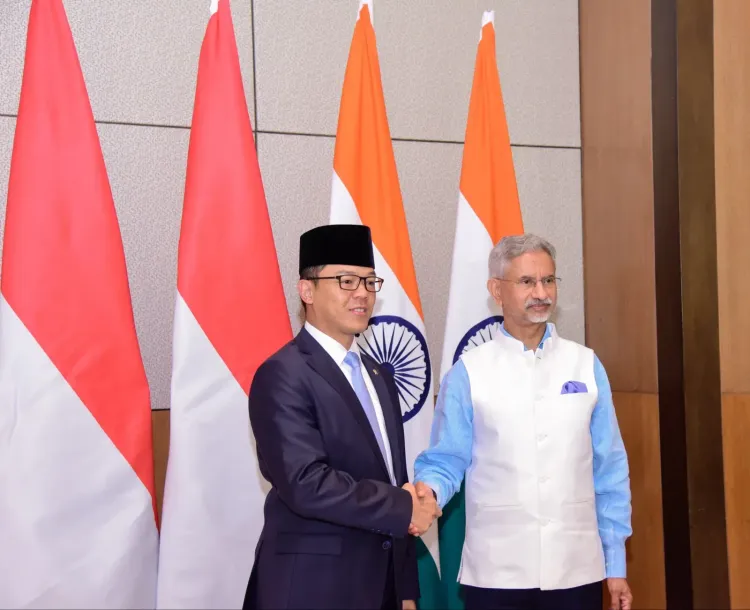
Jaishankar co-chairs 8th India-Indonesia Joint Commission
Synopsis
EAM Dr. S. Jaishankar co-chaired the 8th India-Indonesia Joint Commission with FM Sugiono on June 7, 2026, holding substantive talks on defence, maritime, trade, critical minerals, fintech, and India-ASEAN multilateral coordination under their Comprehensive Strategic Partnership.
Key Takeaways
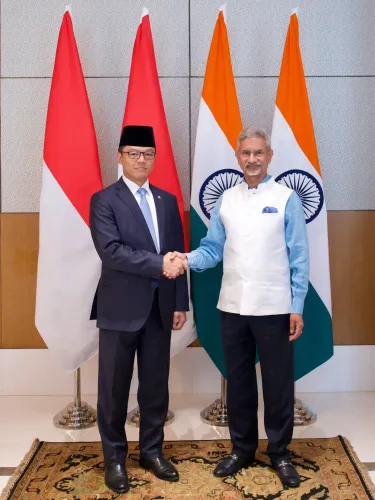
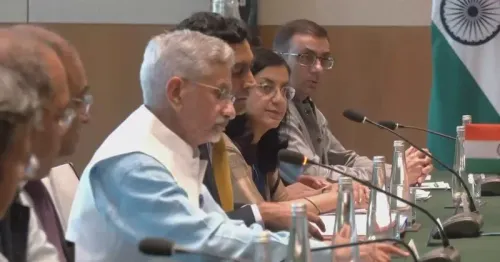
Jaishankar co-chaired the 8th India-Indonesia Joint Commission meeting with Indonesian FM Sugiono on June 7, 2026 .
Discussions covered more than a dozen sectors including defence, maritime, trade, fintech, critical minerals, pharmaceuticals and fertilisers .
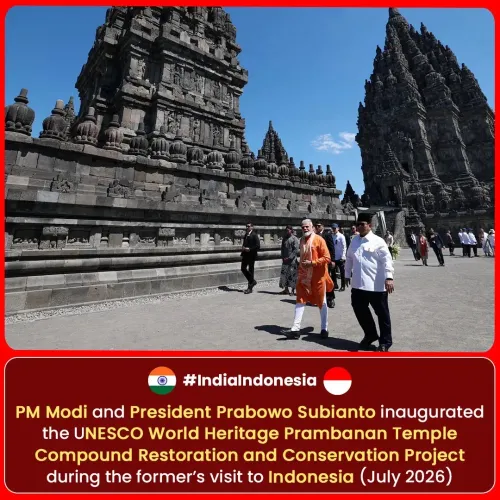
India and Indonesia have held a Comprehensive Strategic Partnership since May 2018 , established during PM Modi's visit to Jakarta .
The two ministers also exchanged views on regional developments and discussed deepening India-ASEAN multilateral coordination.
The Joint Commission mechanism traces its origins to the 2005 India-Indonesia Joint Declaration and serves as the primary institutional review platform for bilateral ties.
Outcomes from the 8th JCM are expected to inform India's posture ahead of the next India-ASEAN Summit .
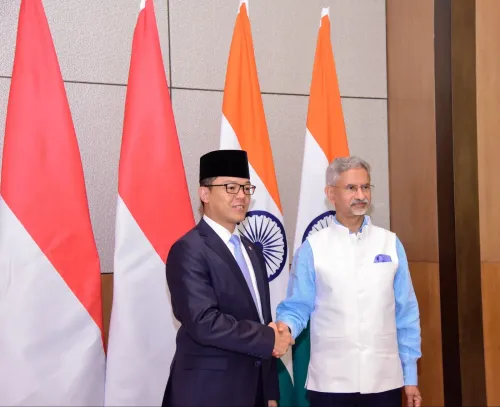
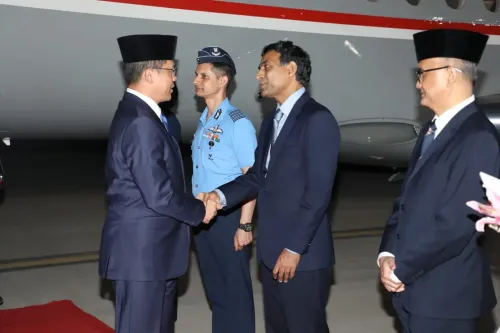
Union External Affairs Minister Dr. S. Jaishankar co-chaired the 8th India-Indonesia Joint Commission (JCM) meeting alongside Indonesian Foreign Minister Sugiono on Sunday, June 7, 2026, holding wide-ranging discussions across political, economic, and security domains under the bilateral Comprehensive Strategic Partnership.
Context
The 8th Joint Commission meeting brought together the two foreign ministers to review and advance cooperation across more than a dozen sectors. Dr. Jaishankar described the meeting as 'substantive,' noting that discussions spanned political ties, defence and security, maritime and shipping, trade, fintech, health, pharmaceuticals, fertilisers, critical minerals, tourism, education, and cultural cooperation. The two sides also exchanged perspectives on regional developments and discussed advancing multilateral coordination.
The Joint Commission mechanism was established under the 2005 India-Indonesia Joint Declaration to provide an institutional platform for periodic review of bilateral cooperation. These meetings serve as a high-level checkpoint to operationalise commitments made at the summit level.
Policy Backdrop
India and Indonesia elevated their relationship to a Comprehensive Strategic Partnership during Prime Minister Narendra Modi's visit to Jakarta in May 2018. Since then, the partnership has expanded steadily across defence, maritime security, trade, and people-to-people engagement, anchored within India's broader Act East Policy and Indo-Pacific strategy.
Indonesia, as the largest member of the Association of Southeast Asian Nations (ASEAN), occupies a pivotal position in India's regional outreach. The two countries share maritime boundaries and democratic credentials, making them natural partners in an era of shifting Indo-Pacific geopolitics. Dr. Jaishankar noted that the Comprehensive Strategic Partnership 'has witnessed a strong growth in recent years.'
The inclusion of sectors such as critical minerals, fintech, and pharmaceuticals in the JCM agenda reflects how the bilateral agenda has broadened well beyond traditional trade and defence to encompass emerging and strategic industries.
Stakeholders and Impact
Indian pharmaceutical and fertiliser exporters stand to benefit from deeper engagement with one of Southeast Asia's largest economies. The maritime and shipping sector — critical to both nations given their extensive coastlines and dependence on sea lanes — is another area where structured cooperation can yield tangible dividends for industry and security planners alike.
The discussion on India-ASEAN ties signals that the bilateral relationship is being leveraged as a channel for broader regional engagement. Defence establishments in both countries, along with businesses in the fintech and critical minerals space, will be watching closely for follow-up measures stemming from the 8th JCM.
What's Next
The outcomes and any agreed deliverables from the 8th Joint Commission meeting are expected to feed into preparations for the next India-ASEAN Summit, where multilateral coordination discussed bilaterally with Indonesia could be advanced at the regional level. Progress on defence and trade agreements emerging from this meeting will be a key indicator of how quickly the partnership can be further operationalised.
With both nations aligned on the importance of a free, open, and rules-based Indo-Pacific, the sustained momentum of the India-Indonesia Joint Commission underscores New Delhi's intent to deepen its institutional architecture with major ASEAN partners as a long-term strategic priority.
Point of View
High-level bilateral mechanisms rather than relying solely on summit-level optics. The broadening of the agenda to include critical minerals, fintech, and pharmaceuticals signals that India views Indonesia not merely as a traditional trade partner but as a strategic node in its supply-chain and Indo-Pacific security architecture. Co-chairing the meeting at the foreign-minister level also reinforces the diplomatic weight both sides are placing on the Comprehensive Strategic Partnership. Sustained engagement of this kind positions India to leverage its Indonesia relationship as a bridge into wider ASEAN multilateral forums.
NationPress
24 Oct 2026
Frequently Asked Questions
What is the India-Indonesia Joint Commission?
The India-Indonesia Joint Commission is a bilateral institutional mechanism established under the 2005 India-Indonesia Joint Declaration to periodically review and advance cooperation across political, economic, defence, and cultural sectors.
When did India and Indonesia become Comprehensive Strategic Partners?
India and Indonesia elevated their ties to a Comprehensive Strategic Partnership in May 2018 during Prime Minister Narendra Modi's visit to Jakarta.
What was discussed at the 8th India-Indonesia Joint Commission meeting?
The 8th JCM covered political ties, defence and security, maritime and shipping, trade, fintech, health, pharmaceuticals, fertilisers, critical minerals, tourism, education, cultural cooperation, and India-ASEAN multilateral coordination.
Who represented Indonesia at the 8th India-Indonesia Joint Commission?
Indonesian Foreign Minister Sugiono co-chaired the 8th India-Indonesia Joint Commission alongside India's External Affairs Minister Dr. S. Jaishankar.
How does the India-Indonesia partnership fit into India's Act East Policy?
Indonesia, as ASEAN's largest member, is a central pillar of India's Act East Policy and Indo-Pacific strategy, with the Joint Commission serving as the key institutional mechanism to operationalise that engagement.