Jaishankar Congratulates Prof. Bimal Patel on ITLOS Election
Synopsis
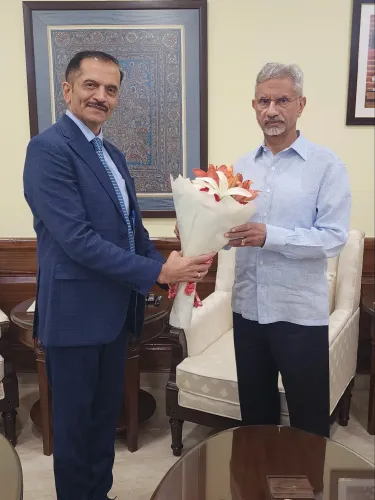
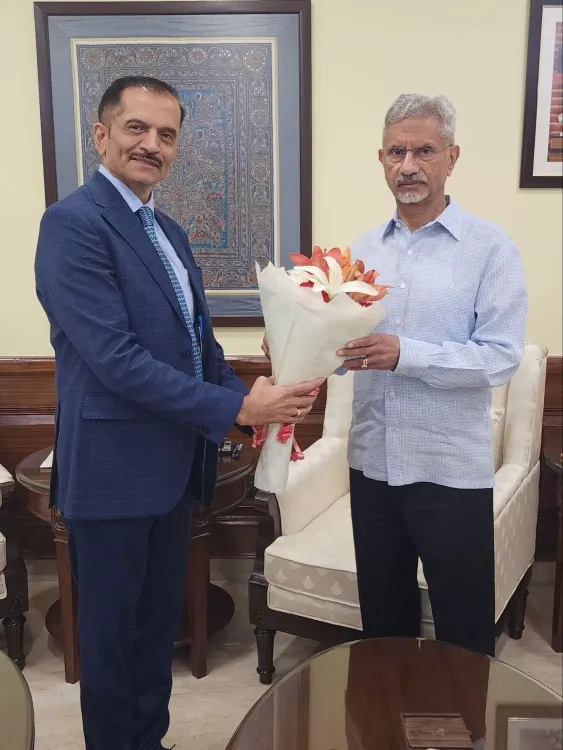
EAM Dr. S. Jaishankar met Prof. Dr. Bimal N. Patel on August 10, 2026, congratulating him on his election as a Judge of ITLOS, the Hamburg-based UN maritime tribunal. Patel, Vice-Chancellor of Gujarat National Law University, joins the bench as India deepens its presence in global judicial institutions.
Key Takeaways
Jaishankar met Prof.
Patel on August 10, 2026 to congratulate him on his ITLOS election.
ITLOS is a Hamburg-based tribunal established under the 1982 UNCLOS to settle maritime disputes between states.
Patel is Vice-Chancellor of Gujarat National Law University and a leading Indian expert in international and maritime law.
India ratified UNCLOS in 1995 , accepting ITLOS jurisdiction as a dispute-settlement option.
ITLOS judges serve nine-year terms , elected in staggered cycles every three years.
India has been systematically working to increase its representation in global judicial and arbitral bodies.
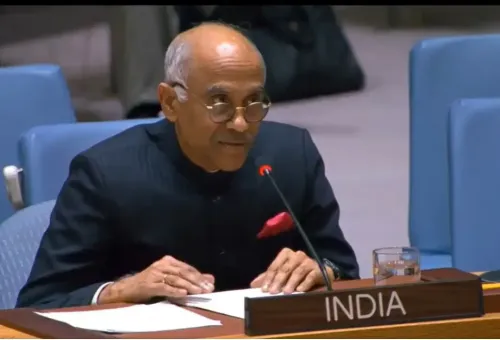
An Indian scholar of international law has earned a seat on one of the world's most consequential maritime tribunals — and India's top diplomat made a point of marking the moment in person. Union External Affairs Minister Dr. S. Jaishankar met Prof. Dr. Bimal N. Patel on Monday, August 10, 2026, to congratulate him on his election as a Judge of the International Tribunal for the Law of the Sea (ITLOS).
Jaishankar posted on X: 'Glad to meet Prof. Dr. Bimal N. Patel today. Congratulated him on his recent election as a Judge of the International Tribunal of the Law of the Sea. Wished him the best for a successful tenure.'
Who is Prof. Dr. Bimal N. Patel?
Prof. Dr. Bimal N. Patel is one of India's foremost experts in international and maritime law, currently serving as Vice-Chancellor of Gujarat National Law University. His academic and policy work spans treaty law, ocean governance, and dispute settlement — precisely the disciplines at the heart of ITLOS's mandate.What ITLOS does — and why India's seat matters
ITLOS is a Hamburg-based independent judicial body established under the 1982 UN Convention on the Law of the Sea (UNCLOS) to adjudicate maritime disputes between states. India ratified UNCLOS in 1995, accepting ITLOS as one of its dispute-settlement options. Judges are elected in staggered cycles, serving nine-year terms, with elections held every three years. Having a sitting Indian judge on the tribunal carries real weight. The Indian Ocean is at the centre of overlapping maritime claims, freedom-of-navigation debates, and deep-sea resource contests — all squarely within ITLOS jurisdiction. An Indian voice on the bench strengthens New Delhi's hand in shaping how the tribunal interprets the very rules that govern these waters.India's push for seats in global judicial institutions
Jaishankar's in-person meeting is not incidental. Indian ministers have made a consistent practice of publicly recognising nationals elected to specialised international tribunals, part of a deliberate, longer-term effort to expand India's footprint in global rule-making and adjudicatory bodies — from the International Court of Justice to trade and arbitration panels. Prof. Patel's election is the latest step in that arc. His tenure at ITLOS will unfold against a docket that increasingly features South Asian and Indian Ocean disputes — cases where India's strategic and economic interests are directly at stake. For New Delhi, this is not just a diplomatic courtesy call. It is a signal that India intends to be present, and consequential, wherever the rules of the sea are written.Point of View
Multi-year strategy of securing representation on international judicial and regulatory bodies — a campaign that runs parallel to its broader 'rules-based order' diplomacy. For Jaishankar, publicly marking the occasion is both a gesture of institutional respect and a quiet assertion that India intends to shape, not merely accept, the norms governing the global commons. With the Indian Ocean increasingly contested — by Chinese maritime expansion, overlapping EEZ claims, and deep-sea resource races — having an Indian judge on the tribunal that interprets UNCLOS is strategically significant, not merely ceremonial. Watch whether New Delhi leverages Prof. Patel's tenure to build coalitions among Indian Ocean littoral states on maritime governance.
NationPress
11 Aug 2026
Frequently Asked Questions
Who is Prof. Dr. Bimal N. Patel and why was he elected to ITLOS?
Prof. Dr. Bimal N. Patel is an Indian international and maritime law expert serving as Vice-Chancellor of Gujarat National Law University. He was elected as a Judge of the International Tribunal for the Law of the Sea (ITLOS), reflecting his expertise in ocean governance and treaty law.
What is ITLOS and what does it do?
ITLOS — the International Tribunal for the Law of the Sea — is an independent judicial body based in Hamburg, Germany, established under the 1982 UN Convention on the Law of the Sea to resolve maritime disputes between states.
Is India a member of ITLOS?
India ratified the UN Convention on the Law of the Sea (UNCLOS) in 1995 and accepted ITLOS as one of its dispute-settlement mechanisms, making it a state party subject to the tribunal's jurisdiction.
How long is an ITLOS judge's term?
ITLOS judges serve nine-year terms. Elections are held every three years for a portion of the 21-member bench, ensuring continuity through staggered appointments.
Why did Jaishankar meet Prof. Bimal Patel?
EAM Dr. S. Jaishankar met Prof. Patel on August 10, 2026, to personally congratulate him on his election as an ITLOS judge and wish him a successful tenure — consistent with India's practice of recognising nationals appointed to major international judicial bodies.