Jaishankar Greets Lebanon on National Day, Eyes Deeper Ties
Synopsis
On Lebanon's National Day, 22 November 2026, EAM Dr. S. Jaishankar greeted FM Youssef Raggi and the Lebanese people, expressing India's intent to deepen bilateral ties — a courteous diplomatic signal consistent with New Delhi's even-handed engagement across the Middle East.
Key Takeaways
Jaishankar extended greetings to Lebanon on its National Day, 22 November 2026 .
Jaishankar addressed Lebanese Foreign Minister Youssef Raggi directly by name in the message.
India and Lebanon have maintained diplomatic relations since the late 1940s .
The minister expressed a desire to 'further deepen' the bilateral relationship, consistent with India's Middle East outreach posture.
India routinely exchanges National Day greetings with partner nations as part of its even-handed engagement across the region.
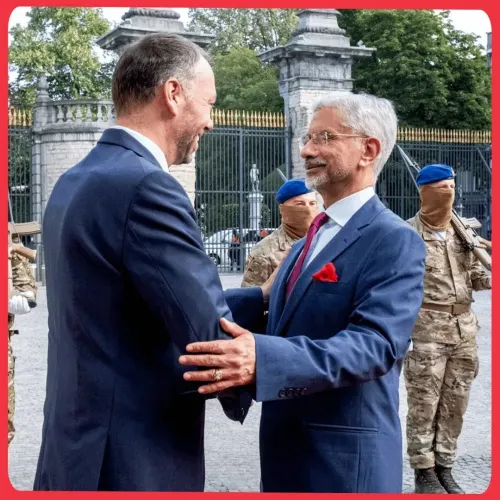
On the day Lebanon marks its independence, Union External Affairs Minister Dr. S. Jaishankar extended warm greetings to Beirut and expressed India's intent to deepen the bilateral relationship — a signal, however routine in diplomatic protocol, that New Delhi keeps its channels to the Levant carefully tended.
Posting on 22 November 2026 — Lebanon's National Day — Jaishankar addressed Foreign Minister Youssef Raggi directly, writing: 'Greetings to FM Youssef Raggi, the Government and people of Lebanon on their National Day. Look forward to further deepening our relationship.' The dual-flag flourish — 🇮🇳🇱🇧 — underscored the gesture's warmth.
India-Lebanon ties: a quiet but durable diplomatic thread
India and Lebanon established diplomatic relations in the late 1940s, shortly after Lebanon's own independence. The ties have remained modest in headline terms but steady — sustained by trade links, a small but present Indian expatriate community, and New Delhi's broader policy of maintaining courteous engagement across the Middle East and the Levant without deep entanglement in regional tensions.
Jaishankar's mention of 'further deepening' the relationship is consistent with India's wider diplomatic posture in the region: even-handed, present, and incrementally expansive. As External Affairs Minister since 2019, he has made a habit of personalising such exchanges — addressing counterpart ministers by name rather than issuing a generic government statement — a small but deliberate touch that diplomats read as a marker of attentiveness.
Lebanon's National Day and the symbolism of the date
November 22 marks Lebanon's independence from the French Mandate, proclaimed in 1943. The date carries particular weight given the turbulence Lebanon has endured in recent years — economic collapse, political deadlock, and the aftershocks of regional conflict. A direct, public greeting from one of Asia's most active foreign ministers lands with quiet significance in that context.
India's pattern of issuing National Day greetings to partner nations is well-established, but Jaishankar consistently uses such moments to lay a small diplomatic brick — a forward-looking phrase, a named counterpart, an open door. Whether this sparks a follow-up bilateral meeting at a multilateral forum such as the United Nations remains to be tracked.
For a nation navigating a complex neighbourhood, every courteous signal to Beirut is also a message to the broader Middle East: India is watching, and India is here.
Point of View
Low-friction ties across the entire Middle East and Levant — avoiding alignment with any single bloc while keeping every door open. The personal address to FM Raggi by name, rather than a generic government communique, reflects Jaishankar's known style of investing diplomatic capital even in ceremonial moments. With Lebanon's political and economic situation remaining fragile, India's visible engagement carries a soft-power dimension that extends beyond mere courtesy. Watch for whether this exchange translates into a bilateral meeting on the sidelines of a multilateral forum in the months ahead.
NationPress
22 Nov 2026
Frequently Asked Questions
When is Lebanon's National Day?
Lebanon's National Day falls on 22 November , commemorating the proclamation of independence from the French Mandate in 1943 .
What did Jaishankar say to Lebanon on National Day 2026?
EAM Dr. S. Jaishankar greeted FM Youssef Raggi and the Lebanese people, saying he looks forward to 'further deepening' the India-Lebanon relationship.
What are India-Lebanon diplomatic relations like?
India and Lebanon established diplomatic relations in the late 1940s . Ties have remained steady, supported by trade and New Delhi's broader policy of even-handed engagement across the Middle East.
Who is Youssef Raggi?
Youssef Raggi is addressed by Jaishankar as the Foreign Minister of Lebanon. Details of his tenure cannot be independently verified from available information.
Why does India send National Day greetings to countries like Lebanon?
India routinely exchanges National Day greetings with partner nations as part of its diplomatic practice of maintaining courteous bilateral channels, particularly across the Middle East and Levant.