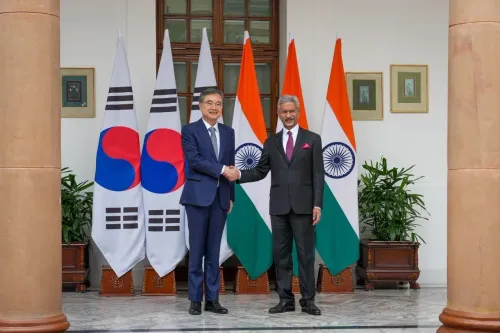
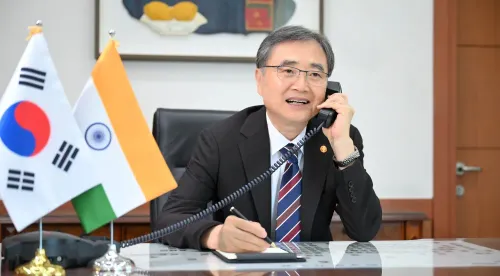
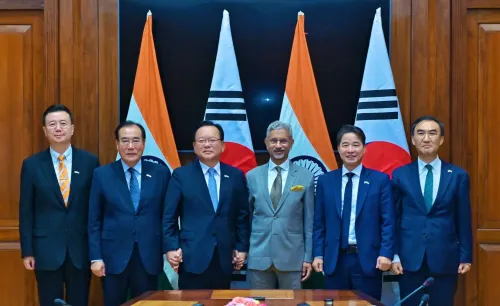
Jaishankar greets South Korea on National Liberation Day
Synopsis
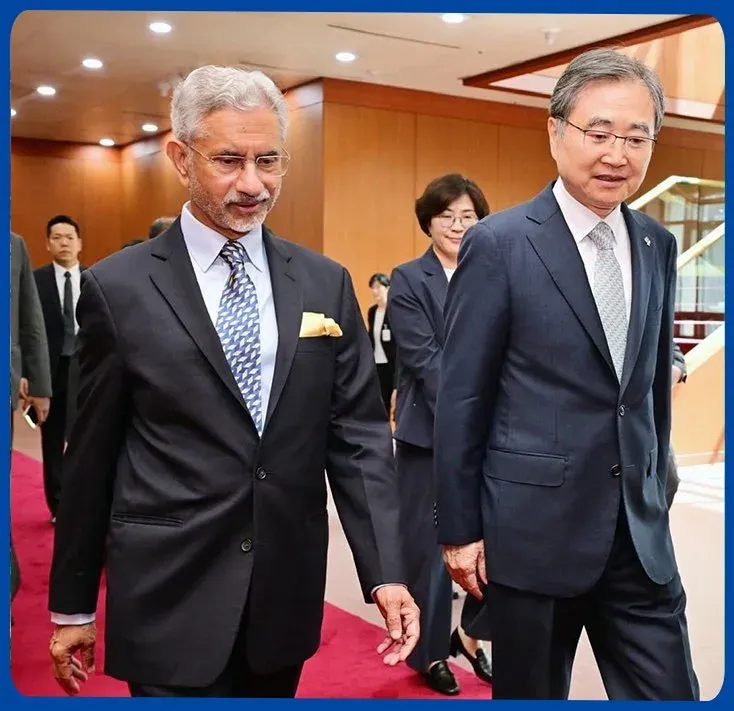
On August 15 — a date both nations celebrate as a liberation milestone — EAM Dr. S. Jaishankar greeted South Korea's FM and people, reaffirming India's Special Strategic Partnership with Seoul under the Act East Policy framework.
Key Takeaways
Jaishankar extended greetings to South Korea on its National Liberation Day, August 15 .
India and South Korea share a Special Strategic Partnership established in 2015 , covering trade, technology, defence, and Indo-Pacific cooperation.
A Comprehensive Economic Partnership Agreement signed in 2009 underpins the bilateral trade relationship.
The message is part of India's broader Act East Policy outreach to East Asian strategic partners.
Both countries mark August 15 as a liberation milestone, giving the annual exchange added symbolic weight.
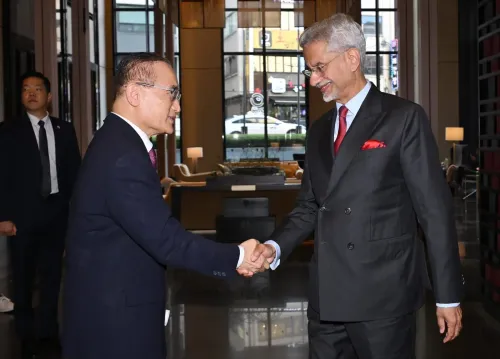
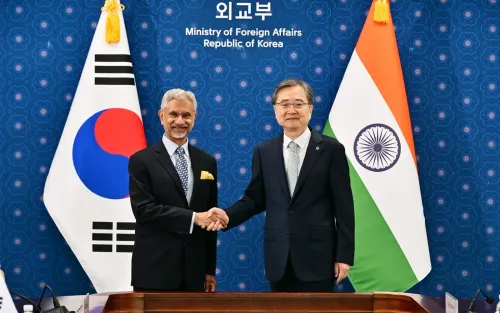
On a day when both India and South Korea mark their independence from colonial rule, Union External Affairs Minister Dr. S. Jaishankar extended greetings to Seoul on South Korea's National Liberation Day, August 15 — a date the two nations share as a symbol of hard-won freedom.
Addressing South Korean Foreign Minister Cho Hyun directly on X, Dr. Jaishankar wrote: 'Greetings to FM Cho Hyun, the Government and people of Republic of Korea on their National Liberation Day. Committed to advancing our Special Strategic Partnership.'
A partnership built on more than goodwill
The message is brief, but the diplomatic architecture behind it is substantial. India and South Korea have been bound by a Special Strategic Partnership since 2015, a framework that spans trade, technology, defence, and broader Indo-Pacific cooperation. The foundation was laid even earlier — a Comprehensive Economic Partnership Agreement signed in 2009 gave the relationship its commercial spine before the strategic upgrade followed. India's outreach to East Asian partners on National Days is a deliberate instrument of its Act East Policy, and South Korea sits near the top of that priority list. The shared August 15 date — Liberation Day for South Korea, Independence Day for India — gives this annual exchange a resonance that goes beyond protocol.Why the 'Special Strategic' label matters
Not every bilateral relationship earns the 'Special Strategic Partnership' designation. For New Delhi, it signals a tier of engagement reserved for partners with whom India shares convergent interests across multiple domains simultaneously. With Seoul, those interests include semiconductor supply chains, shipbuilding, defence manufacturing, and a common stake in a stable Indo-Pacific order. Dr. Jaishankar's reaffirmation of commitment on this symbolic date keeps the signal clear: the partnership is active, not archival. The next concrete test will come at the next India-ROK summit or any review of the CEPA, where the two sides are expected to translate goodwill into deliverables on trade and technology.Point of View
A date both nations hold as foundational, the gesture carries more symbolic weight than a routine greeting. It also fits a broader pattern: India's Act East Policy depends on frequent, visible engagement with East Asian partners to signal strategic seriousness in the Indo-Pacific. The real measure of intent, however, will come when the two sides next sit across a table to review CEPA commitments and defence-technology cooperation.
NationPress
15 Aug 2026
Frequently Asked Questions
What is the India-South Korea Special Strategic Partnership?
The Special Strategic Partnership is a bilateral framework established in 2015 that elevates India-South Korea ties across trade, technology, defence, and Indo-Pacific strategy, building on the Comprehensive Economic Partnership Agreement signed in 2009 .
Why does South Korea celebrate National Liberation Day on August 15?
South Korea observes August 15 as Gwangbokjeol (National Liberation Day), marking its liberation from Japanese colonial rule in 1945 — the same date India celebrates its independence from British rule.
What is India's Act East Policy?
India's Act East Policy is a diplomatic framework that prioritises deeper engagement with East and Southeast Asian nations, treating them as key partners in trade, technology, and Indo-Pacific security.
What is the India-South Korea CEPA?
The Comprehensive Economic Partnership Agreement (CEPA) between India and South Korea, signed in 2009 , is a free-trade framework covering goods, services, and investment that forms the commercial backbone of the bilateral relationship.