Jaishankar launches Operation Amistad, sends aid to Venezuela
Synopsis
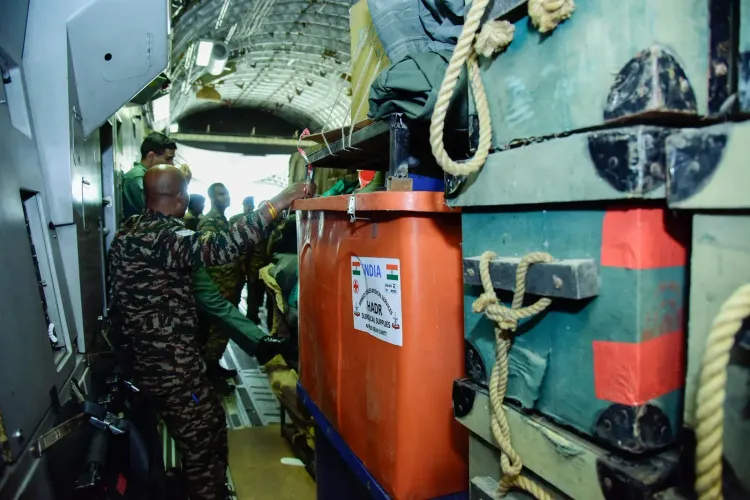
India has launched Operation Amistad, deploying two IAF C-17 aircraft to earthquake-hit Venezuela with an Indian Army Field Hospital Unit, over 35 tonnes of relief supplies, and two BHISHM Cubes. External Affairs Minister Dr. S. Jaishankar confirmed the mission on 26 June 2026, reaffirming India's commitment to Global South humanitarian partnerships.
Key Takeaways
Operation Amistad launched on 26 June 2026 by India in response to a post-earthquake humanitarian crisis in Venezuela .
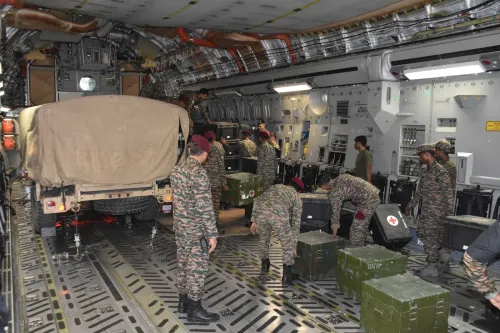
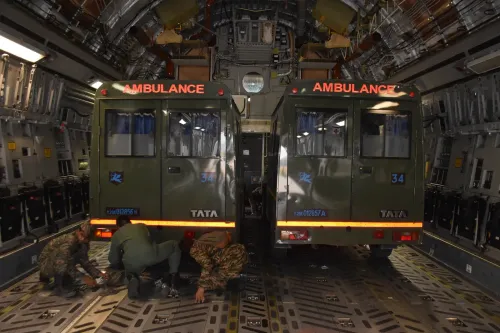
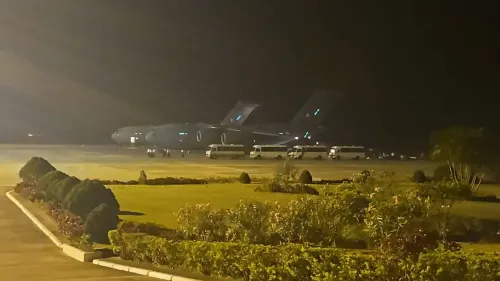
Two IAF C-17 Globemaster aircraft took off carrying the relief consignment.
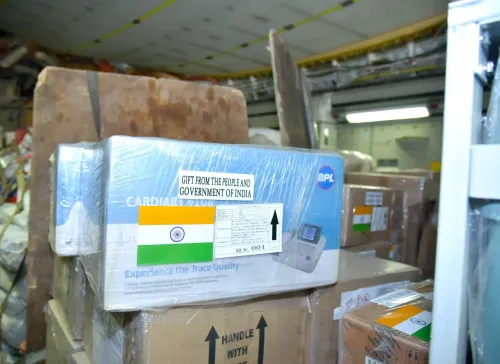
The mission includes an Indian Army Field Hospital Unit and over 35 tonnes of relief supplies, medicines and medical equipment.
Two BHISHM Cubes — India's indigenous portable field medical units — are part of the deployment, marking a significant use of domestic defence technology in overseas relief.
The operation follows the precedent of Operation Maitri (Nepal, 2015) and Operation Dost (Turkey and Syria, 2023), cementing India's 'first responder' HADR doctrine.
India and Venezuela share longstanding diplomatic and energy ties; this mission adds a humanitarian dimension to the bilateral relationship.
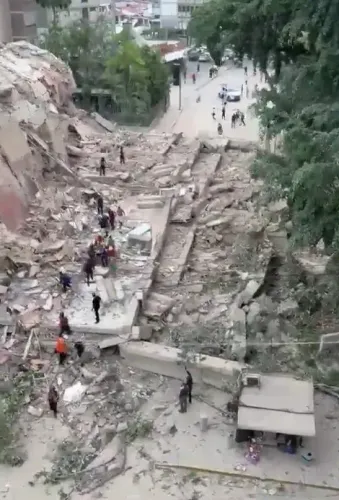
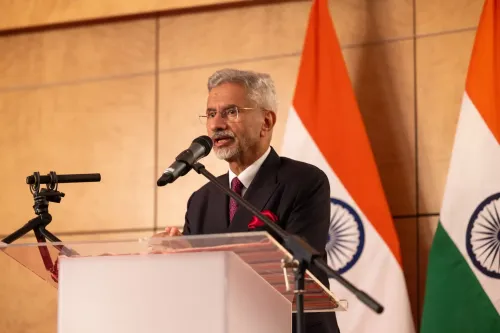
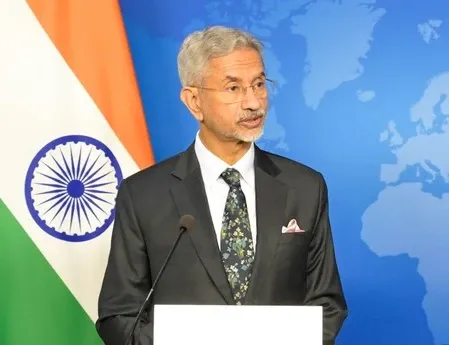
Union External Affairs Minister Dr. S. Jaishankar announced on Friday, 26 June 2026 that India has launched Operation Amistad, dispatching two Indian Air Force C-17 Globemaster aircraft to Venezuela carrying urgent humanitarian assistance in the wake of a devastating earthquake.
Context
Posting on X, Dr. Jaishankar confirmed that the two IAF C-17 aircraft had taken off carrying an Indian Army Field Hospital Unit, over 35 tonnes of relief supplies, medicines and medical equipment, and two BHISHM Cubes — India's indigenous portable medical facilities designed for rapid disaster deployment. 'India is committed to support the Government and people of Venezuela in this difficult time,' he wrote.
The operation's name — Amistad, Spanish for 'friendship' — signals the diplomatic register of the mission, underscoring New Delhi's intent to frame the relief effort as an expression of bilateral solidarity rather than a routine aid transfer.
Policy Backdrop
Operation Amistad follows a well-established template in India's humanitarian assistance and disaster relief (HADR) playbook. In 2015, Operation Maitri saw India mount large-scale rescue and relief operations after Nepal's catastrophic earthquake. In 2023, Operation Dost deployed C-17s with field hospitals and supplies to Turkey and Syria following the deadly earthquake that struck both countries.
The BHISHM Cube — Battlefield Health Information System for Holistic Management — is an indigenously developed modular medical unit capable of being airlifted and operationalised within hours of arrival. Its inclusion in the Venezuela mission reflects India's growing emphasis on deploying domestic defence technology in international relief operations, reinforcing the 'Make in India' dimension of its foreign policy outreach.
India and Venezuela share longstanding diplomatic and energy ties, with Caracas historically being a significant crude oil supplier to Indian refineries. The relief mission adds a humanitarian layer to what has been primarily an economic relationship.
Stakeholders and Impact
The most immediate beneficiaries are Venezuelan civilians affected by the earthquake, who will receive direct medical care through the Indian Army Field Hospital Unit and access to the medicines and equipment flown in. The 35-plus tonnes of relief supplies represent a substantial logistical commitment, requiring the full strategic airlift capacity of two C-17 sorties.
For the Indian Army and IAF, the operation reinforces their role as instruments of 'first responder' diplomacy — a posture New Delhi has cultivated across the Global South over the past decade. Countries in Latin America, Africa, and Southeast Asia have increasingly been recipients of India's HADR outreach, deepening people-to-people and government-to-government ties beyond trade and investment.
What's Next
Attention will now turn to the field hospital's deployment on the ground in Venezuela, with progress reports expected from both the Indian Embassy in Caracas and the Ministry of External Affairs in New Delhi. Any high-level contact between External Affairs Minister Jaishankar and his Venezuelan counterpart in the coming days would signal whether the relief effort catalyses a broader diplomatic reset between the two countries.
As India deepens its engagement with the Global South through forums such as the Voice of Global South Summit, operations like Amistad serve as tangible proof points of New Delhi's claim to be a reliable partner in times of crisis — a narrative that carries growing strategic weight in multilateral diplomacy.
Point of View
New Delhi is simultaneously projecting humanitarian capacity and technological self-reliance to a Latin American audience. The operation fits a decade-long pattern in which India uses military HADR assets to build political capital with the Global South, a constituency it has actively courted since the G20 New Delhi Declaration of 2023. For Venezuela, a country navigating complex relationships with both Western powers and China, India's swift, no-strings relief offer positions New Delhi as a credible third option — a role Dr. Jaishankar has consistently sought to institutionalise across the developing world.
NationPress
26 Jun 2026
Frequently Asked Questions
What is Operation Amistad India?
Operation Amistad is India's humanitarian relief mission launched on 26 June 2026 to assist Venezuela following an earthquake. It involves two IAF C-17 aircraft carrying an Indian Army Field Hospital Unit , over 35 tonnes of relief supplies, and two BHISHM Cubes .
What are BHISHM Cubes?
BHISHM Cubes are indigenously developed, modular portable medical units that can be rapidly airlifted and operationalised at disaster sites. They are designed to function as self-contained field hospitals and have been deployed by India in international HADR missions.
What is India's history of disaster relief operations abroad?
India has a strong track record of overseas HADR operations, including Operation Maitri after the Nepal earthquake in 2015 and Operation Dost following the Turkey-Syria earthquakes in 2023 . These missions typically use IAF C-17 aircraft and deploy Army medical units.
Why did India send relief to Venezuela?
India dispatched relief to Venezuela following a post-earthquake humanitarian crisis. External Affairs Minister Dr. S. Jaishankar stated that India is committed to supporting the Government and people of Venezuela in this difficult time, reflecting both humanitarian concern and India's 'first responder' diplomatic posture.
What is India's relationship with Venezuela?
India and Venezuela have longstanding diplomatic and energy ties, with Venezuela historically supplying crude oil to Indian refineries. Operation Amistad adds a humanitarian dimension to this primarily economic bilateral relationship.