Jaishankar meets Liechtenstein's Hereditary Prince Alois on State Visit
Synopsis
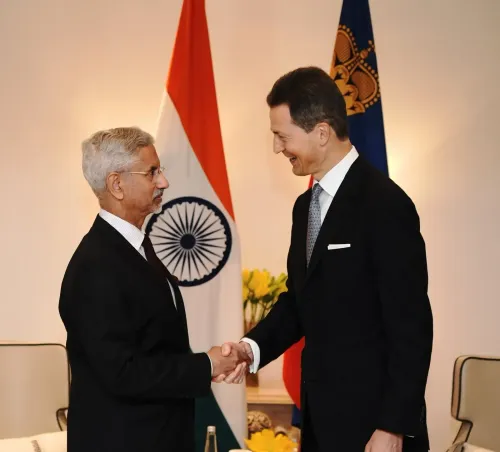
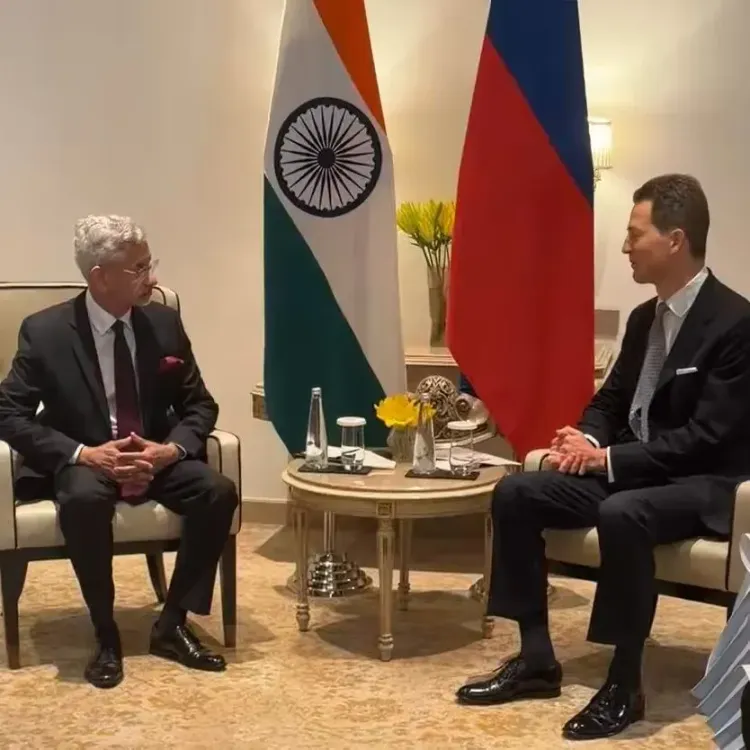
EAM Dr. S. Jaishankar called on Liechtenstein's Hereditary Prince Alois during his State Visit to India on 27 October 2026, flagging the India-EFTA TEPA as the driver of bilateral momentum ahead of the Prince's meeting with PM Modi.
Key Takeaways
Hereditary Prince Alois of Liechtenstein is on a State Visit to India on 27 October 2026 .
Jaishankar held a bilateral call with the Prince, marking the formal diplomatic opening of the visit.
The India–EFTA Trade and Economic Partnership Agreement (TEPA) , signed on 10 March 2024 , is cited as the key driver of bilateral momentum.
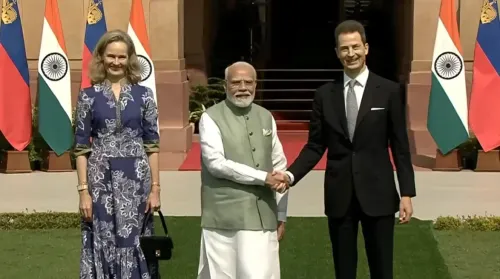
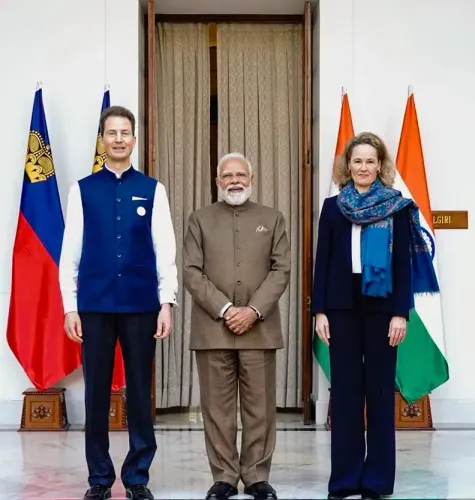
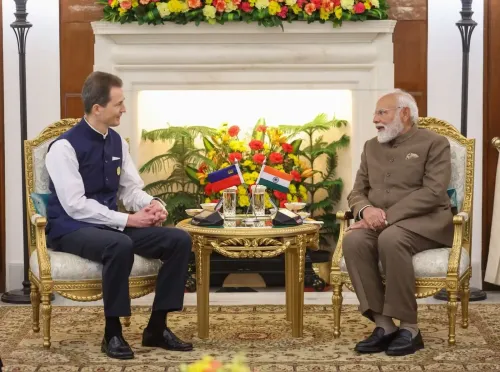
A meeting between Hereditary Prince Alois and PM Narendra Modi was scheduled for later the same day.
Liechtenstein is an EFTA member state alongside Switzerland, Norway, and Iceland, all co-signatories of the TEPA.
Key sectors targeted under TEPA include pharmaceuticals, precision machinery, and services .
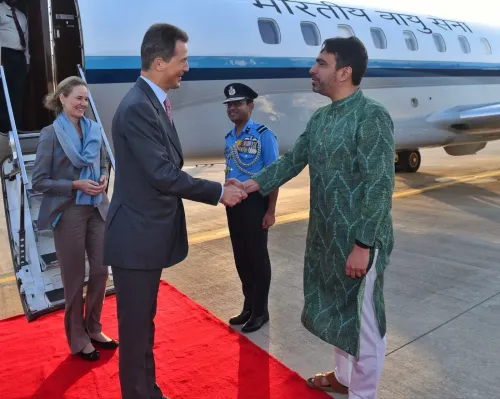
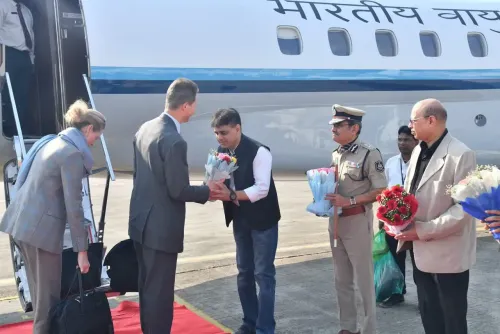
A royal visitor from one of Europe's smallest nations arrived in New Delhi on Tuesday, 27 October 2026 carrying the weight of a landmark trade agreement — and Union External Affairs Minister Dr. S. Jaishankar was the first to receive him. H.S.H. Hereditary Prince Alois of Liechtenstein, who serves as Regent of the Alpine principality, is in India on a State Visit, and Jaishankar's bilateral call set the diplomatic tone ahead of what promises to be the day's centrepiece: a meeting with Prime Minister Narendra Modi.
EFTA TEPA — the engine behind this royal visit
This is not a courtesy call. The India–EFTA Trade and Economic Partnership Agreement, signed on 10 March 2024, is the structural backbone of the visit. Liechtenstein is one of the four member states of the European Free Trade Association (EFTA) — alongside Switzerland, Norway, and Iceland — that collectively inked that landmark pact with India. TEPA was designed to expand market access, attract investment, and reduce tariffs across high-value sectors including pharmaceuticals, precision machinery, and services.
Jaishankar noted on X that 'our bilateral partnership is witnessing strong momentum across a wide range of domains, driven by the opportunities enabled by India–EFTA TEPA.' That momentum now needs converting into concrete project commitments — which is precisely where the Modi meeting comes in.
Why Liechtenstein punches above its size
Liechtenstein is a landlocked principality of roughly 160 square kilometres, yet it hosts a disproportionately dense cluster of precision manufacturing and financial services firms. For India's investment-hungry economy, that makes the principality — and its EFTA membership — strategically relevant far beyond its geography. The Hereditary Prince, who has conducted official state business as Regent, carries the full diplomatic authority of the ruling house of Vaduz in all such engagements.
India has been methodically working through a series of bilateral trade arrangements with European partners over the past several years, deliberately diversifying beyond traditional blocs. TEPA was a flagship moment in that strategy, and state visits like this one are the diplomatic machinery that turns treaty text into actual trade and investment flows.
Modi meeting the day's key deliverable
Jaishankar's post makes clear the visit's immediate next milestone: Hereditary Prince Alois's scheduled meeting with PM Modi later on 27 October. High-level government-to-government engagement of this kind typically yields agreed frameworks on investment facilitation, sector-specific working groups, or joint statements that give businesses on both sides a clear signal. For Indian exporters seeking European market entry — and for EFTA investors eyeing India's manufacturing and services sectors — the outcomes of that conversation will be the ones to watch.
Point of View
Not just headline agreements. For smaller EFTA members like Liechtenstein, direct head-of-state access to Delhi is itself a signal of how seriously India is treating this bloc.
NationPress
27 Oct 2026
Frequently Asked Questions
What is the India-EFTA TEPA?
The India–EFTA Trade and Economic Partnership Agreement (TEPA) is a landmark trade pact signed on 10 March 2024 between India and the four EFTA member states — Switzerland, Norway, Iceland, and Liechtenstein. It aims to expand market access, attract foreign investment, and reduce tariffs in sectors such as pharmaceuticals, machinery, and services.
Who is Hereditary Prince Alois of Liechtenstein?
Hereditary Prince Alois is the Regent of the Principality of Liechtenstein, who conducts official state business and represents the country in diplomatic engagements on behalf of the ruling House of Liechtenstein.
Why is Liechtenstein important for India's trade?
Despite being one of Europe's smallest nations, Liechtenstein hosts a dense cluster of precision manufacturing and financial services companies. As an EFTA member, it is a co-signatory of the India–EFTA TEPA, making it a relevant partner for Indian exporters and for EFTA investors looking at India's economy.
What was the purpose of EAM Jaishankar's meeting with the Hereditary Prince?
EAM Dr. S. Jaishankar called on Hereditary Prince Alois to advance India–Liechtenstein bilateral ties, particularly around opportunities created by the India–EFTA TEPA, and to set the stage for the Prince's subsequent meeting with PM Narendra Modi .
Is PM Modi meeting Hereditary Prince Alois of Liechtenstein?
Yes. According to Jaishankar's post on 27 October 2026 , PM Narendra Modi was scheduled to meet Hereditary Prince Alois later the same day to advance bilateral cooperation under the India–EFTA TEPA framework.