Jaishankar Meets Oman FM Al Busaidi in Manila
Synopsis
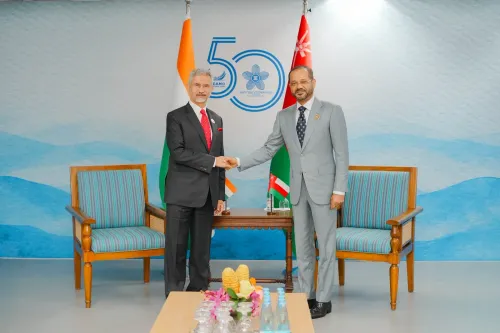
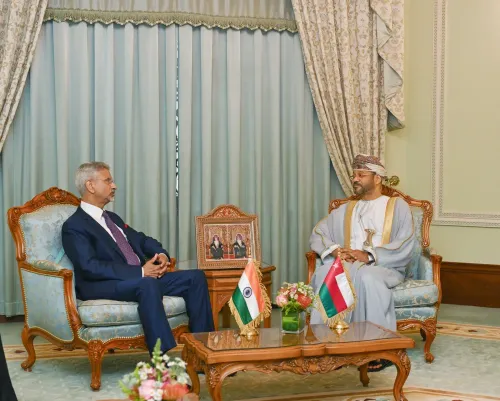
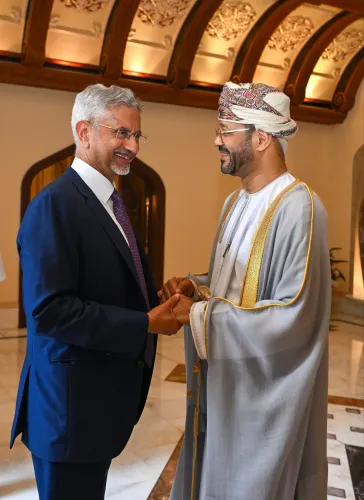
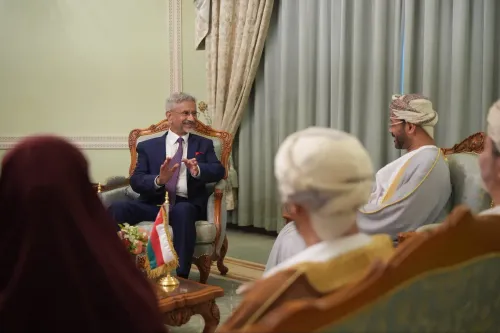
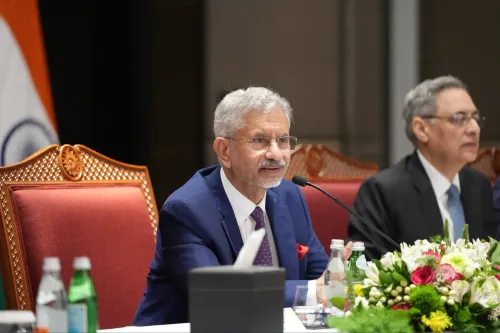
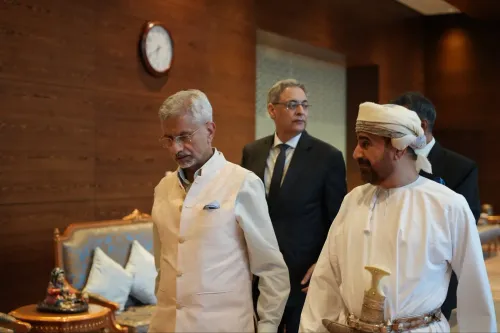
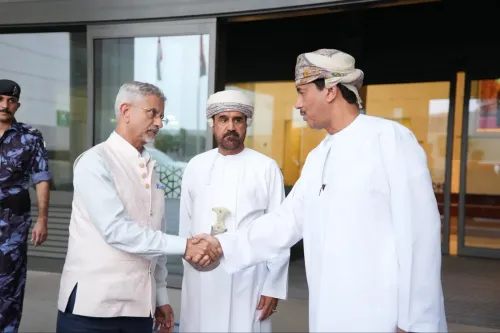
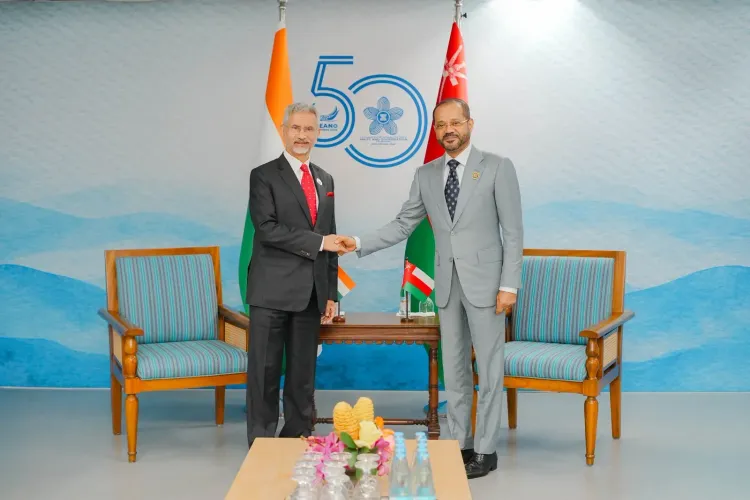
External Affairs Minister Dr. S. Jaishankar met Oman's Foreign Minister Sayyid Badr bin Hamad Al Busaidi in Manila on 24 July 2026. The two ministers exchanged views on Gulf region developments and agreed to stay in contact, reflecting India's sustained high-level diplomatic engagement with GCC partners to safeguard regional stability and national interests.
Key Takeaways
Jaishankar met Oman FM Sayyid Badr bin Hamad Al Busaidi in Manila on 24 July 2026 .
The two ministers exchanged perspectives on 'recent developments in the Gulf region .' Both sides agreed to 'remain in touch,' indicating follow-up engagement is expected.
India and Oman are bound by a Defence Cooperation Agreement first signed in 2006 and renewed periodically.
Oman is a longstanding GCC partner viewed by New Delhi as a reliable interlocutor in West Asia .
The meeting reflects India's broader pattern of conducting bilateral diplomacy on the margins of multilateral gatherings.
Union External Affairs Minister Dr. S. Jaishankar met with Oman's Foreign Minister Sayyid Badr bin Hamad Al Busaidi in Manila on Thursday, 24 July 2026, on the sidelines of a multilateral gathering, exchanging views on recent developments in the Gulf region and agreeing to remain in close contact.
Context
Dr. Jaishankar described the meeting as productive, stating on X that the two ministers 'exchanged perspectives on the recent developments in the Gulf region' and 'agreed to remain in touch.' The meeting in Manila underscores India's practice of conducting bilateral consultations on the margins of multilateral forums to advance its regional diplomatic agenda.
Sayyid Badr bin Hamad Al Busaidi is Oman's principal diplomat, responsible for the Sultanate's external relations and its active role in Gulf Cooperation Council (GCC) diplomacy. Oman has long been regarded by New Delhi as a reliable and discreet interlocutor in West Asia, owing to its tradition of maintaining open channels with a broad range of regional actors.
Policy Backdrop
India and Oman share a multi-layered strategic partnership anchored in defence, trade, energy and people-to-people ties. A Defence Cooperation Agreement, first signed in 2006 and renewed periodically, provides the formal framework for bilateral security collaboration, including Indian naval visits and joint maritime exercises that have continued since the early 2000s.
The Gulf region holds outsized importance for India as the primary source of its energy imports and home to a large Indian diaspora community whose remittances form a significant part of the national economy. Any instability in the region therefore carries direct economic and humanitarian implications for New Delhi.
Stakeholders and Impact
The Indian diaspora in the Gulf — numbering in the millions — represents one of the most immediate stakeholder groups watching India-Oman diplomatic engagement. Their welfare, employment prospects and safe passage in times of regional turbulence are directly tied to the quality of bilateral relations that meetings such as this one are designed to sustain.
Energy importers, including Indian public-sector refiners and private sector buyers who source crude from Gulf producers, also have a stake in stable diplomatic channels between India and GCC states. Consistent high-level contact helps ensure that supply-chain disruptions can be addressed through diplomatic means before they escalate.
What's Next
Both ministers agreed to 'remain in touch,' signalling that the Manila meeting is likely a precursor to further consultations rather than a standalone engagement. Observers will watch for any follow-up bilateral or GCC-related forum where India and Oman may coordinate positions on Gulf security dynamics.
The meeting reinforces a broader pattern of India sustaining high-frequency diplomatic contact with GCC partners — a pattern that has intensified as regional fault lines have shifted. Dr. Jaishankar's engagement with Al Busaidi in Manila suggests that managing Gulf stability remains a live and active priority for New Delhi, irrespective of the geographic setting of any given multilateral gathering.
Point of View
Dr. Jaishankar signals that New Delhi wants its active Gulf engagement on the record — part of a broader effort to reassure domestic stakeholders, especially the diaspora and energy sector, that Indian diplomacy is tracking regional developments in real time. The agreement to 'remain in touch' leaves open the question of what specific coordination, if any, may follow.
NationPress
21 Oct 2026
Frequently Asked Questions
Why did Jaishankar meet Oman's Foreign Minister in Manila?
Dr. S. Jaishankar met Oman FM Sayyid Badr bin Hamad Al Busaidi in Manila on the sidelines of a multilateral gathering to exchange views on recent developments in the Gulf region and maintain high-level bilateral contact between India and Oman .
What is India's relationship with Oman?
India and Oman share a strategic partnership spanning defence, trade, energy and diaspora ties, underpinned by a Defence Cooperation Agreement first signed in 2006 . Oman is seen by New Delhi as a key interlocutor in West Asia .
Who is Sayyid Badr bin Hamad Al Busaidi?
Sayyid Badr bin Hamad Al Busaidi is the Foreign Minister of Oman , responsible for the Sultanate's external relations and its engagement within the Gulf Cooperation Council (GCC) .
What are the recent Gulf developments Jaishankar and Al Busaidi discussed?
The exact content of the discussions on Gulf developments has not been publicly detailed. Dr. Jaishankar stated only that the two ministers 'exchanged perspectives on the recent developments in the Gulf region ' and agreed to remain in contact.
Why is the Gulf region important to India?
The Gulf region is critical to India as a primary source of energy imports and as the home of a large Indian diaspora whose remittances significantly contribute to the Indian economy, making regional stability a direct national interest.