Jaishankar meets Zanzibar President Mwinyi in Delhi
Synopsis
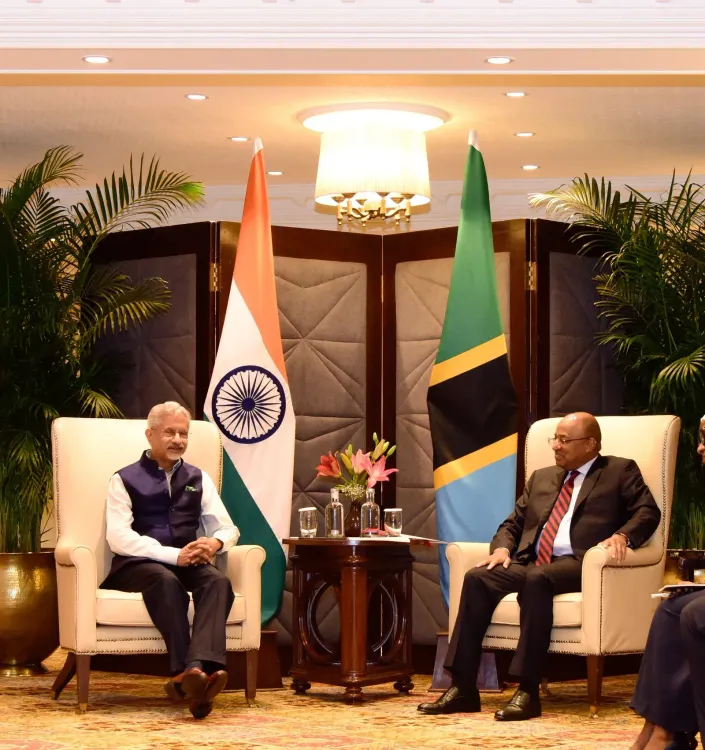
External Affairs Minister Dr. S. Jaishankar met Zanzibar President Dr. Hussein Ali Mwinyi in New Delhi on 19 July 2026, discussing cooperation in education, AI, health, and water supply. The IIT Madras Zanzibar campus — India's first overseas IIT — was highlighted as a model for India-Africa partnership.
Key Takeaways
Jaishankar met Zanzibar President Dr.
Hussein Ali Mwinyi in New Delhi on 19 July 2026 .
Talks covered higher education, capacity building, water supply, health, AI , and digital sectors.
IIT Madras Zanzibar , inaugurated in 2023 , was cited as a 'shining example' of India-Africa educational partnership.
The campus is India's first overseas IIT , operated by IIT Madras and oriented toward African students.
The meeting reflects India's sustained focus on education and digital cooperation as pillars of its Africa engagement strategy.
Further project announcements in AI, digital, and water infrastructure are expected as follow-up to the discussions.
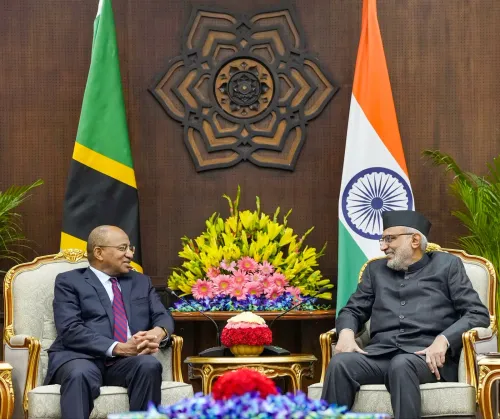
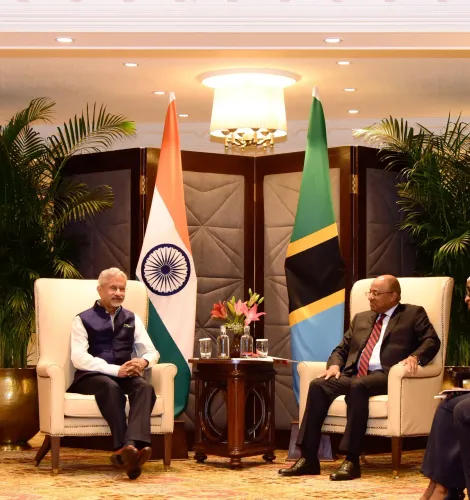
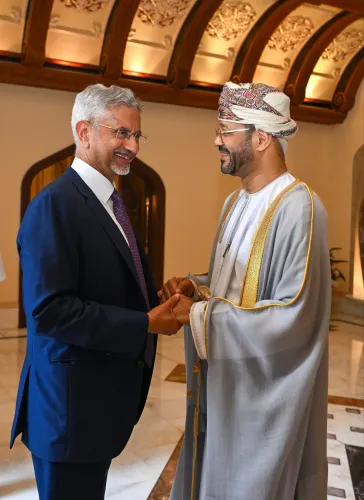
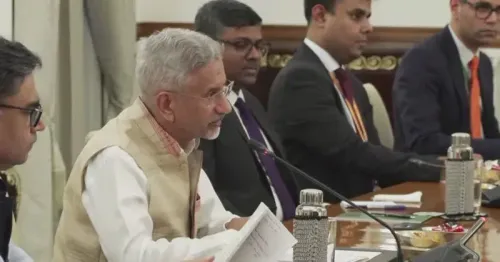
Union External Affairs Minister Dr. S. Jaishankar met Dr. Hussein Ali Mwinyi, President of Zanzibar and Chairman of the Revolutionary Council of the United Republic of Tanzania, in New Delhi on Sunday, 19 July 2026. The two leaders discussed deepening bilateral cooperation across higher education, capacity building, water supply, health, artificial intelligence, and digital sectors.
Context
Jaishankar described the meeting as 'a pleasure' and highlighted the breadth of sectors on the agenda — from foundational infrastructure such as water supply to frontier domains including AI and digital technology. He specifically cited IIT Madras Zanzibar as 'a shining example' of the close partnership and India's 'enduring commitment to Africa's education and development priorities.'
Zanzibar is a semi-autonomous archipelago region of Tanzania situated in the western Indian Ocean, with centuries-old trade and cultural ties to the Indian subcontinent. President Mwinyi also serves as Chairman of the Revolutionary Council, the apex executive body of the Zanzibar government.
Policy Backdrop
IIT Madras Zanzibar, India's first overseas campus of an Indian Institute of Technology, was formally inaugurated in 2023 under a bilateral arrangement between India and Tanzania. Operated by IIT Madras, the campus focuses on engineering, technology, and capacity building, with a deliberate orientation toward serving African students and regional development needs.
The Zanzibar campus is a flagship expression of India's Africa engagement strategy, which has been articulated through successive India-Africa Forum Summits. New Delhi has consistently positioned education, digital connectivity, and human-resource development as core pillars of its Africa outreach — a posture that the July 2026 meeting reinforces at the bilateral level.
Zanzibar's location in the western Indian Ocean also dovetails with India's broader maritime outreach priorities, making the relationship strategically significant beyond the educational dimension.
Stakeholders and Impact
Tanzanian and broader African students stand to benefit most directly from any expansion of the IIT Madras Zanzibar model, which provides access to Indian technical education without requiring relocation to the subcontinent. Capacity-building programmes in health and digital sectors could extend benefits to government institutions and civil society in Zanzibar.
On the Indian side, institutions such as IIT Madras gain an international footprint and research partnerships on the African continent. Indian firms with interests in water infrastructure, health technology, and digital services may also find expanded opportunities as cooperation frameworks are formalised.
What's Next
The meeting signals that both sides are exploring concrete project announcements across the listed priority sectors. Observers will watch for follow-up agreements on AI and digital cooperation, new water-supply projects, and any expansion of the IIT-model to other African partners — particularly in the run-up to the next India-Africa Forum Summit cycle.
As India deepens its development-cooperation footprint across Africa, the India-Tanzania-Zanzibar corridor — anchored by the IIT Madras campus — is likely to serve as a replicable template for education-led partnerships on the continent.
Point of View
Using the IIT Madras Zanzibar campus as a proof-of-concept for education-led soft power. By placing AI and digital cooperation alongside traditional development sectors like water and health, New Delhi is updating its Africa partnership template for the technology era. The meeting also underscores Zanzibar's growing strategic salience as an Indian Ocean node in India's maritime and development diplomacy. For India, replicating the IIT model across other African partners would cement its position as a preferred development partner on the continent against competing offers from other major powers.
NationPress
19 Jul 2026
Frequently Asked Questions
Why did Zanzibar President Mwinyi visit India in July 2026?
President Mwinyi visited India to meet External Affairs Minister Dr. S. Jaishankar in New Delhi on 19 July 2026, with discussions focused on expanding bilateral cooperation in higher education, AI, digital technology, health, and water supply.
What is IIT Madras Zanzibar?
IIT Madras Zanzibar is India's first overseas campus of an Indian Institute of Technology, inaugurated in 2023 and operated by IIT Madras. It focuses on engineering, technology, and capacity building primarily for African students.
What sectors did India and Zanzibar discuss cooperating on?
The two sides discussed cooperation in higher education, capacity building, water supply, health, artificial intelligence, and digital technology, according to Minister Jaishankar's post on 19 July 2026.
What is India's broader Africa education strategy?
India has used successive India-Africa Forum Summits to position education, digital connectivity, and human-resource development as core pillars of its Africa engagement, with the IIT Madras Zanzibar campus serving as a flagship model.
Who is Dr. Hussein Ali Mwinyi?
Dr. Hussein Ali Mwinyi is the President of Zanzibar and Chairman of the Revolutionary Council in the United Republic of Tanzania, heading the government of the semi-autonomous Indian Ocean archipelago.