Jaishankar Pays Tribute to Birsa Munda on Janjatiya Gaurav Divas
Synopsis
On Janjatiya Gaurav Divas, 15 November 2026, EAM Dr. S. Jaishankar paid tribute to Bhagwan Birsa Munda, the 19th-century Munda tribal leader and freedom fighter, honouring tribal communities' role in India's independence and nation-building.
Key Takeaways
Janjatiya Gaurav Divas is observed every 15 November — the birth anniversary of Bhagwan Birsa Munda — as a national day honouring tribal contributions to India's freedom struggle.
The day was formally instituted by the Government of India in 2021 .
Birsa Munda led the Ulgulan uprising against British colonial rule in present-day Jharkhand in the late 19th century and died in Ranchi jail in 1900 , aged 25.
Jaishankar described Birsa Munda's 'courage, sacrifice and commitment to India's freedom struggle' as a continuing source of inspiration.
The tribute reflects a broader governmental effort to integrate Adivasi leaders into the mainstream narrative of India's independence movement.
On the birth anniversary of one of India's most defiant freedom fighters, Union External Affairs Minister Dr. S. Jaishankar joined the nation in honouring Bhagwan Birsa Munda on Janjatiya Gaurav Divas, 15 November 2026 — a day set aside to remember the tribal leader whose rebellion shook the foundations of British colonial rule.
The Man the Day Is Named For
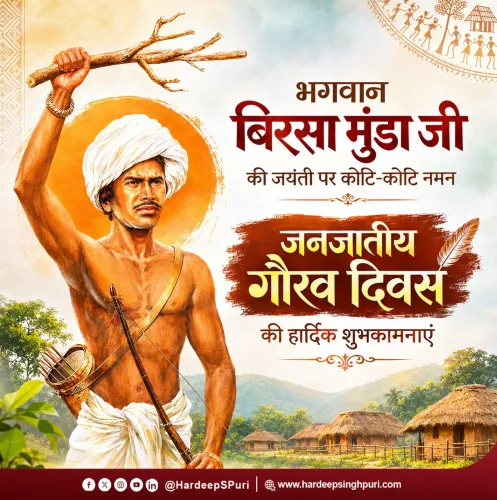
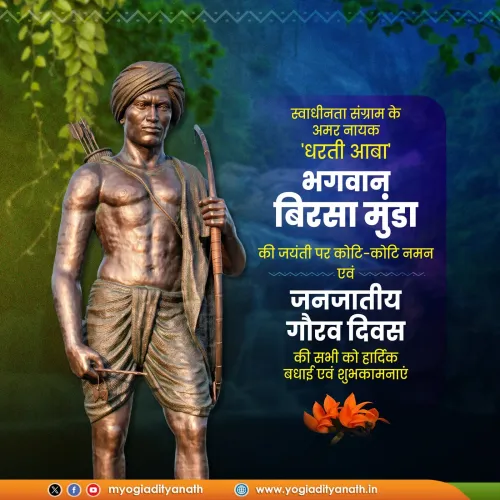
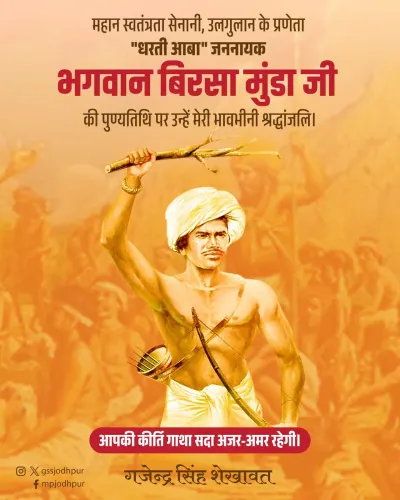
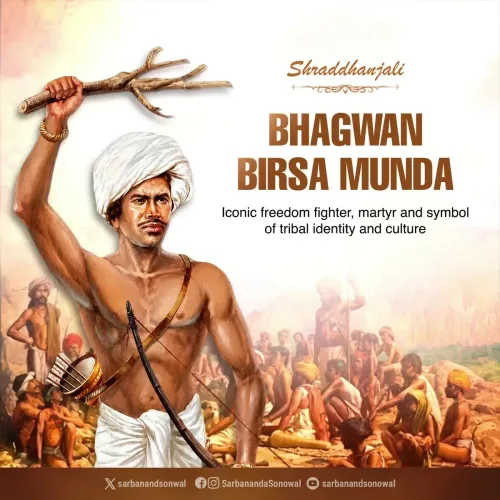
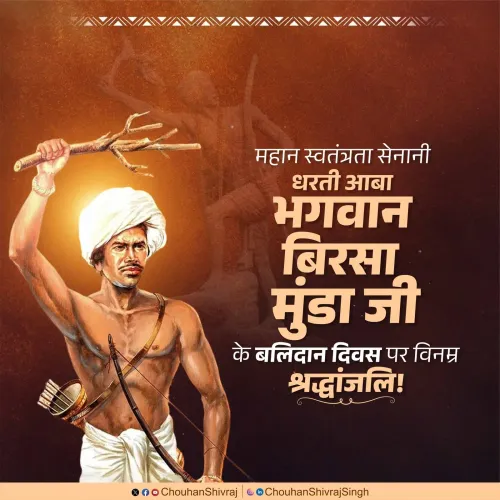
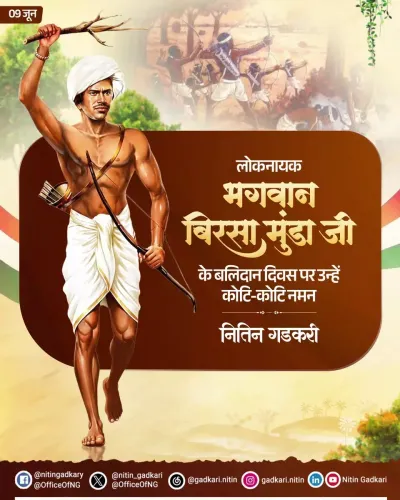
Bhagwan Birsa Munda was born on 15 November 1875 in present-day Jharkhand and led the Ulgulan — the 'Great Tumult' — a fierce Munda tribal uprising against British land-grabbing policies and missionary encroachment in the late 19th century. He was captured by colonial authorities and died in Ranchi jail in 1900, aged just 25, but his legend endured far beyond his short life. Revered as Dharti Aaba — 'Father of the Earth' — he remains one of the few pre-20th-century freedom fighters to be enshrined in the Central Hall of Parliament.
How Janjatiya Gaurav Divas Came to Be
The Government of India formally instituted Janjatiya Gaurav Divas in 2021, designating 15 November as an annual national observance to honour Birsa Munda's legacy and, more broadly, to place tribal contributions to India's independence movement on the same historical footing as other freedom struggles. The move was widely seen as a deliberate effort to weave Adivasi narratives into the mainstream story of the nation's founding.
Jaishankar's Message and What It Signals
Dr. Jaishankar's tribute — 'His courage, sacrifice and commitment to India's freedom struggle continue to inspire. His legacy also reminds us of the invaluable contribution of our tribal communities to the cause of nation-building' — follows an established pattern of senior ministers using the occasion to reaffirm governmental recognition of Adivasi history. It is a signal, repeated annually, that tribal communities are not a footnote to India's independence story but a chapter of their own.
India is home to over 700 Scheduled Tribe communities, constituting roughly 8.6 percent of the national population. Their role in resisting colonial rule — from the Santhal Rebellion of 1855 to the Munda Ulgulan — predates many of the movements that dominate mainstream historical memory. Janjatiya Gaurav Divas is, in part, a corrective to that gap.
As the observance grows in national prominence each year, the question it quietly poses is whether recognition on a calendar date translates into lasting policy momentum for tribal development — and whether Birsa Munda's legacy will be honoured not just in tributes, but in outcomes.
Point of View
Positioning tribal freedom fighters — particularly Birsa Munda — at the centre of a revised national historical narrative. Senior ministers issuing coordinated tributes on this date reflects a deliberate strategy to deepen electoral and cultural connect with Scheduled Tribe communities, who form a substantial voter bloc across states like Jharkhand, Chhattisgarh, Odisha, and the Northeast. For the External Affairs Ministry, participation in such observances signals that India's diplomatic identity is increasingly framed around a pluralistic, inclusive reading of its freedom struggle. The real test, however, remains whether this commemorative momentum converts into measurable progress on tribal land rights, forest rights, and socioeconomic development.
NationPress
15 Nov 2026
Frequently Asked Questions
What is Janjatiya Gaurav Divas and why is it celebrated on 15 November?
Janjatiya Gaurav Divas is a national observance held every 15 November to honour the birth anniversary of Bhagwan Birsa Munda and recognise the contributions of tribal communities to India's independence movement. The Government of India formally instituted it in 2021.
Who was Bhagwan Birsa Munda?
Bhagwan Birsa Munda was a 19th-century tribal leader from present-day Jharkhand who led the Munda Rebellion — known as the Ulgulan — against British colonial rule. Born on 15 November 1875, he died in Ranchi jail in 1900 at the age of 25 and is revered as Dharti Aaba, or 'Father of the Earth'.
What did EAM Jaishankar say on Janjatiya Gaurav Divas 2026?
Dr. S. Jaishankar paid tribute to Bhagwan Birsa Munda, stating that 'his courage, sacrifice and commitment to India's freedom struggle continue to inspire' and that his legacy highlights 'the invaluable contribution of our tribal communities to the cause of nation-building'.
When was Janjatiya Gaurav Divas first celebrated?
The Government of India formally instituted Janjatiya Gaurav Divas in 2021, designating 15 November — Birsa Munda's birth anniversary — as the annual date of observance.
Why is Birsa Munda important to India's freedom struggle?
Birsa Munda organised the Munda tribal community against British land-acquisition policies and colonial administration in the late 19th century, making him one of the earliest and most prominent tribal voices in India's anti-colonial resistance. He is among the few pre-20th-century freedom fighters depicted in the Central Hall of Parliament.