EAM Jaishankar Engages with Iranian FM Amid West Asia Tensions
Synopsis
In a critical dialogue, India's EAM S. Jaishankar and Iranian FM Seyed Abbas Araghchi discuss the escalating security crisis in West Asia, underscoring India's urgent concerns over regional stability and civilian safety.
Key Takeaways
Jaishankar engaged in urgent discussions with Iranian FM Seyed Abbas Araghchi.
The dialogue focused on escalating security concerns in West Asia.
India emphasizes the safety of its citizens in the region as a top priority.
The conflict has resulted in significant casualties and disruptions across multiple nations.
India calls for restraint and dialogue from all parties involved.
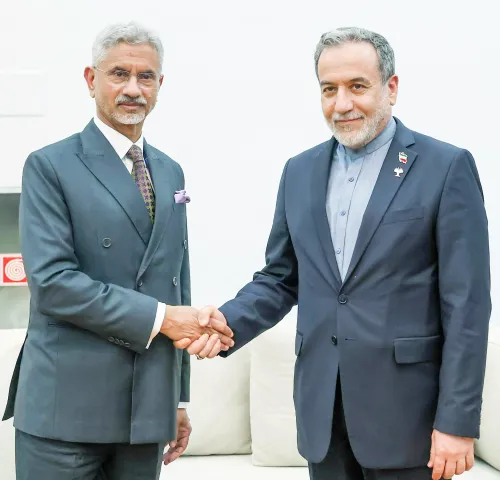
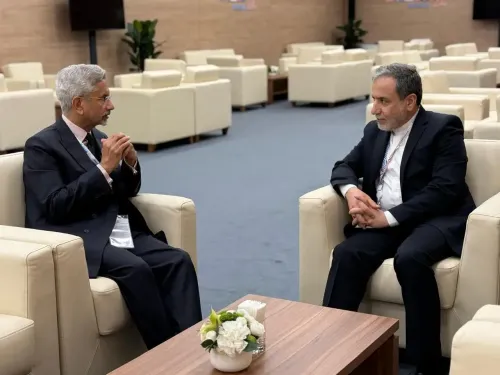
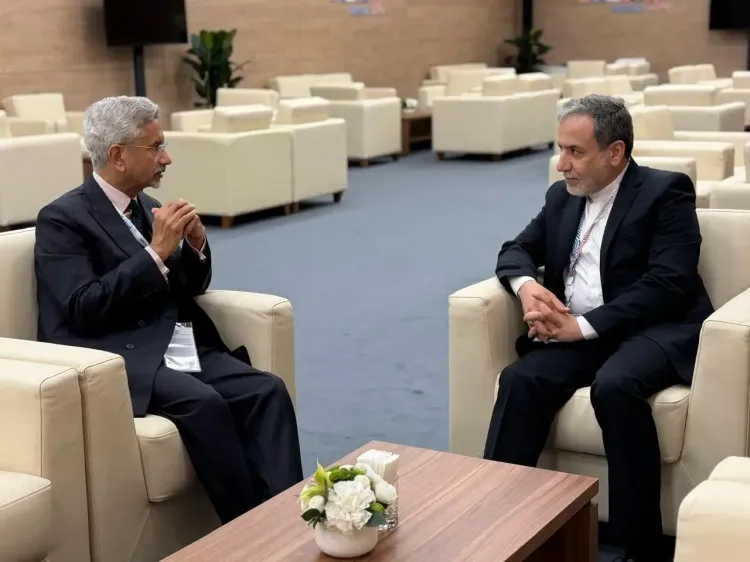
New Delhi, March 5 (NationPress) India’s External Affairs Minister (EAM) S. Jaishankar engaged in a telephonic discussion with his Iranian counterpart, Seyed Abbas Araghchi, for the second time in under a week on Thursday, addressing the changing security dynamics in West Asia.
Post-conversation, EAM Jaishankar shared on X, "Had a telecon with Iranian FM Seyed Abbas Araghchi this afternoon." This was following their previous dialogue on February 28, where he conveyed India’s apprehensions regarding the recent occurrences in Iran and its neighboring regions.
"Had a telecon with Iranian FM Seyed Abbas Araghchi this evening. Shared India’s deep concern at the recent developments in Iran and the region," he tweeted.
Earlier on the same day, Foreign Secretary Vikram Misri represented the Government of India by signing the condolence book at the Iranian Embassy in New Delhi, expressing condolences for the demise of Iran's Supreme Leader, Ayatollah Ali Khamenei.
On Tuesday, India raised alarms about the onset of conflict in Iran and the Gulf area, reiterating the necessity for dialogue and diplomacy. The nation called for a swift conclusion to the conflict, acknowledging the loss of numerous lives.
In an official announcement, the Ministry of External Affairs (MEA) stated, "We had conveyed our deep concern regarding the onset of conflict in Iran and the Gulf region on February 28, 2026. At that time, India urged all parties to exercise restraint, prevent escalation, and prioritize civilian safety. Regrettably, during the sacred month of Ramadan, the circumstances in the region have worsened continuously.
"Recently, we have observed not only an escalation of the conflict but also its extension into other nations. The devastation and casualties have increased, while normalcy and economic activities are disrupted. As a neighboring country with significant stakes in the region's security and stability, these developments induce considerable anxiety," it further stated.
The MEA emphasized that the safety and well-being of approximately one crore Indian nationals residing and working in the Gulf region remains the government's top priority. India will continue to closely observe the evolving circumstances and make pertinent decisions in the national interest.
"We cannot remain indifferent to any developments that adversely affect our citizens. Our trade and energy supply chains also navigate this region. Any major disruption poses serious consequences for the Indian economy. As a nation whose citizens are integral to the global workforce, India firmly opposes any attacks on merchant shipping. Tragically, some Indian nationals have recently lost their lives or are missing due to such attacks," the MEA added.
The Indian Embassies and Consulates in the impacted nations maintain close communication with Indian citizens and community organizations, regularly issuing advisories and extending all possible assistance to those stranded due to the conflict.
The conflict in West Asia was ignited by coordinated US-Israel strikes against Iran on February 28, aimed at crippling Tehran's missile capabilities and military infrastructure. The initial wave of the operation resulted in the deaths of high-ranking Iranian officials, including Supreme Leader Ayatollah Ali Khamenei, instigating a response from Tehran through drone and missile strikes targeting US assets, regional capitals, and allied forces.
Iran's retaliatory actions have affected several countries, with missiles and drones intercepted over Kuwait, Bahrain, and the United Arab Emirates, leading to temporary airspace closures.
Point of View
And careful monitoring is essential for ensuring national interests.
NationPress
24 Sept 2026
Frequently Asked Questions
What was discussed during the call between Jaishankar and Araghchi?
EAM S. Jaishankar and Iranian FM Seyed Abbas Araghchi discussed the evolving security situation in West Asia, emphasizing India's concerns over recent developments.
Why is India's involvement in West Asia significant?
India has a substantial population of approximately one crore citizens in the Gulf region, and maintaining their safety is a top priority for the Indian government amidst rising tensions.
What triggered the conflict in West Asia?
The conflict was initiated by US-Israel strikes against Iran aimed at degrading its military infrastructure, which led to significant retaliatory actions by Iran.