EAM Jaishankar Engages with Iranian FM on BRICS Role Amid West Asia Tensions
Synopsis
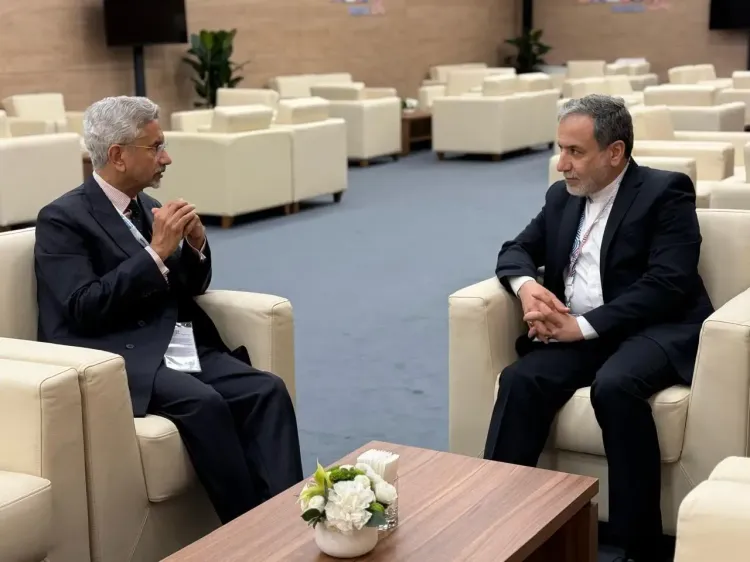
On March 13, EAM S. Jaishankar conversed with Iranian FM Seyed Abbas Araghchi to discuss bilateral cooperation and BRICS amid escalating tensions in West Asia. This dialogue underscores India's commitment to regional stability and proactive diplomacy in the face of ongoing crises.
Key Takeaways
India's proactive diplomatic efforts are evident in its discussions with Iran.
Safety of Indian nationals is a top priority for the government.
BRICS is highlighted as a significant forum for multilateral cooperation .
Conversations reflect India's commitment to regional stability .
Iran's stance on self-defense against aggression is reiterated.
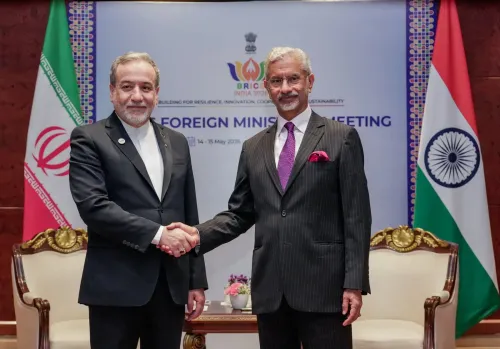
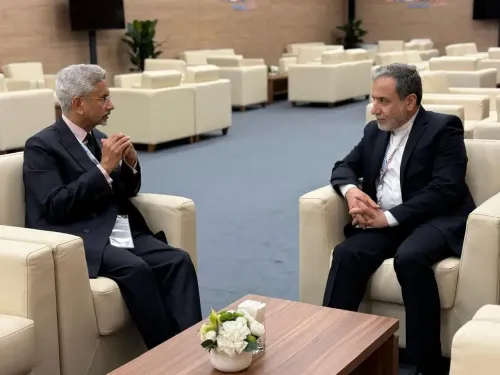
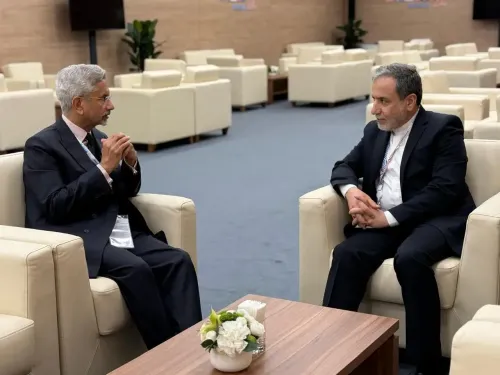
New Delhi, March 13 (NationPress) On Friday, External Affairs Minister (EAM) S. Jaishankar engaged in another telephonic discussion with Iranian Foreign Minister Seyed Abbas Araghchi, focusing on bilateral relations and BRICS-related topics, with India currently chairing the group and Iran being a member.
This conversation marks the fourth dialogue between the two ministers during a time of increasing tensions involving Iran, the United States, and Israel.
The discussion occurred following Prime Minister Narendra Modi's conversation with Iranian President Masoud Pezeshkian the previous night, aimed at evaluating the critical circumstances unfolding in the West Asia region.
In a post on social media platform X, EAM Jaishankar stated, “Had another conversation with Iranian FM Seyed Abbas Araghchi last night. Discussed bilateral matters as well as BRICS-related issues.”
The Iranian Foreign Ministry reported that Araghchi updated EAM Jaishankar on the latest developments stemming from the “acts of aggression and atrocities” perpetrated by the United States and the Israeli regime against Iran, as well as the implications for both regional and global stability and security.
“He underscored the unwavering determination of the Iranian government, populace, and armed forces to defend their legitimate rights against aggressors. The Iranian Foreign Minister highlighted the necessity for regional and international organizations to denounce military aggression toward Iran. He emphasized the significance of BRICS as a platform for fostering multilateral cooperation and its essential role in supporting regional and global stability and security during this critical period,” read a statement issued by Iran's Foreign Ministry following the call.
During the exchange, India’s Foreign Minister reiterated the country's willingness to enhance both bilateral and multilateral collaboration within regional and international frameworks. He underscored the importance of identifying pathways to bolster sustainable stability and security in the region, viewing it as a collective imperative.
In his conversation with Iranian President Masoud Pezeshkian late Thursday, PM Modi expressed deep concern regarding the rising tensions, particularly the loss of civilian lives and damage to infrastructure.
He emphasized that the safety of Indian citizens remains the government's highest priority while reaffirming India's commitment to fostering peace and stability in the region.
“Had a conversation with Iranian President Masoud Pezeshkian to discuss the serious situation in the region. I expressed deep concern over the rising tensions and the humanitarian toll, including loss of civilian lives and damage to infrastructure. The safety and security of Indian nationals, along with ensuring the unhindered transit of goods and energy, are our top priorities. I reiterated India’s commitment to peace and stability and called for dialogue and diplomacy,” PM Modi posted on X.
The Ministry of External Affairs (MEA) highlighted that PM Modi has reached out to several leaders in the Gulf region since the conflict erupted, emphasizing the importance of dialogue and diplomacy in restoring peace and protecting civilians.
“Our Prime Minister has engaged with numerous Gulf leaders following the onset of the conflict. In these discussions, he stressed the need for dialogue and diplomacy to facilitate a swift return to peace. He also highlighted the critical importance of avoiding civilian casualties and focused on the imperative of civilian protection,” MEA spokesperson Randhir Jaiswal stated during a weekly media briefing in New Delhi.
“We have a significant Indian community in the Gulf Cooperation Council (GCC) nations, and their security and welfare are paramount; this was emphasized. We have also condemned the infringements of sovereignty and territorial integrity of states in several instances,” he added.
In response to a query regarding the movement of vessels in the Strait of Hormuz, the MEA spokesperson mentioned that EAM Jaishankar and Iran's Foreign Minister addressed issues related to shipping safety and India's energy security.
This conversation showcases India's proactive diplomatic efforts in light of the evolving situation.
Recently, Iran permitted Indian-flagged tankers to transit through the Strait of Hormuz following discussions between EAM Jaishankar and Araghchi, aiming to maintain this vital maritime route for the transport of crude oil and natural gas.
Sources familiar with the situation indicated that Indian tankers 'Pushpak' and 'Parimal' successfully navigated through the Strait of Hormuz, even as vessels from the US, Europe, and Israel continue to encounter restrictions in this strategically significant waterway.
Point of View
Emphasizing India's commitment to peace and stability. The proactive engagement reflects a strategic approach to international relations, showcasing India's role in mitigating conflict and enhancing cooperation within multilateral frameworks.
NationPress
6 Oct 2026
Frequently Asked Questions
What was the main topic of discussion between EAM Jaishankar and Iranian FM?
The conversation primarily focused on bilateral cooperation and BRICS-related matters amid escalating tensions in West Asia.
How many conversations have EAM Jaishankar and Iranian FM had recently?
This was the fourth conversation between EAM Jaishankar and Iranian FM Seyed Abbas Araghchi.
What stance did the Iranian FM take regarding military aggression?
The Iranian FM emphasized Iran's right to self-defense and called for condemnation of military aggression against Iran.
What did PM Modi express in his conversation with the Iranian President?
PM Modi expressed deep concern over rising tensions, loss of civilian lives, and emphasized the safety of Indian nationals.
What recent action did Iran take regarding Indian-flagged tankers?
Iran allowed Indian-flagged tankers to pass through the Strait of Hormuz to ensure the transportation of crude oil and natural gas.