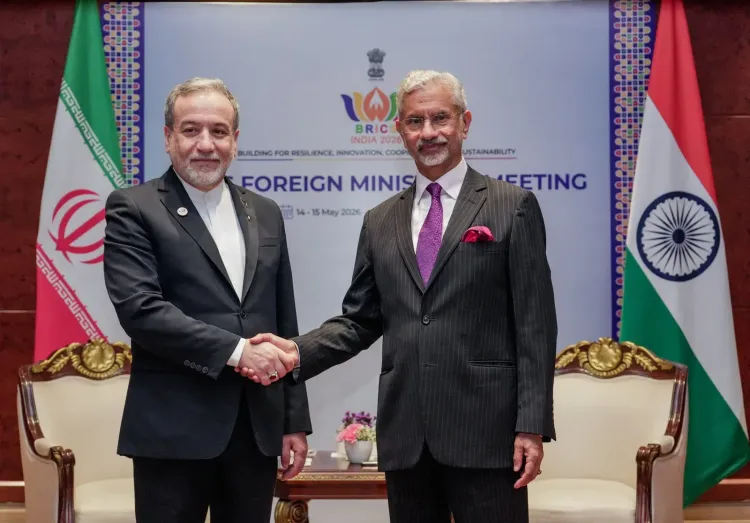
Jaishankar meets Iranian FM Araghchi in New Delhi, reviews West Asia crisis
Synopsis
As the Iran conflict rattles global energy markets and chokes the Strait of Hormuz, India is quietly positioning itself at the centre of the diplomatic response — hosting Iran's FM for talks with both the EAM and the PM, while holding the BRICS chair. New Delhi's balancing act between Tehran and the West has rarely been under more pressure.
Key Takeaways
EAM S Jaishankar met Iranian FM Seyed Abbas Araghchi in New Delhi on 15 May to discuss the West Asia situation and bilateral ties.
Prime Minister Narendra Modi also met Araghchi on Thursday on the sidelines of the BRICS Foreign Ministers' Meeting .
The meetings mark India's first high-level diplomatic engagement since the Iran war began.
Araghchi alleged Iran has faced 'brutal and unlawful aggression' from the US and Israel , urging BRICS nations to act against 'warmongering.' Iran's reported blockade of the Strait of Hormuz — which carries nearly 20% of global oil and LNG — has triggered a surge in energy prices.
Araghchi's three-day New Delhi visit, which began Wednesday , is Tehran's first high-level diplomatic outreach since the conflict started.
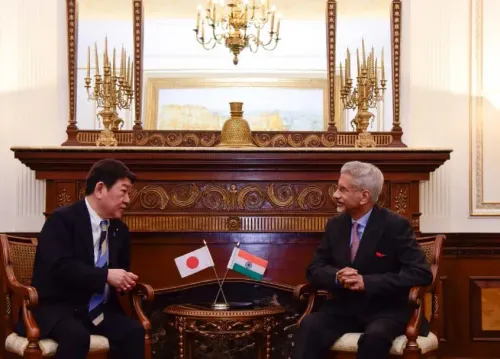
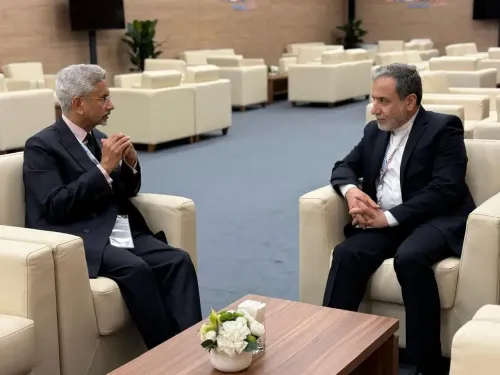
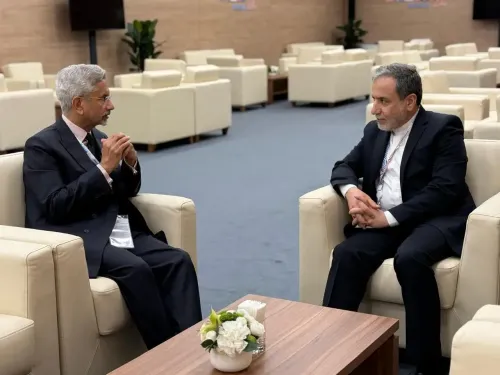
External Affairs Minister S Jaishankar on Friday, 15 May held a bilateral meeting with Iranian Foreign Minister Seyed Abbas Araghchi in New Delhi, with the two sides reviewing the rapidly evolving situation in West Asia and its broader global implications. The talks also covered bilateral matters of mutual interest, marking a significant diplomatic moment as the meeting came amid an active conflict involving Iran.
What Was Discussed
The conversation covered the deteriorating security environment in West Asia, including risks to maritime routes and energy infrastructure. Jaishankar also formally welcomed Araghchi's participation in the BRICS Foreign Ministers' Meeting, being hosted in New Delhi under India's 2026 BRICS chairship.
Following the meeting, Jaishankar said he had a 'detailed conversation' with the Iranian FM, adding that they 'discussed the situation in West Asia and its implications' and 'exchanged views on bilateral issues of mutual interest.'
Modi Also Received Araghchi
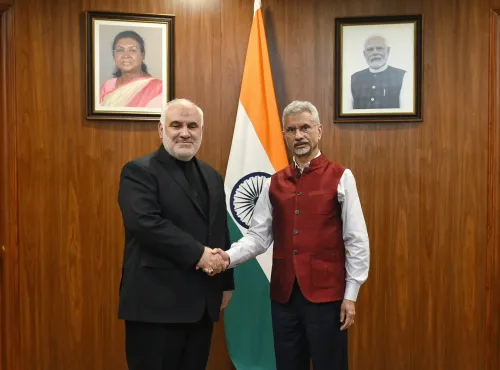
A day earlier, on Thursday, Prime Minister Narendra Modi also met the Iranian Foreign Minister on the sidelines of the BRICS Foreign Ministers' Meeting — underscoring the high-level priority India is according to diplomatic engagement with Tehran at this juncture. The bilateral meetings collectively mark the first such high-level diplomatic engagement involving India since the Iran war began.
Jaishankar's Statement at BRICS
Delivering India's national statement at the BRICS Foreign Ministers' Meeting on Thursday, Jaishankar flagged the fragile security environment in West Asia as a matter of global concern. 'The conflict in West Asia merits particular attention. Continuing tensions, risks to maritime traffic, and disruptions to energy infrastructure highlight the fragility of the situation,' he said.
He specifically called for safe and unimpeded maritime flows through international waterways, including the Strait of Hormuz and the Red Sea, describing them as 'vital for global economic well-being.' Jaishankar also reaffirmed India's 'strong commitment' to the purposes and principles of the United Nations Charter, stating that 'dialogue and diplomacy are the only sustainable means of resolving conflicts.'
Iran's Position at BRICS
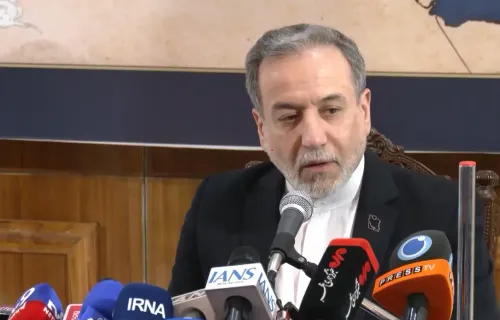
Araghchi used his address at the BRICS meeting to urge the global community to condemn what he described as 'violations of international law' by the United States and Israel, and to act against 'warmongering.' He alleged that Iran has been subjected to 'brutal and unlawful aggression' by the two countries.
'The attacks on my people have been justified with false claims that run counter to the informed assessments of the International Atomic Energy Agency and even America's own intelligence community,' Araghchi stated, adding that Iran is 'the victim of illegal expansionism and warmongering.'
Energy Markets and the Strait of Hormuz
The escalating conflict has sent shockwaves through global energy markets, with oil and gas prices surging after Iran reportedly blocked the Strait of Hormuz — the strategic chokepoint between the Persian Gulf and the Gulf of Oman that carries nearly 20% of the world's oil and LNG supplies. Araghchi arrived in New Delhi on Wednesday for a three-day official visit, marking Tehran's first high-level diplomatic outreach since the conflict began.
With India holding the BRICS chair and maintaining historically calibrated ties with both Iran and Western nations, New Delhi's diplomatic positioning in the weeks ahead will be closely watched.
Point of View
Not a coincidence. New Delhi is leveraging its non-aligned positioning to stay relevant to Tehran without formally endorsing Iran's framing of the conflict. But that balancing act is getting harder: with the Strait of Hormuz reportedly blocked and energy prices climbing, India's dependence on Gulf oil means this is no longer a purely diplomatic question — it is an economic vulnerability. The absence of any public Indian criticism of either side, while Araghchi used the BRICS platform to directly condemn the US and Israel, will not go unnoticed in Washington.
NationPress
20 Sept 2026
Frequently Asked Questions
Why did Iran's Foreign Minister visit New Delhi in May 2026?
Iranian Foreign Minister Seyed Abbas Araghchi visited New Delhi for a three-day official visit beginning Wednesday, 14 May, to participate in the BRICS Foreign Ministers' Meeting hosted by India under its 2026 BRICS chairship. The visit also included bilateral talks with EAM S Jaishankar and Prime Minister Narendra Modi, marking Tehran's first high-level diplomatic outreach since the Iran war began.
What did EAM Jaishankar say about the West Asia situation?
Jaishankar described the situation in West Asia as 'fragile,' warning that continuing tensions, risks to maritime traffic, and disruptions to energy infrastructure are a matter of global concern. He specifically called for safe passage through the Strait of Hormuz and the Red Sea, and reaffirmed India's commitment to dialogue and diplomacy as the only sustainable means of resolving conflicts.
What is Iran's position on the current conflict?
Iranian FM Araghchi alleged at the BRICS meeting that Iran has been subjected to 'brutal and unlawful aggression' by the United States and Israel, and called on the global community to condemn violations of international law and act against warmongering. He argued that justifications for attacks on Iran contradict assessments by the IAEA and the US intelligence community.
How is the West Asia conflict affecting global energy markets?
The escalating conflict has caused oil and gas prices to surge after Iran reportedly blocked the Strait of Hormuz, a strategic chokepoint carrying nearly 20% of the world's oil and LNG supplies. The disruption has raised alarm among energy-importing nations, including India.
What is the significance of India hosting these talks during its BRICS chairship?
India holds the BRICS chair in 2026 and hosted the Foreign Ministers' Meeting in New Delhi, giving it a unique platform to engage all sides of the West Asia crisis. By receiving Araghchi at both the EAM and PM levels, India signalled its intent to remain a relevant diplomatic actor while maintaining its traditional posture of strategic autonomy.