Jal Shakti Minister Paatil backs Varanasi Transport Nagar plan
Synopsis
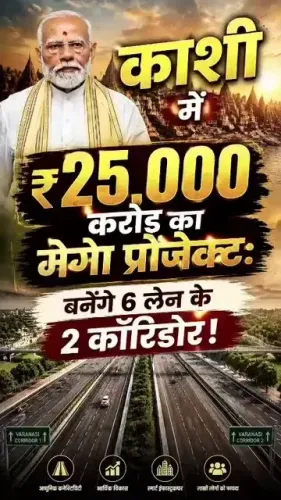
Union Jal Shakti Minister C. R. Paatil has highlighted a Varanasi Development Authority plan to build a high-tech Transport Nagar outside the city, relocating warehouses and heavy trucks from Varanasi's congested inner lanes, alongside smart bus shelters across the city.
Key Takeaways
Union Jal Shakti Minister C.
Paatil posted on 15 July 2026 about an urban decongestion plan for Varanasi .
The Varanasi Development Authority (VDA) is developing a high-tech Transport Nagar on the city's outskirts to house all major warehouses, transport businesses and heavy vehicles.
High-tech smart bus shelters are also being constructed across the city as part of the same initiative.
The project aims to clear heavy commercial traffic from Varanasi's narrow inner-city lanes, improving road safety and reducing pollution.
The initiative is framed under Prime Minister Narendra Modi's leadership, with Varanasi being his Lok Sabha constituency and a Smart Cities Mission beneficiary since 2015 .
Union Jal Shakti Minister C. R. Paatil on Wednesday, 15 July 2026 highlighted an ongoing urban decongestion initiative in Varanasi, crediting Prime Minister Narendra Modi's leadership for a plan to relocate warehouses and heavy trucks out of the ancient city's congested inner lanes through a new, high-tech 'Transport Nagar' (transport township) on the city's outskirts.
Context
Paatil's post describes the chronic traffic gridlock in Varanasi's narrow lanes — locally known as galiyan — as being driven primarily by warehouses and heavy commercial vehicles operating from within the city core. He wrote that the problem is now set to be resolved permanently: 'अब इस समस्या का हमेशा के लिए अंत होने जा रहा है' ('Now this problem is going to end forever').
The Varanasi Development Authority (VDA), the statutory planning body for the city, is developing the proposed Transport Nagar — described in the post as a large, high-tech hub — to which all major warehouses, transport businesses and heavy vehicles would be shifted. Alongside this, high-tech 'smart bus shelters' are stated to be under construction across the city.
Policy Backdrop
Varanasi was designated one of India's 100 Smart Cities under the Centre's Smart Cities Mission, launched in 2015, with area-based development centred on urban mobility and heritage precinct improvement. The city has since seen significant infrastructure investment, most visibly the Kashi Vishwanath Corridor, inaugurated in 2021, which redeveloped large portions of the old city core and altered traffic flows near the ghats.
The relocation of wholesale markets and logistics facilities from congested historic city centres has been a broader pattern across several pilgrimage and heritage cities, often combining Smart Cities Mission and AMRUT funding with local development authority projects. Varanasi is also Prime Minister Modi's own Lok Sabha constituency, which has historically attracted accelerated central attention for urban upgrades.
Stakeholders and Impact
The primary beneficiaries, if the project is executed as described, would be Varanasi's residents and the city's large pilgrim and tourist footfall, who currently navigate heavily congested inner streets. Paatil's post asserts that the shift will make Kashi's roads 'not only safer and open but will also completely eliminate pollution' — 'प्रदूषण भी पूरी तरह खत्म हो जाएगा'.
Truck operators and transport businesses currently based in the city core would be the primary stakeholders affected by the relocation, requiring a shift of operations to the new Transport Nagar. Public transport users stand to gain from the planned smart bus shelters being installed across the city.
What's Next
Key milestones to watch include the VDA's tendering and land acquisition timelines for the Transport Nagar site, as well as the pace of smart bus shelter installations across Varanasi. Analysts will also track whether the new logistics hub is integrated with planned infrastructure such as the Varanasi Metro Phase-1 corridor or upgrades to the NH-19 bypass, which could determine how effectively heavy traffic is kept off the inner-city road network.
If delivered, the project would mark a significant shift in the urban character of one of India's oldest continuously inhabited cities — and a political statement about the pace of development in the Prime Minister's own constituency ahead of future electoral cycles.
Point of View
Timed to reinforce the BJP's urban development narrative around Prime Minister Modi's Varanasi constituency ahead of future electoral cycles. The framing — crediting central leadership for a local statutory body's project — is consistent with a broader pattern of packaging municipal infrastructure work as outcomes of national political will. The convergence of the Transport Nagar plan with Smart Cities Mission and AMRUT-era investments suggests this is less a new announcement and more a visibility push for an existing pipeline. The key test will be whether land acquisition and tendering move at the pace the political messaging implies.
NationPress
15 Jul 2026
Frequently Asked Questions
What is the Varanasi Transport Nagar project?
The Varanasi Transport Nagar is a proposed high-tech logistics and transport hub being developed by the Varanasi Development Authority (VDA) on the outskirts of the city, designed to relocate warehouses, transport businesses and heavy vehicles from Varanasi's congested inner lanes.
Why is Varanasi building a Transport Nagar?
Warehouses and heavy trucks operating from within Varanasi's narrow inner lanes have long been a major cause of severe traffic congestion. The Transport Nagar is intended to shift all such operations outside the city core, easing traffic and reducing pollution.
What are the smart bus shelters being built in Varanasi?
As part of the same urban upgrade initiative, high-tech smart bus shelters are being constructed across Varanasi to improve public transport infrastructure and the commuter experience in the city.
Is Varanasi a Smart City?
Yes. Varanasi was selected as one of India's 100 Smart Cities under the central government's Smart Cities Mission launched in 2015, with a focus on urban mobility and heritage precinct development.
What did C. R. Paatil say about Varanasi's development?
Union Jal Shakti Minister C. R. Paatil posted on 15 July 2026 that the VDA's Transport Nagar project will permanently end the problem of traffic jams in Varanasi's inner lanes, and that smart bus shelters will make the city's roads safer, more open and free of pollution.