Jal Shakti Minister Paatil joins Mann Ki Baat session in Surat
Synopsis
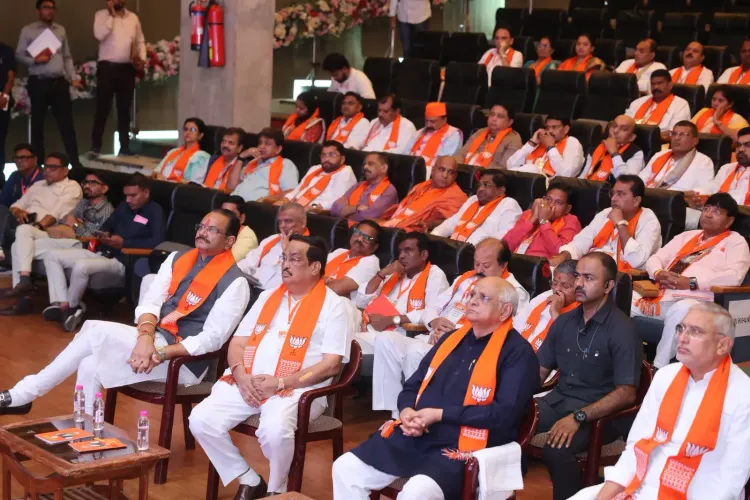
Union Jal Shakti Minister C. R. Paatil joined Gujarat CM Bhupendra Patel and BJP workers at Surat's Science Centre on 25 October 2026 to listen collectively to PM Modi's monthly Mann Ki Baat radio address, calling it a catalyst for public participation and national service.
Key Takeaways
Paatil , Union Jal Shakti Minister and former BJP Gujarat state president, attended a collective Mann Ki Baat listening session at Surat's Science Centre on 25 October 2026 .
Gujarat Chief Minister Bhupendra Patel was also present, alongside BJP workers.
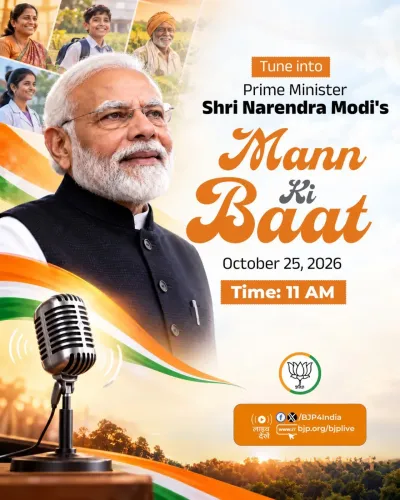
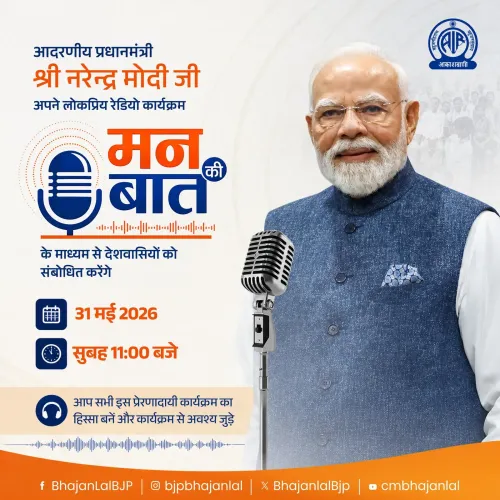
Mann Ki Baat was launched by PM Narendra Modi in October 2014 as a monthly All India Radio address highlighting citizen-driven stories.
Paatil described the programme as giving 'new energy to the spirit of public participation and national service.' BJP units across Gujarat and India routinely organise collective listening sessions to amplify the broadcast's reach at the grassroots.
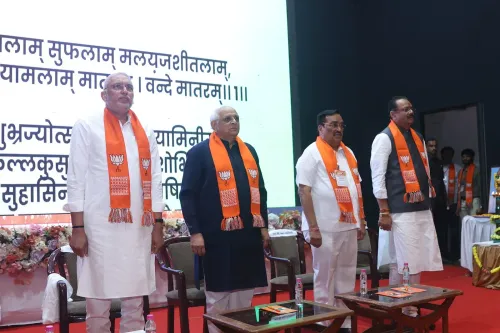
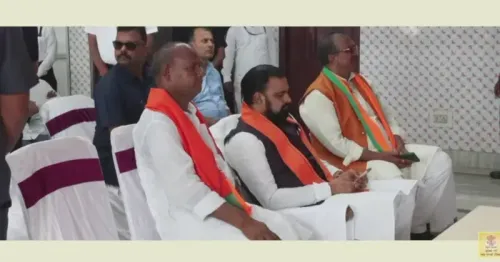
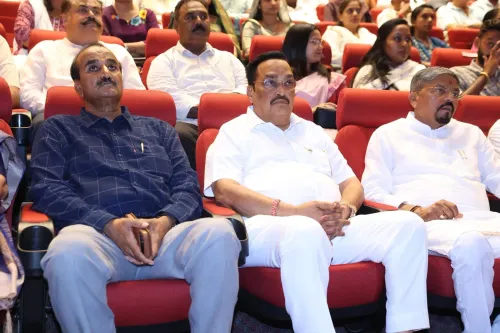
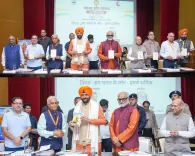
At Surat's Science Centre on Sunday, 25 October 2026, Union Jal Shakti Minister C. R. Paatil gathered with BJP workers to listen collectively to Prime Minister Narendra Modi's monthly radio address, Mann Ki Baat — with Gujarat Chief Minister Bhupendra Patel lending his presence to the occasion.
Paatil shared his reflections in Gujarati, writing: 'Aaje Suratna Science Centre khate... Pradhanmantri Shri Narendrabhāi Modiji nā 'Mann Ki Baat' kāryakramnu shravan karyu' — 'Today at Surat's Science Centre, in the special presence of Chief Minister Bhupendrabhai Patel, we listened to Prime Minister Shri Narendra Modi's Mann Ki Baat programme alongside party workers.' He described the broadcast as one that 'lights up the inspiring efforts of citizens across the country's diverse fields' and 'gives new energy to the spirit of public participation and national service.'
What Mann Ki Baat has meant since 2014
Mann Ki Baat was launched by Prime Minister Modi in October 2014 as a monthly All India Radio address — a direct, unmediated channel between the Prime Minister and citizens. Its format has stayed deliberately consistent: no new policy rollouts, no adversarial exchanges. Instead, episode after episode spotlights ordinary Indians doing extraordinary things — a farmer innovating, a student excelling, a volunteer rebuilding.
That consistency is, in itself, a design choice. The programme functions less as a policy instrument and more as a national mood-setter, threading together stories from Kashmir to Kerala, Gujarat to the North-East, and presenting them as proof of a participatory republic at work. For BJP units across states, collective listening sessions have become a ritual that doubles as local outreach — converting a radio broadcast into a community event.
Surat as a listening venue — and what it signals
Surat is no ordinary backdrop. The diamond-and-textile city is among Gujarat's most economically dynamic, and the presence of both a Union Cabinet minister and the Chief Minister at the same listening session signals the weight the state leadership attaches to the event. Paatil, who served as BJP Gujarat state president before joining the Union Cabinet, has deep organisational roots in this region — making Surat a natural anchor for such gatherings.
Chief Minister Bhupendra Patel's attendance underlines the BJP's approach of turning each episode into a simultaneous, state-wide moment rather than a solitary listening experience. For workers in the room, the message is clear: the Prime Minister's words are not just to be heard — they are to be internalised and acted upon.
As Modi's voice reaches millions each month, it is the local amplifiers — ministers, chief ministers, booth-level workers gathered in science centres and community halls — who complete the circuit. The next episode will tell us whether the ritual holds.
Point of View
Not just a broadcast. By deploying Union ministers and chief ministers to physically co-attend these sessions, the party converts a top-down communication exercise into a show of cadre solidarity and public connect. For C. R. Paatil — a mass organiser by instinct — such gatherings are an extension of the grassroots mobilisation model he refined as Gujarat BJP chief. The ritual also reinforces the party's broader narrative that governance and citizen participation flow from a single, unified source of inspiration.
NationPress
25 Oct 2026
Frequently Asked Questions
What is Mann Ki Baat and when did it start?
Mann Ki Baat is a monthly radio address by Prime Minister Narendra Modi on All India Radio, launched in October 2014 . It highlights inspiring stories of ordinary citizens and encourages public participation in national development.
What happened at Surat's Science Centre on 25 October 2026?
Union Jal Shakti Minister C. R. Paatil and Gujarat Chief Minister Bhupendra Patel joined BJP workers at Surat's Science Centre to listen collectively to PM Modi's Mann Ki Baat broadcast.
Who is C. R. Paatil?
C. R. Paatil is India's Union Minister of Jal Shakti, a senior BJP leader, and a former Gujarat BJP state president with strong organisational roots in the Surat region.
Why does the BJP organise collective Mann Ki Baat listening sessions?
Collective listening sessions allow the BJP to turn a national radio broadcast into a local community event, reinforcing cadre engagement and projecting a unified message of public participation and national service at the grassroots level.
Who is Bhupendra Patel?
Bhupendra Patel is the Chief Minister of Gujarat and a senior BJP leader who attended the Surat Mann Ki Baat session alongside Union Minister C. R. Paatil on 25 October 2026.