Jal Shakti Minister Paatil launches JJM Reform Utsav on Gandhi Jayanti
Synopsis
Union Jal Shakti Minister C. R. Paatil has announced JJMReformUtsav, launching on Gandhi Jayanti (2 October) and running to 17 October. The 16-day Jal Arpan initiative aims to shift rural communities from passive beneficiaries to active custodians of Jal Jeevan Mission water infrastructure across India.
Key Takeaways
JJMReformUtsav runs from 2 to 17 October , launched on Gandhi Jayanti by Union Jal Shakti Minister C.
The Jal Arpan programme focuses on community operation, maintenance, and conservation of rural water systems — not new construction.
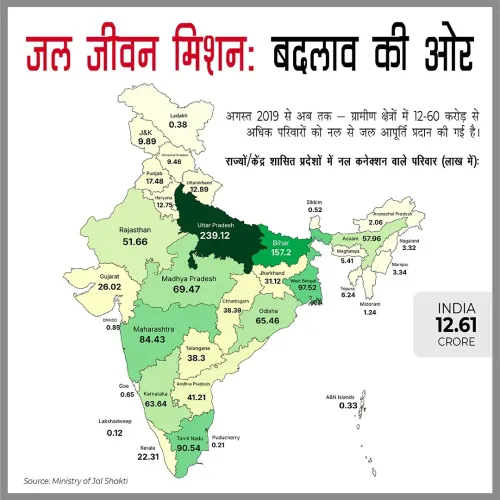
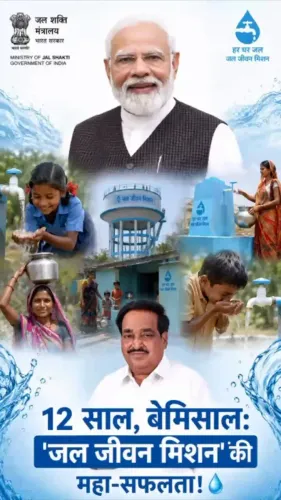
Jal Jeevan Mission was launched in August 2019 to provide piped tap water to every rural household in India.
The initiative targets Gram Panchayats and village water committees as primary stakeholders for long-term scheme sustainability.
The Gandhi Jayanti launch date mirrors the 2 October 2014 inauguration of Swachh Bharat Mission, reinforcing a recurring political and moral framing.
The campaign signals a strategic pivot in JJM from asset creation to community ownership and behavioural change.
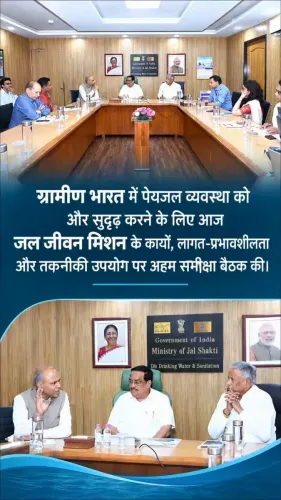
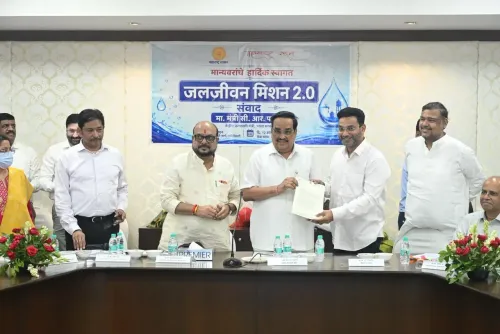
On Gandhi Jayanti, 2 October, a nationwide campaign is set to redefine what India's landmark rural water mission means for the villages it serves — shifting the conversation from pipes laid to communities empowered. Union Jal Shakti Minister C. R. Paatil has announced the #JJMReformUtsav, a 16-day initiative running from 2 to 17 October that invites rural communities across India to take active ownership of their water supply systems through a programme called Jal Arpan (water offering).
What Jal Arpan asks of every village
The Jal Arpan drive is not a construction push — it is a behavioural and institutional one. Through community events held across rural India during the 16-day window, villages will be formally connected to the operation, maintenance, and conservation of their local water infrastructure. The idea is to move Gram Panchayats and village water committees from passive beneficiaries to active custodians of the systems built under Jal Jeevan Mission (JJM).
Paatil, posting in Hindi, framed the timing deliberately: 'Rashtrpita Mahatma Gandhi ji ki jayanti, 2 October se #JJMReformUtsav ka shubharambh ho raha hai' — 'The #JJMReformUtsav is being launched on the birth anniversary of the Father of the Nation, Mahatma Gandhi ji, on 2 October.' The invocation of Gandhi's philosophy of janbhagidari (people's participation) and swavalamban (self-reliance) is pointed: it anchors a government scheme in a moral vocabulary that transcends party lines.
From tap connections to community ownership — JJM's next chapter
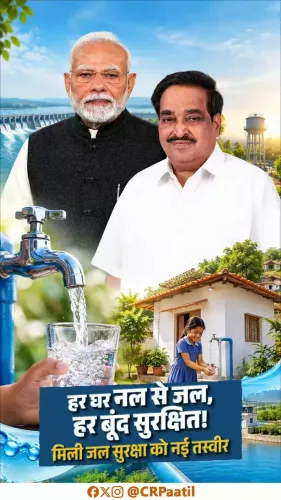
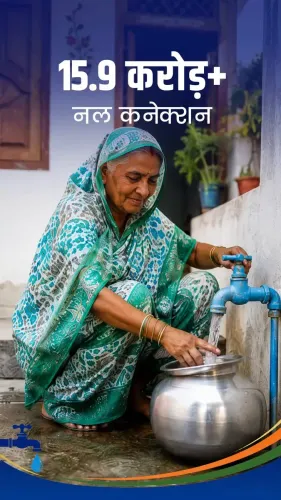
Jal Jeevan Mission was launched in August 2019 by Prime Minister Narendra Modi with the goal of delivering functional household tap connections to every rural home in India. The programme represented one of the largest rural infrastructure drives in the country's history, targeting hundreds of millions of people who had never had piped water at their doorstep.
But infrastructure without upkeep decays. The shift toward sustainability — ensuring that connections remain functional, that pipes are maintained, that water is conserved — has been the persistent challenge for large central schemes. The Swachh Bharat Mission faced a parallel question about toilet usage versus toilet construction. JJMReformUtsav signals that the Jal Shakti Ministry is now squarely in that second, harder phase: locking in long-term functionality through community accountability.
Paatil's post calls on citizens directly: 'Aiye, jal suraksha ko jan andolan banayen' — 'Come, let us make water security a people's movement.' It is a call to convert a government-built asset into a community-owned institution.
Gandhi Jayanti as a political and moral anchor
The choice of 2 October as the launch date is not incidental. Gandhi Jayanti has become a recurring launchpad for flagship social programmes — Swachh Bharat Mission was itself inaugurated on 2 October 2014. Tying JJMReformUtsav to the same date draws a direct line between Gandhian grassroots philosophy and the current government's rural welfare architecture, reinforcing a political narrative that has proved durable across successive campaigns.
The 16-day span ending on 17 October gives state governments, district administrations, and Gram Panchayats a structured window to revive or form community water committees, conduct local Jal Arpan ceremonies, and document participation — data that will likely feed into any mid-term sustainability review of JJM.
Whether the Utsav translates into measurable improvements in scheme functionality will depend on state-level execution. But the signal from the Union ministry is unambiguous: the era of building is giving way to the era of owning.
Point of View
The ministry now faces the harder task of keeping them running. Anchoring the campaign on Gandhi Jayanti is a well-worn but effective political move — it wraps a bureaucratic sustainability drive in moral and historical legitimacy that cuts across constituencies. The Jal Arpan framing also quietly pre-empts criticism about non-functional connections by making communities co-responsible for outcomes. Whether this translates into durable institutional change at the village level, or remains a ceremonial fortnight, will be the real test of JJM's long-term legacy.
NationPress
30 Sept 2026
Frequently Asked Questions
What is JJMReformUtsav and when does it take place?
JJMReformUtsav is a 16-day national campaign running from 2 to 17 October, announced by Union Jal Shakti Minister C. R. Paatil. It uses Jal Arpan community events to engage rural citizens in the operation, maintenance, and conservation of Jal Jeevan Mission water infrastructure.
What is Jal Arpan under Jal Jeevan Mission?
Jal Arpan is a community participation programme under JJMReformUtsav where rural communities formally take responsibility for the upkeep and sustainable management of their local water supply systems built under Jal Jeevan Mission.
What is Jal Jeevan Mission and who launched it?
Jal Jeevan Mission was launched by Prime Minister Narendra Modi in August 2019 with the goal of providing functional household tap connections to every rural home in India, making it one of the country's largest rural water infrastructure programmes.
Why is JJMReformUtsav starting on Gandhi Jayanti?
The campaign launches on 2 October, Gandhi Jayanti, to align with Mahatma Gandhi's philosophy of community participation and self-reliance. The date also echoes the 2 October 2014 launch of Swachh Bharat Mission, reinforcing a recurring government tradition of anchoring social campaigns to the occasion.
Who is C. R. Paatil and what is his role in Jal Jeevan Mission?
C. R. Paatil is the Union Minister of Jal Shakti and a senior BJP leader and former Gujarat BJP state president. As Jal Shakti Minister, he oversees the implementation of Jal Jeevan Mission and related water sector reforms, including the JJMReformUtsav initiative.