Jal Shakti Minister Paatil meets students who assessed JJM schemes
Synopsis
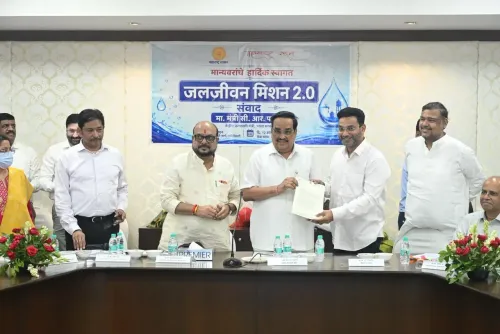
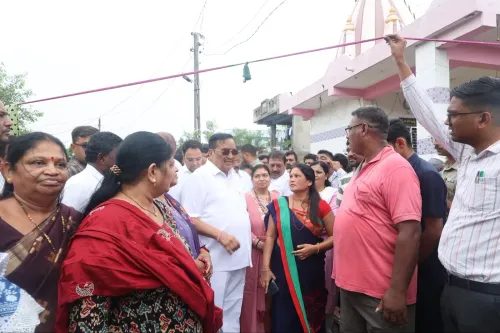
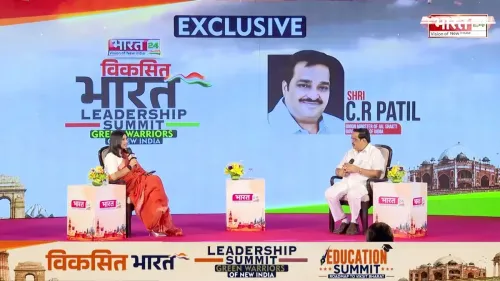
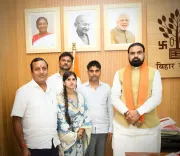
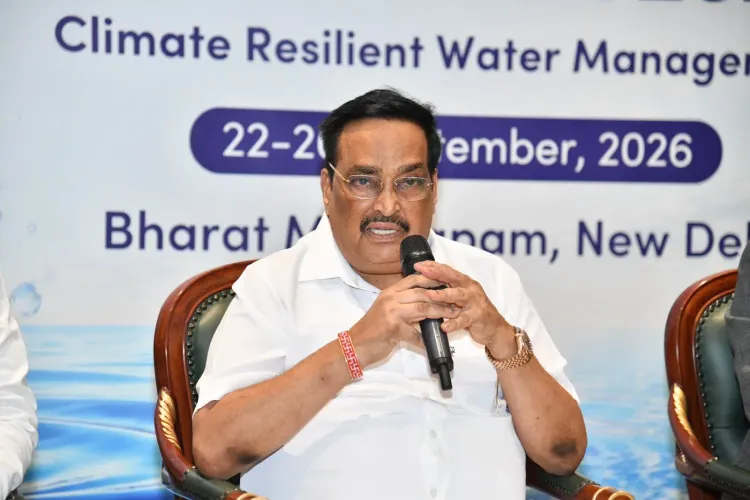
Union Jal Shakti Minister C. R. Paatil on 24 September 2026 interacted with AICTE-affiliated engineering students who independently assessed Jal Jeevan Mission schemes under the Jal Seva Adhyayan initiative, reporting first-hand findings on rural tap-water delivery at the last mile.
Key Takeaways
Union Jal Shakti Minister C.
Paatil met AICTE-affiliated engineering students on 24 September 2026 as part of the Jal Seva Adhyayan initiative.
Students conducted independent field assessments of Jal Jeevan Mission schemes, not guided visits, focusing on last-mile tap-water access.
Jal Jeevan Mission was launched on 15 August 2019 to provide functional household tap connections to all rural households in India.
The All India Council for Technical Education (AICTE) linked affiliated engineering colleges to the programme, bridging technical education with public-scheme monitoring.
Student assessments introduce an independent, academic layer of scrutiny beyond standard departmental data on JJM coverage.
Whether student findings are formally integrated into JJM's monitoring framework remains the key open question for the programme's impact.
Engineering students walked into villages, turned on taps, and came back with findings that Union Jal Shakti Minister C. R. Paatil called 'truly encouraging' — a sign that India's flagship rural water mission is now doubling as a classroom for the next generation of public-service thinkers. On Thursday, 24 September 2026, Paatil met with students from various AICTE-affiliated engineering colleges who participated in the Jal Seva Adhyayan initiative, a programme that sent young engineers into the field to independently assess Jal Jeevan Mission (JJM) infrastructure at the grassroots level.
What students found at the last mile
The students visited active JJM scheme sites and conducted independent evaluations — not guided tours, but ground-up assessments of whether safe tap water was actually reaching families at the farthest end of the pipeline. Paatil said it was 'encouraging to hear their experiences and learnings, particularly how they witnessed first-hand the transformational benefits of safe tap water reaching families even at the last mile.' That phrase — the last mile — is the crux of JJM's credibility challenge: infrastructure that connects a district headquarters but stops short of the most remote household is infrastructure that fails its purpose.
Jal Jeevan Mission: the scheme behind the field visits
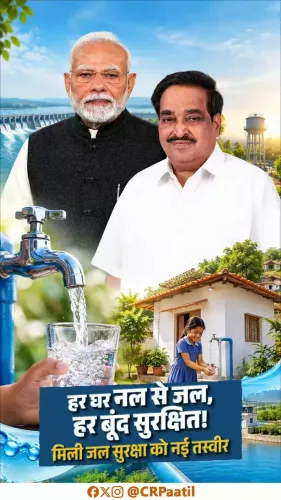
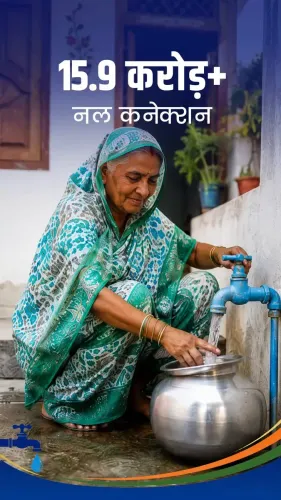
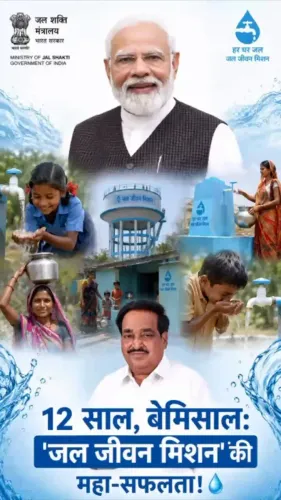
Jal Jeevan Mission was announced in the 2019 Union Budget and formally launched by Prime Minister Narendra Modi on 15 August 2019, with the stated goal of providing functional household tap connections to every rural home in India. The scale is enormous: hundreds of millions of people in rural India had historically relied on wells, hand pumps, or distant water sources. JJM set out to change that through a centrally-funded, state-implemented infrastructure drive. Village-level monitoring mechanisms were built into the design, but independent student assessments represent a newer, more academic layer of scrutiny.
AICTE's role in linking campuses to public schemes
The All India Council for Technical Education (AICTE), the statutory regulator of engineering and technical education in India, affiliated the colleges whose students participated in Jal Seva Adhyayan. This link matters: it signals an institutional effort to connect technical education's pipeline with actual policy delivery on the ground. Students gain practical exposure to public infrastructure; ministries gain a fresh, independent lens on scheme performance. Paatil noted the students brought 'enthusiasm, curiosity and fresh perspective' to the water sector — qualities that standard government monitoring frameworks rarely capture.
Youth as validators of rural infrastructure
The broader pattern here is deliberate. Governments increasingly face a credibility gap between reported scheme coverage numbers and ground-level reality. Deploying engineering students as independent evaluators — rather than relying solely on departmental data — introduces a check that carries both technical weight and public-trust value. If young engineers from AICTE colleges attest that tap water is reaching remote households, that carries a different kind of authority than a ministry press release. Whether this model expands formally into a structured assessment programme for JJM's remaining coverage targets is the question worth watching.
Paatil framed the entire initiative within Prime Minister Modi's 'visionary leadership,' describing JJM as a mission that has 'not only transformed rural lives but is also giving our youth an opportunity to understand public service delivery on the ground.' The double dividend — rural households with safe water, and engineering graduates who understand how the state actually works — is the political and policy pitch rolled into one. Whether the data from these student assessments feeds formally into JJM's monitoring architecture will determine whether Jal Seva Adhyayan is a photo opportunity or a genuine feedback loop.
Point of View
Which has historically been the hardest metric to verify. Placing young engineers as independent evaluators rather than relying purely on departmental reporting is a soft accountability move that carries political value: it pre-empts opposition arguments about data inflation. If the programme scales formally and its findings are published, it could strengthen JJM's evidentiary base heading into future budget discussions. For now, the initiative sits at the intersection of scheme promotion and genuine civic education.
NationPress
24 Sept 2026
Frequently Asked Questions
What is the Jal Seva Adhyayan initiative?
Jal Seva Adhyayan is an initiative under which engineering students from AICTE-affiliated colleges visit and independently assess Jal Jeevan Mission scheme sites at the grassroots level, reporting on whether safe tap water is actually reaching rural families.
What is Jal Jeevan Mission and when was it launched?
Jal Jeevan Mission is a central government scheme launched on 15 August 2019 by Prime Minister Narendra Modi, aimed at providing functional household tap connections to every rural household in India.
Who is C. R. Paatil and what ministry does he head?
C. R. Paatil is a senior BJP leader and former BJP Gujarat state president who currently serves as Union Minister of Jal Shakti, the ministry responsible for drinking water and water resources policy in India.
What role does AICTE play in the Jal Seva Adhyayan programme?
AICTE, the statutory regulator of technical education in India, provides institutional linkage for the programme by connecting its affiliated engineering colleges to the field assessment exercise under Jal Jeevan Mission.
Why does last-mile water delivery matter for Jal Jeevan Mission?
Last-mile delivery refers to tap-water connections reaching the most remote households, which is the hardest and most critical part of JJM's goal; coverage statistics only hold meaning if water is actually flowing to families at the farthest end of the network.