Jal Shakti Minister Paatil shares PM Modi's letter on Amarnath Yatra
Synopsis
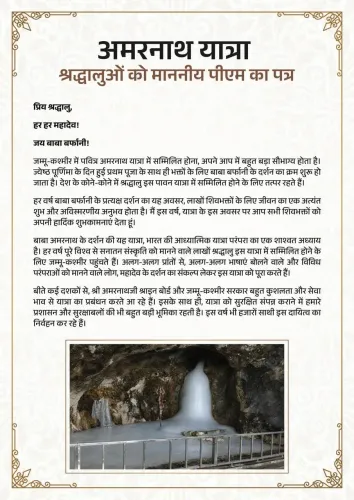
Union Jal Shakti Minister C. R. Paatil shared a letter from Prime Minister Narendra Modi carrying five resolutions for Amarnath Yatra pilgrims, describing the annual pilgrimage as an eternal expression of India's spiritual tradition and cultural unity.
Key Takeaways
Paatil , Union Jal Shakti Minister and senior BJP leader, shared the post on 3 July 2026 .
Prime Minister Narendra Modi addressed a letter to Amarnath pilgrims outlining five resolutions ( paanch sankalp ) for devotees.
The Shri Amarnath Yatra is managed by the Shri Amarnathji Shrine Board under the Shri Amarnathji Shrine Act, 2000 .
The shrine of Baba Barfani is located at an altitude of approximately 3,888 metres in Jammu and Kashmir .
The yatra has significant economic impact on local communities in Jammu and Kashmir , including porters, pony operators, and traders.
The pilgrimage is a key marker of central government administration in Jammu and Kashmir since its reorganisation as a Union Territory in 2019 .
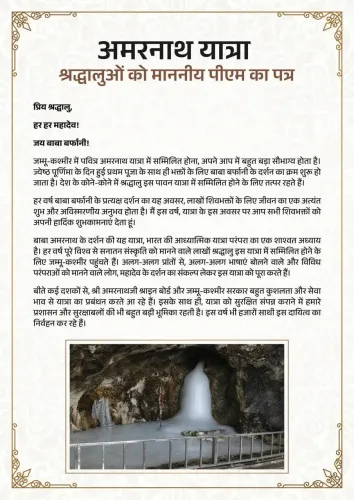
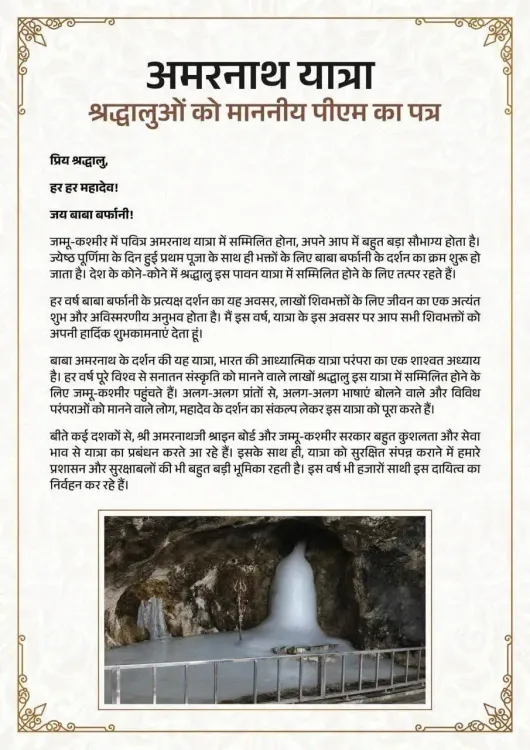
Union Jal Shakti Minister C. R. Paatil on Friday, 3 July 2026, shared a letter by Prime Minister Narendra Modi addressed to Amarnath pilgrims, calling the annual yatra an 'eternal chapter of our spiritual tradition and cultural unity.' The letter, which outlines five resolutions (paanch sankalp) for devotees, was shared by the minister ahead of the pilgrimage season.
Context
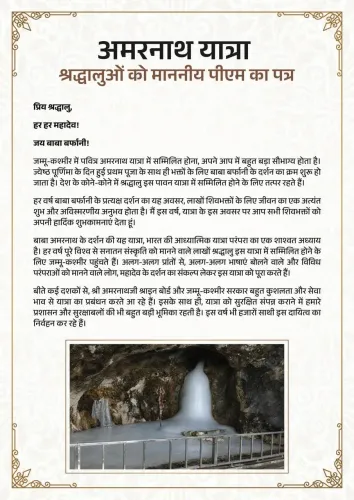
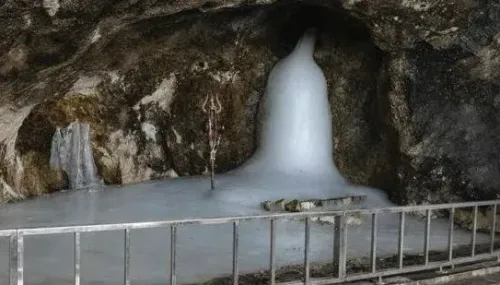
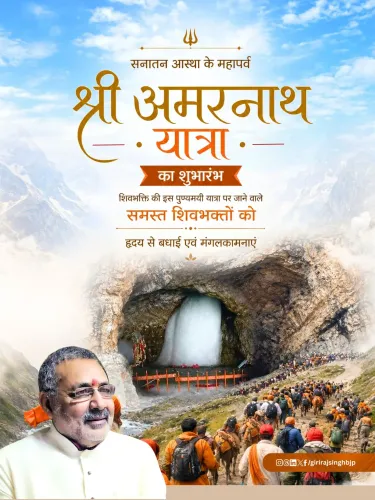
In his post on X, Paatil described the Shri Amarnath Yatra — the pilgrimage to the naturally formed ice lingam of Baba Barfani in the high-altitude cave shrine of Jammu and Kashmir — as 'hamaari aadhyatmik parampara aur saanskritik ekta ka shaashvat adhyaay' (an eternal chapter of our spiritual tradition and cultural unity). He shared what he described as a letter from Prime Minister Modi carrying five resolutions for pilgrims undertaking the sacred journey. The post was accompanied by two images, believed to include the text of the Prime Minister's letter.
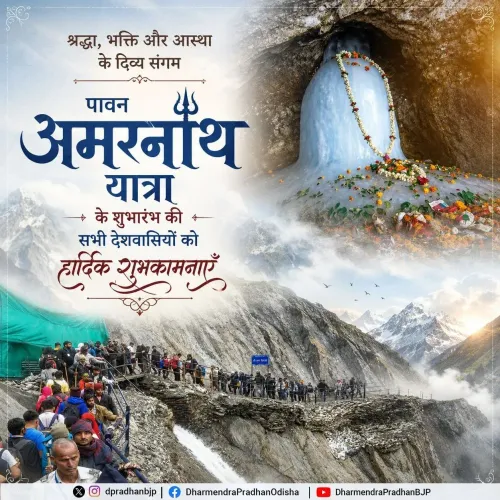
The Amarnath Yatra is one of India's most prominent Hindu pilgrimages, drawing hundreds of thousands of devotees each year to a shrine situated at an altitude of roughly 3,888 metres in the Himalayan ranges of Jammu and Kashmir. The pilgrimage is managed under the Shri Amarnathji Shrine Board, constituted under the Shri Amarnathji Shrine Act, 2000.
Policy Backdrop
Since the reorganisation of Jammu and Kashmir into a Union Territory in August 2019, the central government has placed heightened administrative and security focus on the region, with the Amarnath Yatra serving as a key annual touchstone for that attention. Successive editions of the yatra have seen upgrades to registration systems, medical infrastructure along the twin routes via Baltal and Pahalgam, and increased paramilitary deployment.
The BJP-led central government has consistently framed major Hindu pilgrimages as expressions of national integration and cultural heritage. Senior ministers amplifying the Prime Minister's direct communications to pilgrims fits a well-established pattern of coordinated official outreach around such events.
Stakeholders and Impact
The primary audience for PM Modi's letter is the large body of registered pilgrims preparing for the yatra season. The Shrine Board, state administration of Jammu and Kashmir, and security forces — including the CRPF and Indian Army — are the principal institutional stakeholders responsible for ensuring safe passage for devotees.
Local communities along the yatra routes, including pony operators, porters (pithoos), and traders, have a direct economic stake in the pilgrimage season. A smooth, well-attended yatra translates into significant seasonal income for these groups as well as broader tourism revenue for the Union Territory.
What's Next
Official announcements on registration timelines, medical fitness requirements, and security protocols for the current yatra season are expected from the Shri Amarnathji Shrine Board in the coming days. Any follow-up communication from the Prime Minister's Office elaborating on the five resolutions outlined in the letter will be closely watched by both pilgrims and administrators. The yatra's smooth conduct will remain a key indicator of the central government's administrative grip over Jammu and Kashmir ahead of the broader political calendar.
Point of View
Particularly in Jammu and Kashmir post-2019. The framing of the yatra as an 'eternal chapter' of spiritual and cultural identity carries deliberate political resonance in a Union Territory that remains a sensitive administrative and electoral context. By channelling the Prime Minister's direct communication through senior ministers, the party reinforces a top-down message of governance and devotion simultaneously. This pattern is likely to intensify as the yatra season progresses and the government seeks to demonstrate administrative competence in the region.
NationPress
3 Jul 2026
Frequently Asked Questions
What is the Amarnath Yatra?
The Amarnath Yatra is an annual Hindu pilgrimage to the Amarnath cave shrine in Jammu and Kashmir, where devotees worship a naturally formed ice lingam known as Baba Barfani. It is one of India's most significant religious pilgrimages, drawing hundreds of thousands of devotees each year.
What did PM Modi's letter to Amarnath pilgrims say?
PM Modi's letter, shared by Union Jal Shakti Minister C. R. Paatil on 3 July 2026, outlines five resolutions (paanch sankalp) for Amarnath Yatra pilgrims. The specific content of the five resolutions has not been independently detailed in official public statements beyond the post.
Who manages the Amarnath Yatra?
The Amarnath Yatra is managed by the Shri Amarnathji Shrine Board, which was constituted under the Shri Amarnathji Shrine Act of 2000. The Board oversees registration, medical facilities, security coordination, and infrastructure along the pilgrimage routes.
What are the two routes for the Amarnath Yatra?
The Amarnath Yatra is accessible via two main routes: the Baltal route, which is shorter and steeper, and the Pahalgam route, which is longer and more gradual. Both routes are managed with medical posts and security cover during the pilgrimage season.
Why is C. R. Paatil sharing posts about Amarnath Yatra?
C. R. Paatil is a senior BJP leader and Union Minister of Jal Shakti. His sharing of PM Modi's letter to Amarnath pilgrims aligns with the BJP government's practice of senior ministers amplifying the Prime Minister's outreach on major religious and cultural events.