Jal Shakti Minister Paatil spotlights Gujarat farmers leading Catch the Rain drive
Synopsis
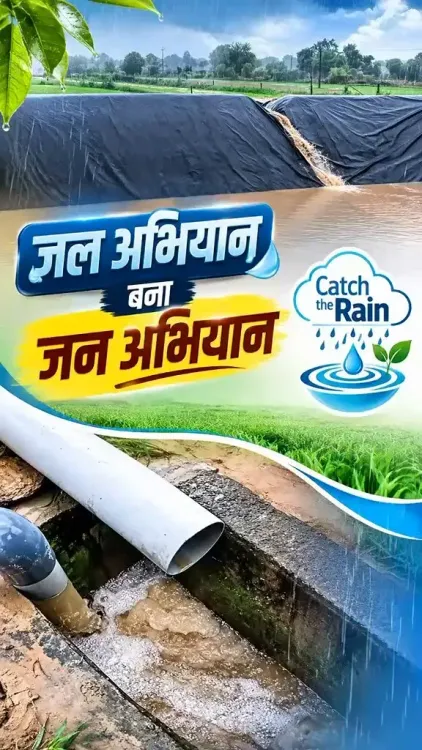
Jal Shakti Minister C. R. Paatil has spotlighted two Gujarat farmers — one using a farm pond in Dhanera taluka and another using bore-recharge in Lakhani taluka — as ground-level proof of PM Modi's Catch the Rain campaign turning water conservation into a people's movement.
Key Takeaways
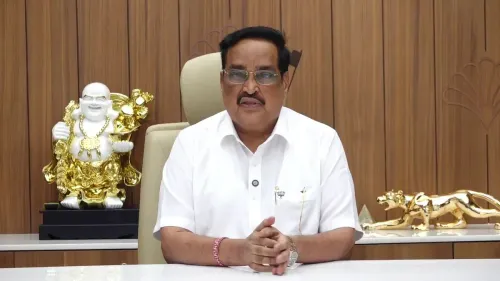
Paatil , Union Jal Shakti Minister, on 28 July 2026 highlighted two Gujarat farmers as exemplars of the Catch the Rain campaign.
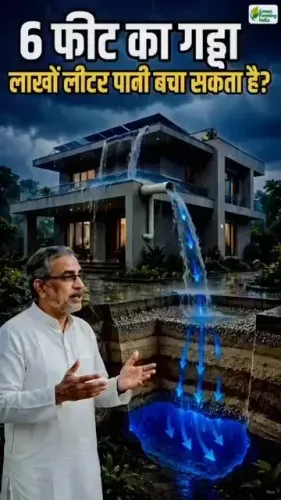
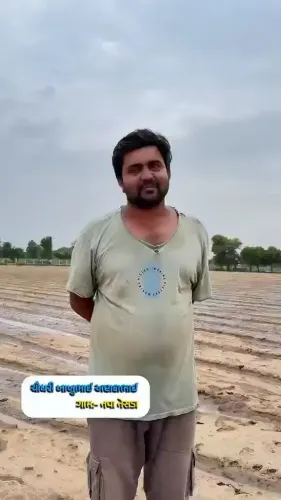
Farmer Devrajbhai Chaudhary of Bhati village, Dhanera taluka (Banaskantha district) is harvesting rainwater through a khet talavdi (farm pond).
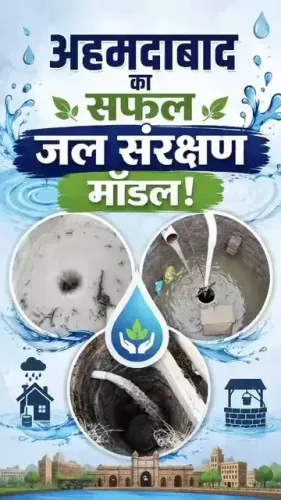
Farmer Prakashbhai Chaudhary of Sarkari Golia village, Lakhani taluka is using bore-recharge technology to replenish groundwater.
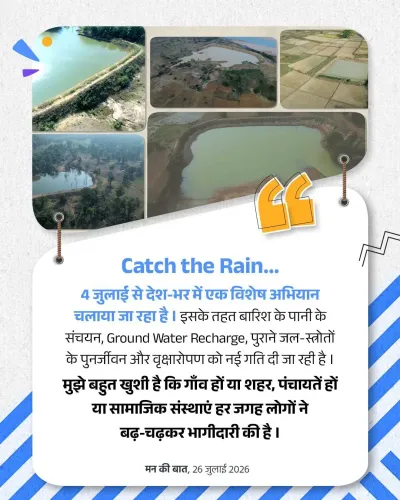
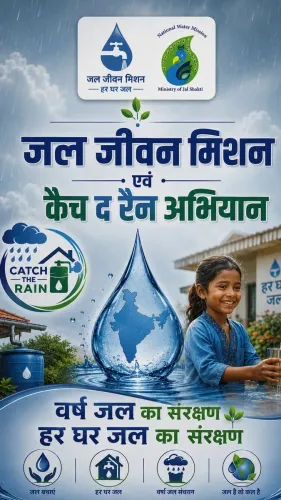
The Catch the Rain campaign was launched by the Ministry of Jal Shakti in April 2021 to build decentralised water-harvesting structures before each monsoon.
Gujarat has been a consistent model state for decentralised water management, including under the Atal Bhujal Yojana for over-exploited groundwater blocks.
The minister's post signals a shift in official messaging — from campaign launches to named, replicable individual examples.
Two farmers in rural Gujarat are doing what a national water campaign was always meant to inspire — catching rain before it runs away. Union Jal Shakti Minister C. R. Paatil on Tuesday, 28 July 2026 highlighted their work as living proof that Prime Minister Narendra Modi's Catch the Rain initiative has taken root far beyond government offices.
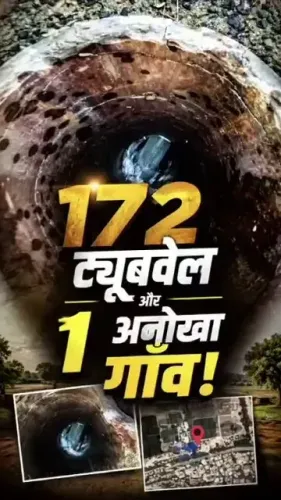
Paatil pointed to Devrajbhai Chaudhary of Bhati village, Dhanera taluka, Banaskantha district, who has built a khet talavdi — a farm pond — to harvest rainwater directly on agricultural land. In Lakhani taluka's Sarkari Golia village, Prakashbhai Chaudhary is using bore-recharge technology to push monsoon runoff back into the ground, replenishing aquifers that years of extraction have drawn down. The minister described these efforts as 'an inspiring picture of the people's resolve' behind the campaign.
What Catch the Rain actually asks of ordinary citizens
The Catch the Rain campaign was launched by the Ministry of Jal Shakti in April 2021 with a deceptively simple premise: build as many water-harvesting structures as possible before the monsoon arrives, and let communities — not just engineers — lead the charge. Farm ponds, check dams, rooftop collectors, bore-recharge pits — the campaign deliberately kept the technology low-barrier so that a single farmer could participate without waiting for a government contractor.
Gujarat has been a recurring reference point in this national narrative. The state has a long history of decentralised water management — check-dam construction in semi-arid districts, groundwater recharge in over-exploited blocks under the Atal Bhujal Yojana — and the two villages Paatil cited sit squarely in that tradition. Banaskantha, where Dhanera taluka lies, is one of the drier belts of north Gujarat, making every litre of harvested rain count twice.
From a 2021 campaign to a 2026 ground reality
What Paatil's post signals is a shift in how the government is now telling the Catch the Rain story — less about scheme launches, more about named individuals and specific techniques. That pivot matters. Naming Devrajbhai and Prakashbhai by name, and specifying khet talavdi and bore-recharge as distinct methods, turns an abstract campaign into a replicable model other farmers can copy.
The broader push since 2019 has been to reframe water security as a mass-participation issue rather than a purely engineering problem. When a Union Minister amplifies village-level examples from his home state, it also functions as a template — implicitly asking other states to surface their own Devrajbhais and Prakashbhais ahead of the next monsoon assessment cycle.
The monsoon is the country's largest annual water event. How much of it gets captured rather than lost to runoff will increasingly define India's groundwater future — and right now, two farmers in Gujarat are making that argument without saying a word.
Point of View
Paatil is deploying a well-tested communication strategy: the human story as policy proof. This fits a broader pattern since 2021 of the Jal Shakti Ministry moving Catch the Rain from a launch-day headline into a durable grassroots brand. Highlighting Gujarat examples also carries a domestic political subtext — the minister is a former Gujarat BJP president, and showcasing his home state's water culture reinforces the state's role as a governance model. The sharper question for the campaign's next phase is whether this bottom-up storytelling translates into verifiable, scaled impact data that can hold up to independent scrutiny.
NationPress
28 Jul 2026
Frequently Asked Questions
What is the Catch the Rain campaign?
Catch the Rain is a Ministry of Jal Shakti initiative launched in April 2021 that urges communities, farmers, and local bodies to build rainwater-harvesting structures — such as farm ponds, check dams, and bore-recharge pits — before the monsoon season arrives, treating water conservation as a people's movement rather than a government-only task.
What did Jal Shakti Minister C. R. Paatil post about on 28 July 2026?
Paatil highlighted two Gujarat farmers — Devrajbhai Chaudhary of Dhanera taluka, who built a farm pond for rainwater storage, and Prakashbhai Chaudhary of Lakhani taluka, who uses bore-recharge technology — as inspiring examples of PM Modi's Catch the Rain campaign in action.
What is a khet talavdi?
A khet talavdi is a farm pond — a small, on-field water body dug by a farmer to collect and store rainwater or runoff directly on agricultural land, reducing dependence on irrigation canals or groundwater pumping.
What is bore-recharge technology in water conservation?
Bore-recharge (or borewell recharge) is a technique where monsoon runoff or harvested rainwater is channelled into an existing or dedicated borewell shaft, allowing it to percolate down and replenish depleted underground aquifers rather than flowing away as surface runoff.
Why is Gujarat highlighted for water conservation under Catch the Rain?
Gujarat has a long tradition of decentralised water management — including check-dam networks in semi-arid districts and groundwater recharge under the Atal Bhujal Yojana — making it a natural reference state for showcasing community-led rainwater harvesting under the national Catch the Rain campaign.