J&K High Court quashes drug case, calls 8-year delay 'shocking'
Synopsis
The J&K High Court has quashed a drug-testing prosecution that dragged on for eight years — only to collapse because the disputed sample never reached the Central Drugs Laboratory and had long expired. Justice Wasim Sadiq Nargal's ruling is a damning indictment of systemic failure across trial courts, drug inspectors, and clerical machinery, and raises hard questions about how India's drug-regulatory enforcement actually works in practice.
Key Takeaways
The J&K High Court quashed criminal proceedings against a pharmaceutical company under the Drugs and Cosmetics Act, 1940 , citing an eight-year delay .
The disputed drug sample expired in July 2012 ; cognisance was taken only in February 2020 , by which point re-testing was impossible.
The Central Drugs Laboratory, Kolkata reported in October 2016 that it had never received the sample — yet proceedings continued for years.
Justice Wasim Sadiq Nargal held the delay violated the accused's right to a fair and speedy trial under Article 21 of the Constitution.
The Drug Controller, Drugs and Food Control Organisation, J&K has been directed to constitute a committee to fix accountability for the sample's disappearance.
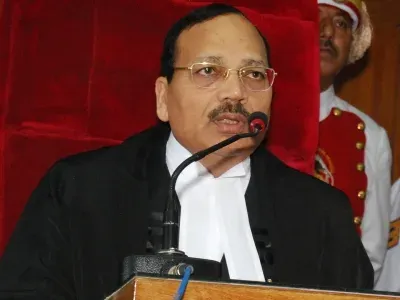
The Jammu and Kashmir High Court has quashed criminal proceedings against a pharmaceutical company under the Drugs and Cosmetics Act, 1940, ruling that an eight-year delay in prosecuting the case — combined with the irreversible loss of the accused's statutory right to re-test a disputed drug sample — 'shocks the conscience of this Court.' The judgment, delivered by Justice Wasim Sadiq Nargal, marks a sharp rebuke of procedural failures across the drug-testing machinery in Jammu and Kashmir.
Background of the Case
The dispute centred on a drug sample whose shelf life had expired in July 2012. The complaint was filed in May 2012, and the petitioner-company promptly exercised its statutory right to challenge the government analyst's report, seeking re-analysis by the Central Drugs Laboratory (CDL), Kolkata.
In a critical development in October 2016, the CDL informed the trial court that the disputed sample had never been received by it for testing. Despite this disclosure, proceedings continued for several more years. Cognisance was eventually taken in February 2020 — nearly eight years after the original complaint — on the basis of the original government analyst's report, even though the sample had long since expired and the opportunity for meaningful re-testing had been permanently lost.
What the High Court Found
Justice Nargal observed that the trial court, the clerical machinery, and the Drug Inspector were all obligated to ensure that the sample reached the designated laboratory within the prescribed statutory period. Instead, the matter was allowed to drift through repeated reminders without resolution.
The Court termed the case a 'stark instance' where statutory timelines had been rendered meaningless. It noted that once the CDL reported in 2016 that it had not received the sample, the trial court was duty-bound to conduct a proper inquiry — to determine where the sample had gone, at what stage it was lost, and who bore responsibility for the failure.
Critically, the High Court held that the failure could not be attributed to the petitioner-company, which had exercised its statutory right within the prescribed period. The Court further held that the extraordinary delay had materially compromised the fairness of the proceedings and attracted the constitutional guarantee of a fair and speedy trial under Article 21 of the Constitution.
On Public Health vs. Fair Procedure
The Court was unequivocal that public health concerns cannot be invoked to dilute the requirement of a legally compliant procedure. Where the quality of a drug is under scrutiny, the Court said, the testing mechanism must be completed 'promptly, properly and in accordance with law' so that both public-health interests and the accused's right of defence are adequately protected. The Court expressed that it was 'deeply perturbed' by the casual manner in which the matter had been handled across multiple forums over nearly a decade.
Administrative Accountability Ordered
Taking serious note of the procedural lapses, the High Court directed the Drug Controller, Drugs and Food Control Organisation, J&K, to constitute a committee to determine responsibility for the failure. The committee has been tasked with ascertaining why the disputed sample never reached the CDL and whether any negligence was committed by the Drug Inspector or any other officer involved.
The panel has also been directed to examine whether any official of the petitioner-company played any role in preventing the sample from reaching the laboratory. All stakeholders are to be given an opportunity of being heard before any conclusion is reached.
Significance of the Ruling
The judgment reinforces that procedural fairness and timely scientific examination are non-negotiable in drug-testing prosecutions. This is not an isolated concern — courts across India have increasingly flagged systemic delays in drug-regulatory enforcement as a threat to both public safety and the rule of law. The ruling signals that prolonged administrative inaction, when it destroys an accused's statutory rights, can itself constitute an abuse of the process of law.
The committee's findings are expected to determine whether disciplinary action follows against the officials concerned.
Point of View
A laboratory that flagged the gap in 2016, and a trial court that pressed on regardless for four more years: each failure compounded the last. The Court's direction to constitute an accountability committee is welcome, but such panels rarely produce punitive outcomes. The deeper question is structural — whether drug inspectors and trial courts have the resources, training, and incentives to enforce statutory timelines before evidence literally expires.
NationPress
5 Oct 2026
Frequently Asked Questions
Why did the J&K High Court quash the drug-testing prosecution?
The Court quashed the case because the disputed drug sample never reached the Central Drugs Laboratory for re-testing, the sample had expired by the time cognisance was taken in 2020, and the accused company's statutory right to an independent re-analysis had been irretrievably lost. The Court held that continuing the prosecution under these circumstances would amount to an abuse of the process of law.
What was the eight-year delay about?
The complaint was filed in May 2012, but cognisance was taken only in February 2020 — nearly eight years later. During this period, the disputed sample expired, the Central Drugs Laboratory reported in October 2016 that it had never received the sample, and no proper inquiry was conducted to trace what had happened to it.
Who has been held responsible for the failure?
The High Court has not yet assigned individual blame, but it directed the Drug Controller, Drugs and Food Control Organisation, J&K, to constitute a committee to determine whether the Drug Inspector or any other officer was negligent. The panel will also examine whether any official of the pharmaceutical company interfered with the sample's transit to the laboratory.
What is the significance of Article 21 in this ruling?
Article 21 of the Constitution guarantees every person the right to life and personal liberty, which the Supreme Court has interpreted to include the right to a fair and speedy trial. The J&K High Court held that the eight-year delay, combined with the permanent loss of the right to re-test the sample, violated this constitutional guarantee.
Does this ruling mean the drug in question was safe?
The ruling does not make any finding on the quality or safety of the drug. The Court quashed the prosecution solely on the grounds of procedural failure — the statutory re-testing mechanism was not completed, making a fair trial impossible. The question of the drug's quality remains unresolved.