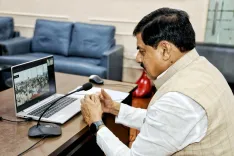
J&K LG Manoj Sinha chairs security review, directs district-level coordination

Synopsis
J&K Lt Governor Manoj Sinha convened all Deputy Commissioners and Senior Superintendents of Police at Lok Bhavan on 30 October to review security preparedness across the UT — a reminder that under the Reorganisation Act, 2019, law and order in Jammu and Kashmir remains firmly in LG-Central hands, outside the elected government's remit.
Key Takeaways
Lt Governor Manoj Sinha chaired a high-level security review at Lok Bhavan, Srinagar on 30 October 2026 .
All Deputy Commissioners and Senior Superintendents of Police from across J&K attended the meeting.
The review focused on district-level security preparedness and strengthening coordination between civil administration and police.
Under the J&K Reorganisation Act, 2019 , law and order and police powers vest with the Lt Governor and the Centre, not the elected Assembly.
Counter-terrorism operations and action against terror networks remain core responsibilities of the Lt Governor-led administration in coordination with central agencies.
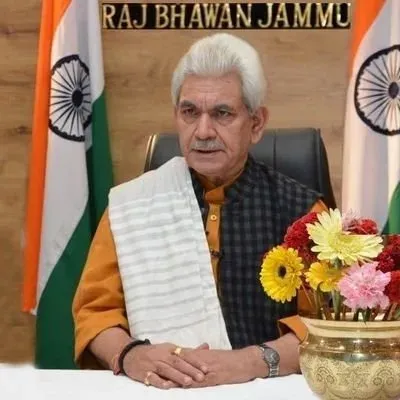
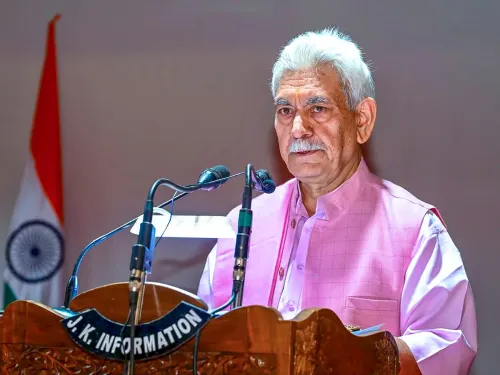
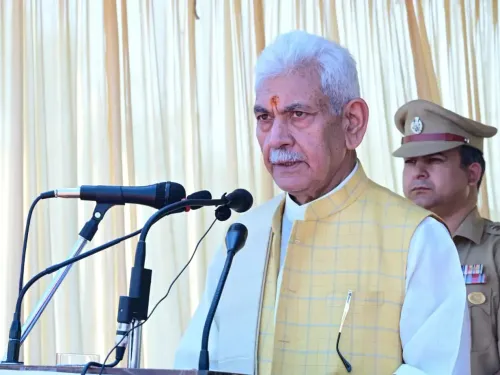
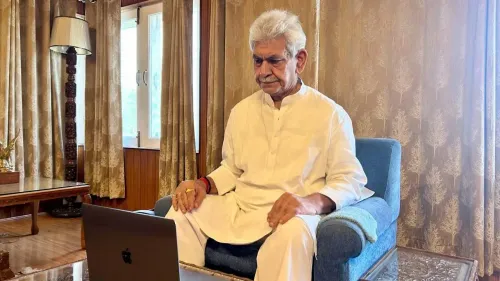
Jammu and Kashmir Lieutenant Governor Manoj Sinha on Friday, 30 October 2026, chaired a high-level security review meeting at Lok Bhavan, Srinagar, to assess the prevailing security situation and overall preparedness across the Union Territory. The meeting brought together all Deputy Commissioners and Senior Superintendents of Police to evaluate district-level readiness and strengthen coordination between civil and police machinery.
Key Developments at the Review
Senior officials briefed Lt Governor Sinha on the security situation, recent developments, and preparedness measures undertaken in their respective districts. The review focused on identifying emerging challenges and ensuring that district administrations are equipped to respond swiftly and effectively.
According to officials, the meeting placed particular emphasis on tightening coordination between civil administration and police authorities — a recurring priority in the UT's security management framework. This is part of the administration's broader effort to maintain close surveillance of the security environment across Jammu and Kashmir.
Why the LG Holds Security Authority
Under the constitutional and legal framework governing the Union Territory, law and order, police, public order, and security fall directly under the jurisdiction of the Lt Governor and the Central government — not the elected Jammu and Kashmir government. The Jammu and Kashmir Reorganisation Act, 2019, explicitly excludes matters relating to public order and police from the legislative and executive powers of the elected Assembly.
Subsequent amendments to the Transaction of Business Rules under the Act have further codified the Lt Governor's administrative control over the police, prisons, prosecution, and forensic science departments. Postings, transfers, and service matters concerning All India Services officers — including IAS and IPS officers — also fall within the Lt Governor's domain.
Counter-Terror Mandate and Central Coordination
Security management, counter-terrorism operations, and action against terror networks remain among the principal responsibilities of the Lt Governor-led administration, working in close coordination with central security agencies. Proposals concerning the appointment of the Advocate General and law officers, as well as decisions on prosecution sanctions and legal appeals, require the Lt Governor's concurrence and approval.
What Comes Next
The review is expected to translate into reinforced district-level protocols and enhanced inter-agency coordination in the coming weeks. With the security landscape in Jammu and Kashmir remaining fluid, periodic high-level reviews of this nature are likely to continue as the administration works to pre-empt emerging threats and maintain operational readiness.
Point of View
Insulated from the elected government in ways that have no parallel in any other Indian state. The periodic high-level review format serves a dual purpose — operational calibration and a visible assertion of LG authority. What the readout does not reveal is whether the review was triggered by specific threat intelligence or is purely precautionary, a distinction that matters considerably. As long as the Reorganisation Act's exclusions remain in place, J&K's elected representatives will govern in a divided house — with the most consequential lever, security, beyond their reach.
NationPress
30 Oct 2026
Frequently Asked Questions
What was the purpose of LG Manoj Sinha's security review meeting on 30 October?
The meeting was convened to assess the prevailing security situation and district-level preparedness across Jammu and Kashmir. All Deputy Commissioners and Senior Superintendents of Police attended and briefed the Lt Governor on conditions in their respective districts.
Who attended the high-level security review at Lok Bhavan?
All Deputy Commissioners and Senior Superintendents of Police from across Jammu and Kashmir attended the meeting chaired by Lt Governor Manoj Sinha at Lok Bhavan in Srinagar.
Why does the Lt Governor, and not the elected government, control security in J&K?
Under the Jammu and Kashmir Reorganisation Act, 2019, matters relating to public order, police, and security are explicitly excluded from the legislative and executive powers of the elected Assembly. These powers vest directly with the Lt Governor and the Central government.
What administrative powers does the J&K Lt Governor hold over police and security?
The Lt Governor controls postings, transfers, and service matters of IAS and IPS officers, oversees police, prisons, prosecution, and forensic science departments, and has authority over prosecution sanctions and legal appeals. Counter-terrorism operations are also conducted under the Lt Governor's mandate.
Is this security review a regular occurrence in Jammu and Kashmir?
Yes, periodic high-level security reviews are part of the J&K administration's standing practice to maintain close surveillance of the security situation and ensure district-level machinery remains prepared for emerging challenges.