Nasha Mukt J&K campaign: 20,292 FIRs, 92 drug networks busted in 100 days
Synopsis
In 100 days, J&K's Nasha Mukt Abhiyaan registered over 20,000 FIRs, dismantled 92 drug networks, attached ₹188.9 crore in assets, and impounded 64 passports — while mobilising women, students, and religious institutions. L-G Sinha now wants a rehabilitation scheme to match the enforcement blitz, marking a critical shift from supply-side crackdown to long-term recovery.
Key Takeaways
20,292 FIRs were registered during the 100-day Nasha Mukt Jammu Kashmir Abhiyaan .
Agencies dismantled 92 drug networks and identified 4,474 drug hotspots across the Union Territory.
Assets worth ₹188.9 crore were attached under the PIT-NDPS Act and related provisions.
64 passports impounded, 884 driving licences and 687 vehicle registrations recommended for suspension or cancellation.
University of Jammu generated over 1,18,000 online pledges via the Nasha Mukt JK portal.
A new Rehabilitation and Socio-Economic Reintegration Scheme for drug abuse victims is set to be launched soon.
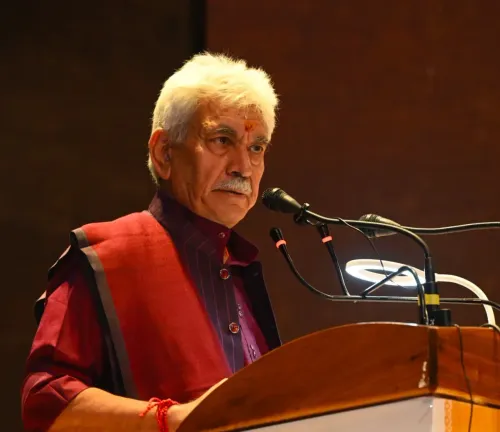
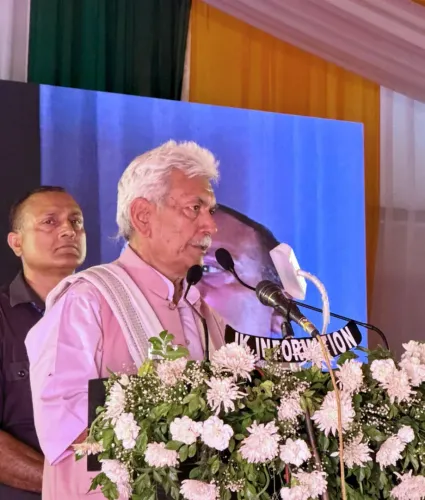
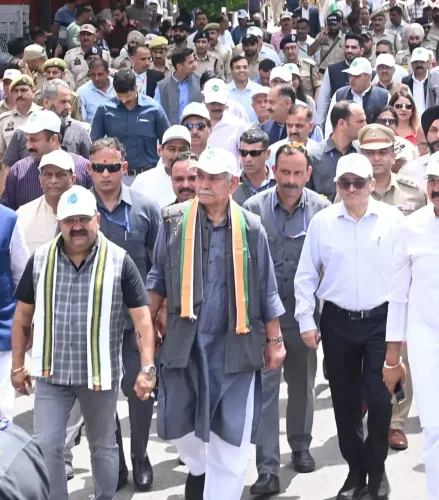
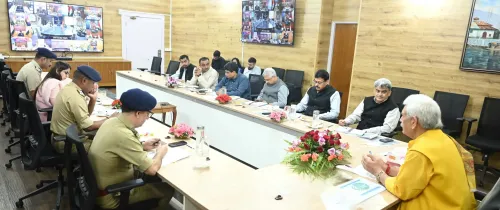
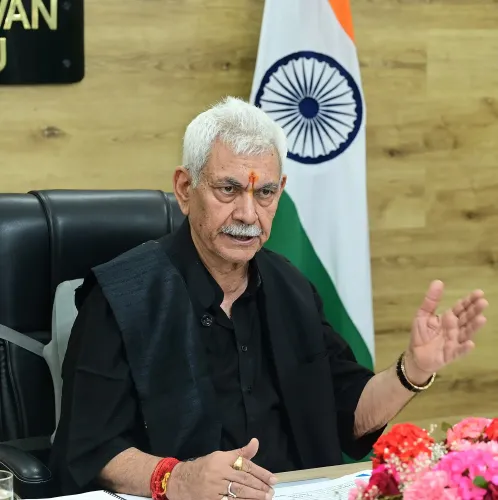
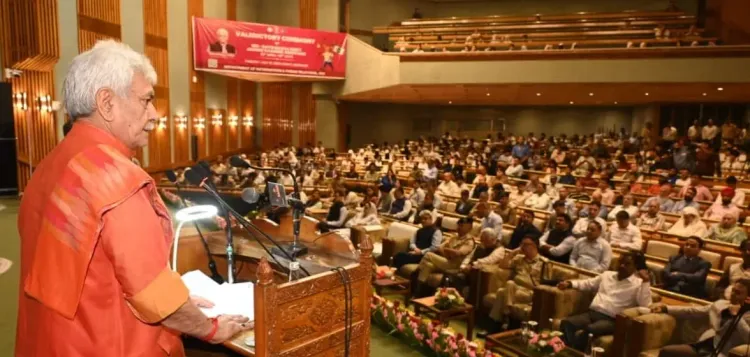
Lieutenant Governor Manoj Sinha on Tuesday declared that the 100-day Nasha Mukt Jammu Kashmir Abhiyaan has grown into a genuine people's movement, with mass public participation transforming the anti-narcotics drive far beyond a routine law-enforcement exercise. Speaking at a review of the campaign, Sinha directed all departments to act on pending recommendations against drug peddlers within 7 to 10 days and called for the removal of identified offenders from the system without further delay.
Scale of the Crackdown
Official figures place the campaign's legal footprint at 20,292 FIRs registered across Jammu and Kashmir during the 100-day window. Agencies dismantled 92 drug networks and mapped 4,474 drug hotspots across the Union Territory, enabling targeted enforcement in areas most affected by narcotics distribution and use.
Assets worth ₹188.9 crore were attached, with properties seized under stringent provisions including the PIT-NDPS Act. Regulatory actions extended beyond arrests: 884 driving licences were recommended for suspension or cancellation to curtail smuggler mobility, and 687 vehicle registrations were flagged for cancellation due to links with narcotic logistics. At least 64 passports were impounded to block international flight, 8 arms licences were suspended, and official security cover was withdrawn from eligible suspects.
Community at the Centre
The campaign drew institutional strength from Panchayat Mahila Samitis, youth clubs, senior citizens, and ex-servicemen. Religious institutions stepped in as local guardians, working to dismantle the social stigma that often prevents families from seeking help for addiction. L-G Sinha specifically lauded the role of local women, crediting their courage in identifying abuse cases and steering young people away from narcotics.
Notably, the University of Jammu ran campus-wide anti-drug drives that generated over 1,18,000 online pledges through the official Nasha Mukt JK portal — a signal of how deeply the campaign penetrated institutional life.
What Comes Next
The administration announced that a dedicated Rehabilitation and Socio-Economic Reintegration Scheme for Drug Abuse Victims will be launched shortly, aiming to sustain the campaign's momentum by addressing the demand side of the narcotics problem. This is a significant pivot: while the first 100 days focused heavily on supply-side enforcement, the forthcoming scheme signals a shift toward long-term recovery support for those already caught in the cycle of addiction.
This comes amid a broader national push to curb drug trafficking in border-sensitive Union Territories, where cross-border narco-networks have historically exploited porous supply chains. The scale and speed of the J&K campaign — 92 networks dismantled and nearly 20,300 FIRs in 100 days — positions it as one of the most intensive sub-national anti-drug drives in recent years.
Point of View
292 FIRs and 92 networks busted — are striking, but enforcement intensity alone does not measure a campaign's durability. J&K's drug problem is structurally linked to cross-border supply chains and economic marginalisation; without the promised rehabilitation scheme delivering at scale, the crackdown risks cycling the same individuals back into the narco-ecosystem. The pivot toward community mobilisation — women-led identification, campus pledges, religious institutions — is the more durable innovation here. Whether the Centre backs the reintegration scheme with adequate funding will determine if this 100-day sprint becomes a sustained shift or another well-documented but short-lived enforcement surge.
NationPress
20 Oct 2026
Frequently Asked Questions
What is the Nasha Mukt Jammu Kashmir Abhiyaan?
The Nasha Mukt Jammu Kashmir Abhiyaan is a 100-day anti-drug campaign launched by the J&K administration under Lieutenant Governor Manoj Sinha, targeting narcotics supply networks, traffickers, and drug hotspots across the Union Territory through coordinated law-enforcement and community mobilisation.
How many FIRs were registered during the campaign?
According to official figures, 20,292 FIRs were registered during the 100-day campaign, alongside the dismantling of 92 drug networks and the identification of 4,474 drug hotspots across Jammu and Kashmir.
What assets were seized under the campaign?
Authorities attached assets worth ₹188.9 crore , impounded 64 passports , recommended suspension of 884 driving licences and 687 vehicle registrations , and suspended 8 arms licences under provisions including the PIT-NDPS Act.
What role did communities play in the anti-drug drive?
Panchayat Mahila Samitis, youth clubs, senior citizens, ex-servicemen, and religious institutions all participated actively. Local women were specifically credited by L-G Sinha for leading identification efforts, while the University of Jammu generated over 1,18,000 online pledges through the Nasha Mukt JK portal.
What is the next step after the 100-day campaign?
The J&K administration has announced an upcoming Rehabilitation and Socio-Economic Reintegration Scheme for Drug Abuse Victims, designed to address the demand side of addiction and sustain the momentum built during the enforcement-heavy first phase.