JD-U hits back at Sonia Gandhi's memoir over Nitish Kumar portrayal
Synopsis
Sonia Gandhi's memoir accuses Nitish Kumar of always being under BJP's control and looking for a way out of the INDIA bloc — a characterisation JD-U has now publicly torn apart, calling Kumar the coalition's true founding architect and warning of a troubling new Congress culture of personal attacks on rival leaders.
Key Takeaways
JD-U on 11 November strongly rejected Sonia Gandhi's portrayal of Nitish Kumar in her memoir 'Belonging: A Journey of Love' .
Sanjay Kumar Jha , JD-U National Working President, called the memoir's claims 'outrightly baseless and fallacious.' JD-U asserts Kumar was the chief architect of the INDIA alliance , travelling nationally to unite opposition parties, with the bloc's first meeting held in Patna at his initiative.
The memoir reportedly claims Kumar was 'under the control of the BJP ' and sought a pretext to exit the alliance.
Rajeev Ranjan Prasad , JD-U National Spokesperson, accused Sonia Gandhi of misleading readers with 'unverified information.' JD-U cited Kumar's two-year imprisonment during the Congress-imposed Emergency as context for why the memoir's remarks are 'deeply regrettable.'
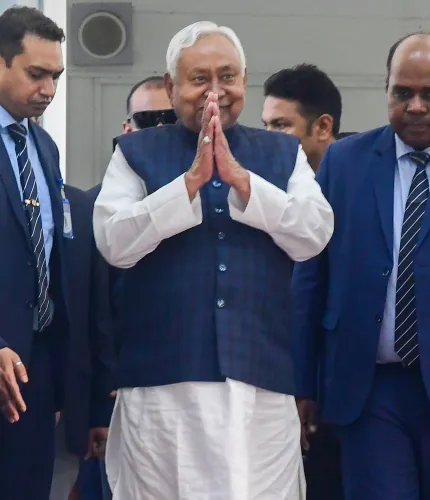
The Janata Dal-United (JD-U) on Wednesday, 11 November sharply rebutted former Congress President Sonia Gandhi's portrayal of Bihar Chief Minister Nitish Kumar in her memoir 'Belonging: A Journey of Love', asserting that Kumar was, in fact, the principal architect of the INDIA alliance and the central figure who persuaded rival opposition factions to unite under a single umbrella.
JD-U's Core Rebuttal
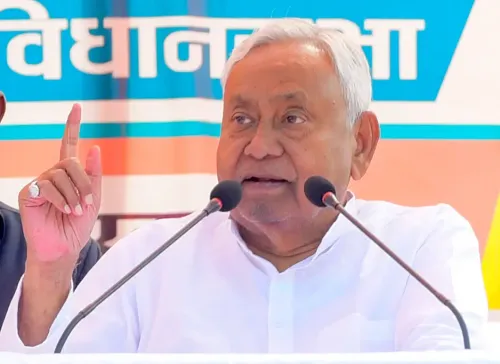
Sanjay Kumar Jha, JD-U's National Working President, addressed reporters in Patna and flatly rejected the memoir's claims. He said a troubling new culture has taken root within the Congress, where senior leaders make 'personal and highly trivial remarks' against politicians who have devoted their lives to public service. The memoir's assertion that Kumar departed the INDIA bloc for 'flimsy reasons' was, Jha said, 'outrightly baseless and fallacious.'
Jha also pointed to what he described as Congress's duplicity, citing Congress President Mallikarjun Kharge's recent remarks against Prime Minister Narendra Modi at an event in Patna as further evidence of the party's combative internal culture.
Nitish Kumar as INDIA Bloc Founder, Says JD-U
'It was Nitish Kumar who laid the foundation for the INDIA alliance — it was through his initiative and the trust placed in him that the opposition parties came together,' Jha said. He noted that Kumar travelled extensively across the country to bring various opposition leaders on board, and that the alliance's first formal meeting was held in Patna at his initiative. JD-U's account directly contradicts the memoir's framing of Kumar as a reluctant and disposable participant.
Jha also invoked history, reminding reporters that Kumar was imprisoned for two years during the Congress-imposed Emergency, making Sonia Gandhi's characterisation of him, he argued, all the more 'petty and regrettable.'
What Sonia Gandhi's Memoir Claims
According to reports, Sonia Gandhi's autobiography alleges that Nitish Kumar was always looking for an opportunity to leave the INDIA bloc and was 'under the control of the Bharatiya Janata Party (BJP).' The memoir frames his eventual exit from the alliance as a reflection of his divided loyalties rather than any failure of the coalition itself.
JD-U Spokesperson Doubles Down
Rajeev Ranjan Prasad, JD-U's National Spokesperson, accused Sonia Gandhi of 'misleading readers with unverified information' about the INDIA bloc's formation and Kumar's exit. Prasad maintained that several regional parties were initially apprehensive about joining a Congress-led alliance, and it was Kumar who persuaded them to participate. 'He brought the parties together, following which the first meeting of the INDIA alliance was also held in Patna,' Prasad said.
Prasad offered a pointed alternative explanation for Kumar's departure: competing ambitions and divergent regional political interests within Congress and its allies, he argued, made it evident that the grouping lacked the cohesion to mount a credible challenge to the National Democratic Alliance (NDA). 'That is why Nitish Kumar left the INDIA bloc,' he said.
Significance and What Comes Next
The row over Sonia Gandhi's memoir reopens old fault lines in Indian opposition politics, arriving at a moment when the INDIA alliance is already under pressure ahead of several state elections. JD-U's forceful response signals that the Bihar-based party — now a key NDA constituent — is unwilling to let the Congress-era narrative about Kumar's role go unchallenged. Whether the Congress officially responds to JD-U's rebuttal is likely to determine how far this war of words escalates.
Point of View
And the party has seized it with both hands. The irony is rich: a book meant to document personal legacy has reignited a debate about who actually built the INDIA alliance — and the evidence JD-U cites (the Patna meeting, Kumar's outreach tours) is not easily dismissed. What this episode really reveals is the Congress's enduring difficulty with coalition arithmetic: it needs regional allies but struggles to credit them without diminishing its own narrative. As long as that tension persists, memoir-triggered spats like this one will keep surfacing, complicating any future opposition consolidation.
NationPress
11 Nov 2026
Frequently Asked Questions
What does Sonia Gandhi's memoir say about Nitish Kumar?
Sonia Gandhi's memoir 'Belonging: A Journey of Love' reportedly claims that Nitish Kumar was always looking for an opportunity to exit the INDIA bloc and was 'under the control of the BJP.' The book frames his departure from the alliance as reflecting divided loyalties rather than any failure of the coalition itself.
How has JD-U responded to Sonia Gandhi's memoir?
JD-U National Working President Sanjay Kumar Jha called the claims 'outrightly baseless and fallacious,' asserting that Nitish Kumar was the chief architect of the INDIA alliance who personally brought rival opposition parties together. The party also accused Congress of fostering a culture of personal attacks against dedicated public servants.
Why did Nitish Kumar actually leave the INDIA bloc, according to JD-U?
JD-U National Spokesperson Rajeev Ranjan Prasad said Kumar left because Congress and its allies' competing ambitions and regional political interests made it clear the grouping could not mount a credible challenge to the NDA. He rejected the memoir's characterisation that Kumar departed for reasons connected to BJP influence.
What was Nitish Kumar's role in founding the INDIA alliance?
According to JD-U, Nitish Kumar initiated and organised the INDIA alliance, travelling across the country to persuade reluctant regional parties to join. The coalition's first formal meeting was held in Patna at Kumar's initiative, the party stated.
What is the Congress-imposed Emergency reference JD-U made?
JD-U's Sanjay Kumar Jha pointed out that Nitish Kumar was imprisoned for two years during the Emergency declared by the Congress government in the 1970s, arguing this history makes Sonia Gandhi's personal remarks about Kumar in the memoir 'deeply regrettable' and inappropriate.