JD(U) Leaders Affirm Continuation of Nitish Kumar's Governance Model and Future with Nishant Kumar
Synopsis
JD(U) leaders express unwavering support for Nitish Kumar's governance approach as he takes on a new role in the Rajya Sabha, while also highlighting the promising future of Nishant Kumar as a key leader for Bihar.
Key Takeaways
Nitish Kumar's governance model will continue to guide Bihar.
Nishant Kumar is seen as the future leader of the party.
Bihar's political landscape is evolving with Kumar's new role.
JD(U) emphasizes the importance of maintaining development.
Kumar has served in all four legislative bodies of India.
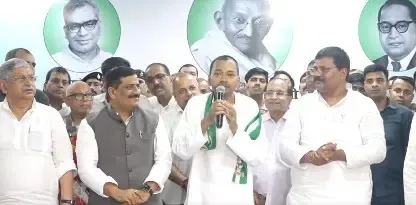
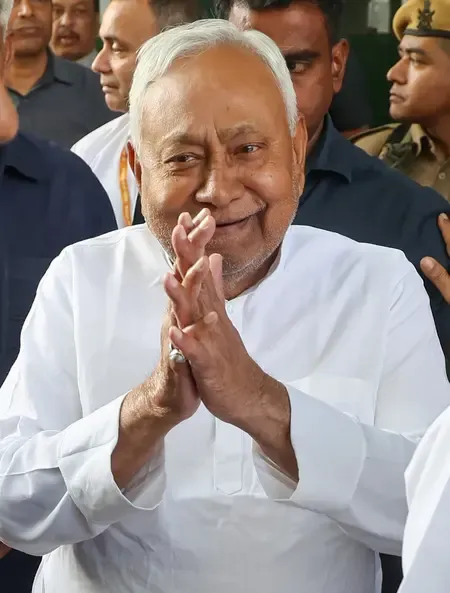
New Delhi, April 10 (NationPress) Prominent figures within the Janata Dal (United) on Friday expressed robust support for Nitish Kumar, emphasizing that his governance model will persist in directing the state as he transitions into a new role in the Rajya Sabha.
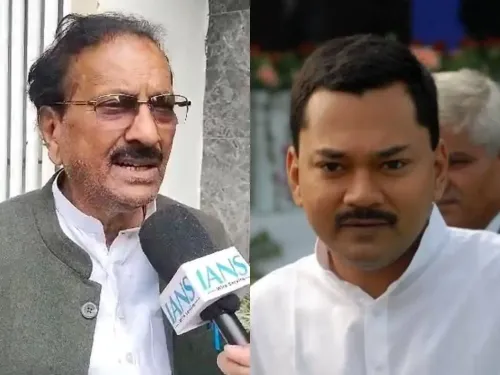
Commenting on the situation, JD(U) Bihar State President Umesh Singh Kushwaha stated, “In Bihar, our leader has established a clear trajectory for development, and under his guidance, the government operates effectively. The ‘Nitish model’ will persist in Bihar, ensuring continued progress.”
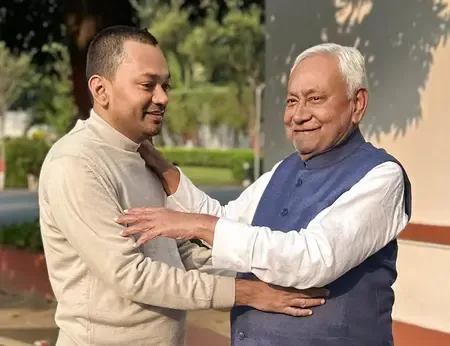
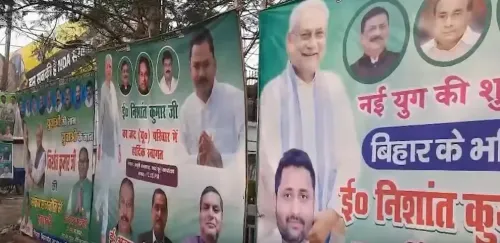
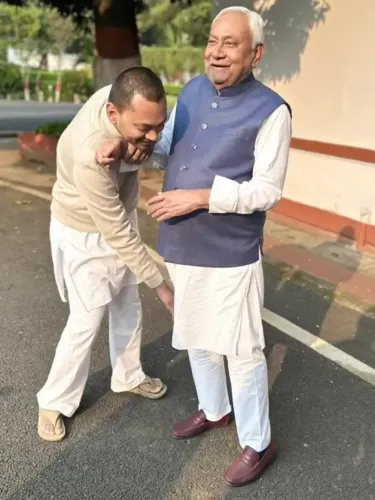
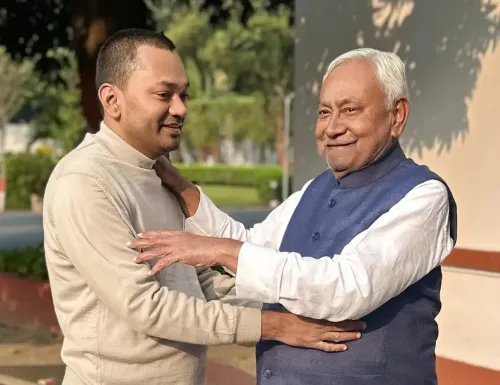
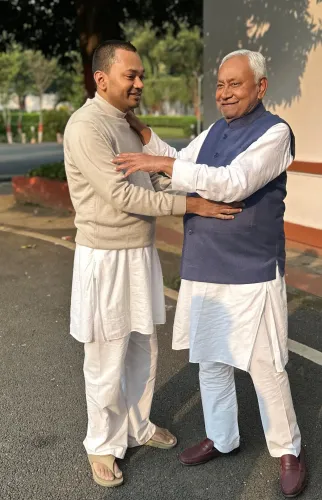
Regarding the party’s future leadership, Kushwaha expressed confidence in Nishant Kumar, asserting, “There is no doubt that Nishant Kumar embodies the future; he signifies the future of Bihar and our party. He is a promising, educated, and youthful leader....”
In a related comment, Bihar Minister Vijay Chaudhary remarked that Nitish Kumar’s choice to join the Rajya Sabha was his own decision. “...He made this choice independently, and we have always honored his decisions, which is why we are doing so now,” he noted.
Bihar Minister Madan Sahni added, “His journey has been extraordinary, and he has accomplished significant work. The entire state of Bihar is grieving; the people are deeply affected...”
Supporting this sentiment, JD(U) National General Secretary Harshvardhan Singh stated, “He has changed history and transformed Bihar. Any future leader will need to adhere to the path established by Nitish Kumar, and for many years ahead, the ‘Nitish model’ will prevail.”
Earlier today, Nitish Kumar took his oath as a member of the Rajya Sabha, marking a crucial milestone in his extensive political career. He arrived in New Delhi on Thursday with party leaders Sanjay Jha and Vijay Kumar Choudhary to finalize the formalities.
With this transition, Nitish Kumar joins a select group of Indian leaders who have served in all four legislative bodies—State Legislative Assembly, State Legislative Council, Lok Sabha, and now the Rajya Sabha—a remarkable achievement in public service.
Elected unopposed to the Upper House on March 16, he resigned from the Bihar Legislative Council on March 30, concluding nearly two decades of association with the body, where he held multiple consecutive terms since 2006.
This development signifies a new chapter in Bihar’s political landscape, as JD(U) leaders continue to stress the importance of maintaining governance under the “Nitish model”.
Point of View
JD(U) leaders emphasize continuity in governance through the 'Nitish model.' They express optimism about the party's future under young leaders like Nishant Kumar, highlighting a blend of experience and youth in Bihar's political evolution.
NationPress
10 Oct 2026
Frequently Asked Questions
What is the 'Nitish model'?
The 'Nitish model' refers to the governance approach established by Nitish Kumar, focusing on development and effective administration in Bihar.
Who is Nishant Kumar?
Nishant Kumar is a promising young leader within the JD(U) party, identified as a future leader for Bihar.
What role has Nitish Kumar taken on recently?
Nitish Kumar has recently been elected as a member of the Rajya Sabha, marking a significant milestone in his political career.
How long has Nitish Kumar been involved in politics?
Nitish Kumar has had a long political career spanning several decades, having served in various legislative bodies.
What impact will Nitish Kumar's transition have on Bihar?
JD(U) leaders believe that the transition will ensure continuity in governance and development under the established 'Nitish model'.