Jharkhand CMO: ₹10,000 monthly aid for women's self-reliance
Synopsis
The Chief Minister's Office of Jharkhand said lakhs of families are receiving at least ₹10,000 a month under women's empowerment, quoting CM Hemant Soren on a push to replace metro migration with local jobs and self-employment.
Key Takeaways
The Chief Minister's Office of Jharkhand on 28 November 2026 quoted CM Hemant Soren on a women's empowerment drive.
It said economic assistance of at least ₹10,000 a month is reaching lakhs of families .
The government said women are being linked to employment and self-employment inside the state .
The CMO contrasted that with an earlier pattern of Jharkhand women working in metropolitan cities.
Soren, the JMM chief minister since 2019 , has made welfare and tribal livelihoods a core public pitch.
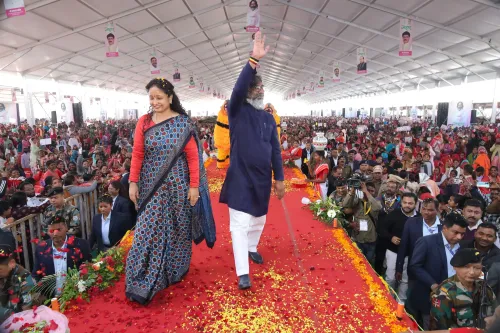
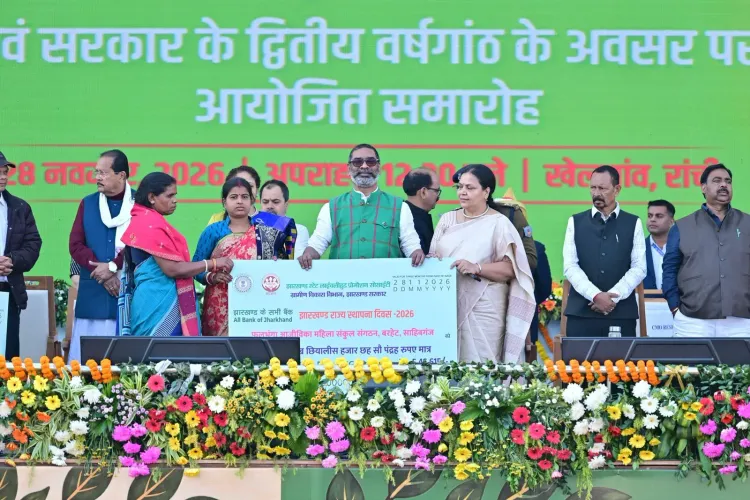
Lakhs of families in Jharkhand are receiving at least ₹10,000 every month under a women's empowerment push, the Chief Minister's Office of Jharkhand said on Saturday, 28 November 2026, quoting Chief Minister Hemant Soren. The claim is not just about cash. It is about reversing a familiar eastern-India story: daughters and wives boarding trains for low-wage work in distant metros.
The office posted Soren's remarks in Hindi. In English they read: ‘Under women's empowerment, economic assistance of at least ₹10,000 a month is reaching lakhs of families. Earlier, women from Jharkhand were seen working in metropolitan cities, but now an effort has been made to make them self-reliant by linking them to employment and self-employment within the state itself.’ A short original phrase in the post — महिला सशक्तीकरण (women's empowerment) — is the banner the government is hanging over both the transfer and the jobs pitch.
At least ₹10,000 reaching lakh families
The figure the CMO put on record is a floor, not a ceiling: at least ₹10,000 a month, said to be reaching lakhs of families. No beneficiary roster or disbursement ledger was attached, so the numbers stand as the government's own account of an ongoing welfare effort.
Hemant Soren, the JMM leader who has headed the state since 2019, has long staked his government on welfare and tribal livelihoods. Saturday's message folds cash support into that larger pitch of self-reliance for women who stay in the village economy.
From metro labour to work inside the state
For years, women from Jharkhand's rural belts were a visible part of domestic work, construction and factory labour in big cities. The CMO's argument is that employment and self-employment inside the state can break that circuit. Keep the wage at home, and the family stays put.
Eastern state governments have tried a similar mix: cash transfers plus local skills and self-employment, often sitting alongside the Centre's Deendayal Antyodaya Yojana–National Rural Livelihoods Mission (DAY-NRLM), which builds women's self-help groups and bank linkages. Jharkhand has repeatedly held up reduced female out-migration as the proof of concept.
The ₹10,000 floor still needs a jobs test
Cash on a passbook is only half the test. Whether that ₹10,000 floor actually lands every month, and whether local work holds, will be read in state budget lines and quarterly progress reports. That is the scoreboard this claim will be measured against.
For households that once sent a woman to a metro for survival wages, the political bet is simple: if work and support arrive at home, the train ticket becomes optional.
Point of View
And a campaign to keep women in local work instead of metro migration. That pairing is now a signature of eastern-state politics, where cash plus self-help groups is sold as both dignity and an anti-poverty tool. The test is not the slogan but whether the ₹10,000 actually lands every month and whether local jobs hold. Watch the next budget print and employment-retention data; that is where this claim becomes a record or a talking point.
NationPress
28 Nov 2026
Frequently Asked Questions
What did the Jharkhand CMO say about ₹10,000 assistance?
On 28 November 2026 the Chief Minister's Office of Jharkhand said economic assistance of at least ₹10,000 a month is reaching lakhs of families under women's empowerment, quoting Chief Minister Hemant Soren.
Did Hemant Soren announce a new named scheme?
The post did not name a new scheme. It described ongoing monthly assistance and a push to link women with employment and self-employment inside Jharkhand.
Why did Jharkhand women go to metros for work?
For years, women from rural Jharkhand took low-wage jobs in big cities. The CMO presented local employment and self-employment as the alternative that keeps families in the state.
How does this relate to national rural livelihood programmes?
State cash-and-skills efforts in eastern India often sit alongside the Centre's DAY-NRLM, which promotes women's self-help groups and financial inclusion. The CMO post itself did not cite that mission by name.
Who is Hemant Soren?
Hemant Soren is the Chief Minister of Jharkhand from the JMM. He has led the state government since 2019, with a public focus on welfare and tribal issues.