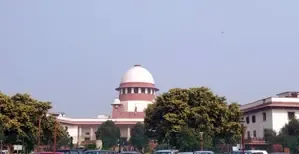
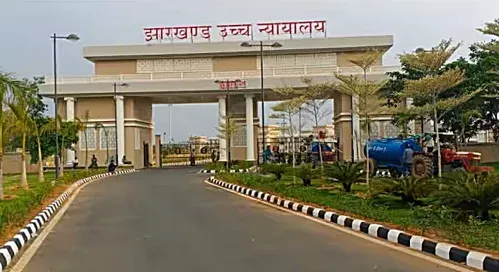
Jharkhand HC mandates judicial probe in all custodial death, rape cases
Synopsis
Jharkhand's High Court has exposed a stark accountability gap: 500 custody deaths over seven years, nearly half with no judicial inquiry. Thursday's ruling makes such probes mandatory by law — and orders District Judges to explain every uninvestigated case directly to the court. It is a rare instance of a High Court using its oversight powers to force a systemic reset on custodial accountability.
Key Takeaways
The Jharkhand High Court on 14 May ruled that judicial inquiry is mandatory in all custodial death and rape cases, with no exceptions.
A division bench of Chief Justice M.S.
Sonak and Justice Rajesh Shankar grounded the order in Section 196(2) of the BNSS and Section 176(1A) of the CrPC .
State data revealed approximately 500 custody deaths in Jharkhand between 2018 and 2025 ; nearly 250 cases had no judicial inquiry.
JHALSA has been directed to draft an SOP aligned with NHRC guidelines for custodial investigations.
District Judges must submit reports directly to the High Court explaining the absence of probes in uninvestigated cases.
The PIL was filed by Mohammad Mumtaz Ansari , represented by advocate Shadab Ansari .
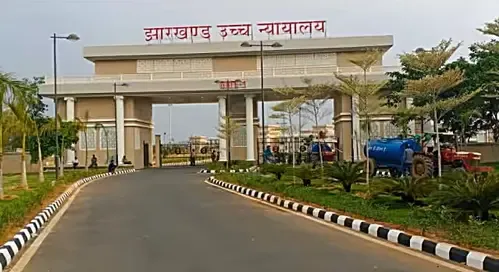
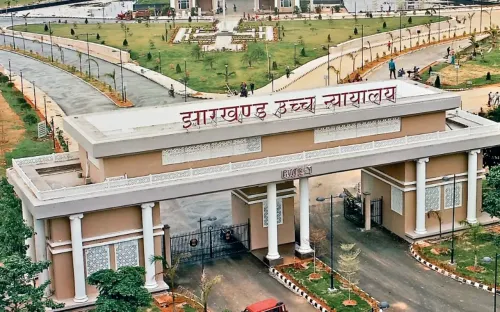
The Jharkhand High Court on Thursday, 14 May ruled that a judicial inquiry is now compulsory in every case of death or rape occurring in police or jail custody in the state, delivering a landmark order on a public interest litigation that exposed systemic lapses in custodial accountability. The ruling marks a decisive shift from the previous practice of relying on Executive Magistrate inquiries, which the court found inadequate.
What the Court Ordered
A division bench comprising Chief Justice M.S. Sonak and Justice Rajesh Shankar directed that all custodial deaths and rape cases must undergo judicial inquiry without exception. The bench grounded its order in Section 196(2) of the Bharatiya Nagarik Suraksha Sanhita (BNSS) and the corresponding Section 176(1A) of the erstwhile Code of Criminal Procedure (CrPC) — provisions that, the court held, make such inquiries mandatory by law.
The bench further directed the Jharkhand Legal Services Authority (JHALSA) to frame a Standard Operating Procedure (SOP) in line with National Human Rights Commission (NHRC) guidelines, aimed at ensuring fair, impartial, and thorough investigations in all such cases.
The Scale of the Lapse
The magnitude of the systemic failure came into sharp relief during the hearing. An affidavit filed by the state Home Secretary admitted that approximately 500 deaths occurred in police and jail custody in Jharkhand between 2018 and 2025. In nearly half of those cases — around 250 instances — no judicial inquiry was conducted, with the state instead relying on Executive Magistrates.
Taking serious note of this disclosure, the court directed District Judges across the state to submit detailed reports directly to the High Court, explaining the reasons for the absence of mandatory judicial inquiries in each of these cases.
Background and Petitioner
The PIL was filed by Mohammad Mumtaz Ansari, represented by advocate Shadab Ansari, who placed written submissions, multiple Supreme Court judgments, and NHRC guidelines before the bench. The court's ruling drew directly on those submissions, underscoring that the legal obligation for judicial inquiry had existed in statute but was being routinely bypassed in Jharkhand.
Notably, the Jharkhand government had until now treated judicial inquiries as discretionary rather than mandatory, a position the High Court has now categorically rejected.
Significance and What Comes Next
The order represents a structural correction in how custodial accountability is enforced in Jharkhand. By requiring District Judges to report directly to the High Court on uninvestigated cases, the bench has created a direct oversight mechanism that bypasses the executive chain — a significant check on potential cover-ups.
With JHALSA now tasked with drafting a formal SOP aligned with NHRC standards, the ruling is expected to set a replicable template for other states where custodial inquiry norms remain inconsistently applied. The High Court will continue to monitor compliance, and the reports from District Judges are expected to trigger further judicial scrutiny of individual cases.
Point of View
With nearly half uninvestigated, is not an administrative oversight; it is a structural failure of accountability. The Jharkhand government's reliance on Executive Magistrates — who sit within the same executive hierarchy as the police — was a built-in conflict of interest that this ruling now formally dismantles. The question is whether compliance follows the order. High Court directives on custodial accountability have been issued before across India; the gap between judicial mandate and ground-level enforcement remains the real test. The direct reporting mechanism to District Judges is the order's sharpest tool — and the one most worth watching.
NationPress
13 Oct 2026
Frequently Asked Questions
What did the Jharkhand High Court rule on custodial deaths?
The Jharkhand High Court ruled on 14 May that a judicial inquiry is mandatory in every case of death or rape occurring in police or jail custody. The court held that this obligation exists under Section 196(2) of the BNSS and Section 176(1A) of the erstwhile CrPC, and that the state's earlier practice of using Executive Magistrate inquiries was legally insufficient.
How many custodial deaths occurred in Jharkhand without a judicial inquiry?
According to an affidavit filed by the state Home Secretary, approximately 500 deaths occurred in police and jail custody in Jharkhand between 2018 and 2025. In nearly half of these cases — around 250 — no judicial inquiry was conducted.
What is JHALSA's role under the new order?
The Jharkhand Legal Services Authority (JHALSA) has been directed by the High Court to frame a Standard Operating Procedure (SOP) based on National Human Rights Commission (NHRC) guidelines. The SOP is intended to ensure fair, impartial, and proper investigation of all custodial death and rape cases going forward.
Who filed the PIL that led to this ruling?
The public interest litigation was filed by Mohammad Mumtaz Ansari and argued by advocate Shadab Ansari, who submitted written arguments, Supreme Court precedents, and NHRC guidelines before the bench. The court's ruling drew directly on those submissions.
What happens to the 250 uninvestigated custodial death cases?
The High Court has directed District Judges across Jharkhand to submit detailed reports directly to the court explaining why judicial inquiries were not conducted in each of the approximately 250 uninvestigated custodial death cases. These reports are expected to trigger further judicial scrutiny of individual cases.