Jitendra Singh: Biotech to drive next industrial revolution
Synopsis
At CII’s 2nd Global Genomics Summit in New Delhi, Union Science Minister Dr Jitendra Singh said biotechnology will drive the next industrial revolution and that India’s bio-economy is set to reach 300 billion dollars by 2030. He cited a rise in biotech startups since 2014 and urged industry to invest in genomics and multi-omics.
Key Takeaways
Union Science and Technology Minister Dr.
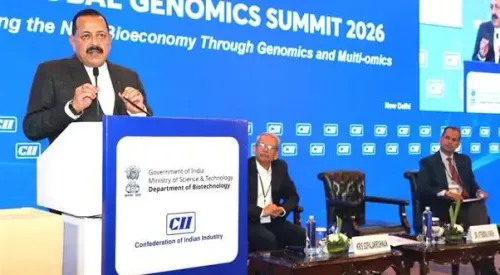
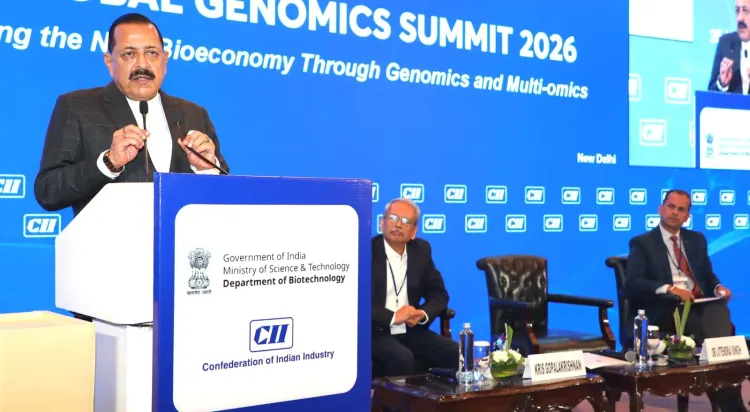
Jitendra Singh addressed the CII 2nd Global Genomics Summit 2026 in New Delhi on 25 November 2026.
He said India’s bio-economy is set to reach 300 billion dollars by 2030, with biotechnology driving the next industrial revolution.
He said biotech startups grew from 50-60 in 2014 to over 11,000 today.
He called industry participation, private investment and R&D partnerships crucial to converting discoveries into economic opportunity.
He urged startups, investors and industry to increase spending on genomics, multi-omics and advanced biotechnology, citing India’s genetic diversity as a global research advantage.
Union Science and Technology Minister Dr. Jitendra Singh walked into a New Delhi industry hall on 25 November 2026 with a high-stakes claim: biotechnology will drive the next industrial revolution, and India’s genetic diversity is a research advantage few countries can replicate. Addressing the Confederation of Indian Industry’s 2nd Global Genomics Summit 2026, he pressed companies, startups and investors to put real capital into genomics, multi-omics and advanced biotechnology.
The minister’s $300-billion bio-economy pitch
In key takeaways he posted after the address, Dr. Singh said India’s bio-economy is set to reach 300 billion dollars by 2030. Biotechnology, he argued, is not a side bet. It is the engine of that leap.
He also put a number on the startup pipeline. Biotech startups in India, he said, had grown from just 50-60 in 2014 to over 11,000 today. He framed that jump as evidence that policy and market interest have already moved — and that the next bottleneck is translation, not talent.
His own list of takeaways was blunt: industry participation, private investment and R&D partnerships are crucial to translating scientific discoveries into economic opportunities.
A recruitment drive for private genomics capital
The speech read less like a celebration and more like a recruitment drive. Dr. Singh said the government has been repeatedly urging industry leaders, startups and investors to seize emerging opportunities through greater investment and participation in genomics, multi-omics and advanced biotechnology.
That pitch sits on a longer policy track. The Startup India initiative, launched in 2016, offered tax incentives, easier compliance and funding support that helped biotech founders grow. Since 2014, the science ministry has treated biotechnology as a strategic sector for growth and self-reliance, tying it to Atmanirbhar Bharat goals. Public-private R&D partnerships and population-scale genetic data have been recurring themes in Department of Biotechnology strategies.
Genetic diversity as India’s research card
The minister’s closing card was demographic, not fiscal. India’s genetic diversity, he said, offers a unique global advantage for research and innovation. Genomics and multi-omics are the fields where that diversity can be turned into datasets, therapies and products — if industry shows up as a co-investor, not a spectator.
The people he named in the room are the ones who can close the gap: biotech startups, private investors and research institutions. Follow-through would look like new public-private genomics consortia, heavier R&D spend, or sharper funding rules from the science establishment.
Delhi has now put a date and a dollar figure on the bio-economy. The question Dr. Singh left with CII’s boardrooms is whether they will fund the revolution they have been invited to lead.
Point of View
He is signalling that translation, not discovery, is the binding constraint. The genetic-diversity argument tries to turn a demographic fact into a research and commercial moat. The test is whether new public-private genomics consortia or sharper Department of Biotechnology funding rules follow the speech.
NationPress
25 Nov 2026
Frequently Asked Questions
What did Jitendra Singh say at the CII Global Genomics Summit 2026?
Union Science and Technology Minister Dr. Jitendra Singh said biotechnology will drive the next industrial revolution and that India’s bio-economy is set to reach 300 billion dollars by 2030. He spoke at CII’s 2nd Global Genomics Summit in New Delhi on 25 November 2026 and urged greater private investment in genomics.
How many biotech startups did Jitendra Singh say India has?
He said biotech startups in India had grown from 50-60 in 2014 to over 11,000 today. He presented that rise as evidence that policy support and market interest have already expanded the pipeline.
What is the CII Global Genomics Summit?
It is an international genomics-focused summit organised by the Confederation of Indian Industry. The 2026 edition in New Delhi was described as its second, bringing industry, investors and researchers into one policy conversation.
Why did Jitendra Singh mention India’s genetic diversity?
He said India’s genetic diversity offers a unique global advantage for research and innovation. He tied that advantage specifically to genomics, multi-omics and advanced biotechnology.
What did the minister ask industry and investors to do?
He urged industry leaders, startups and investors to increase investment and participation in genomics, multi-omics and advanced biotechnology. He also stressed public-private R&D partnerships to turn scientific discoveries into economic opportunities.