Dr. Jitendra Singh flags Shahpur Kandi project for J&K-Punjab border
Synopsis
Union Minister Dr. Jitendra Singh on 19 June 2026 spotlighted the Shahpur Kandi multipurpose dam on the Ravi River, calling it transformative for border districts of Jammu and Kashmir and Punjab. The project, stalled for decades over inter-state disputes before a 2018 agreement revived it, aims to deliver irrigation and hydropower under India's Indus Waters Treaty entitlements.
Key Takeaways
Jitendra Singh on 19 June 2026 highlighted the Shahpur Kandi project as transformative for border districts of Jammu and Kashmir and Punjab .
The project is a multipurpose dam on the Ravi River designed to deliver irrigation and hydropower to the region.
It was originally conceived in the early 1990s but remained stalled for decades over inter-state water disputes until a 2018 agreement between J&K and Punjab revived it.
India is entitled to develop the Ravi River's waters under the Indus Waters Treaty of 1960 , and the Shahpur Kandi project is a key vehicle for that utilisation.
Jitendra Singh's constituency, is among the districts directly in line for irrigation and power benefits.
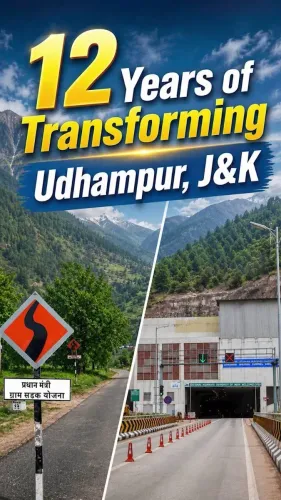
The post was tagged under #12YearsOfSeva , linking the project milestone to the minister's tenure as Kathua's MP.
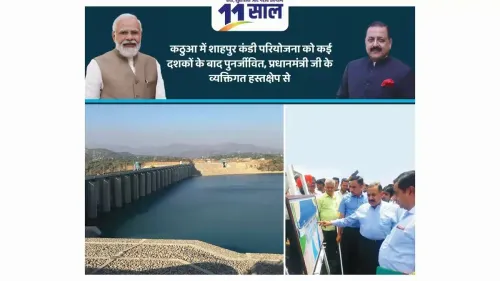
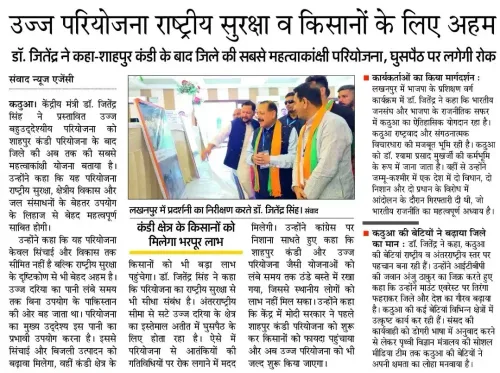
Union Minister of State (Independent Charge) for Science and Technology Dr. Jitendra Singh, who also serves as Member of Parliament from Kathua, on Friday, 19 June 2026, highlighted the Shahpur Kandi dam project as a transformative initiative for bordering districts of Jammu and Kashmir and Punjab, sharing the development via his official X account under the hashtags #Kathua and #12YearsOfSeva.
Context
The Shahpur Kandi project is a multipurpose dam on the Ravi River, designed to deliver irrigation water and hydropower to districts on both sides of the Jammu and Kashmir–Punjab border. Kathua, Dr. Jitendra Singh's constituency, is among the districts directly in line for irrigation and power benefits. The minister's post, tagged under his twelve-year service milestone, frames the project as a tangible outcome of sustained political attention to the region.
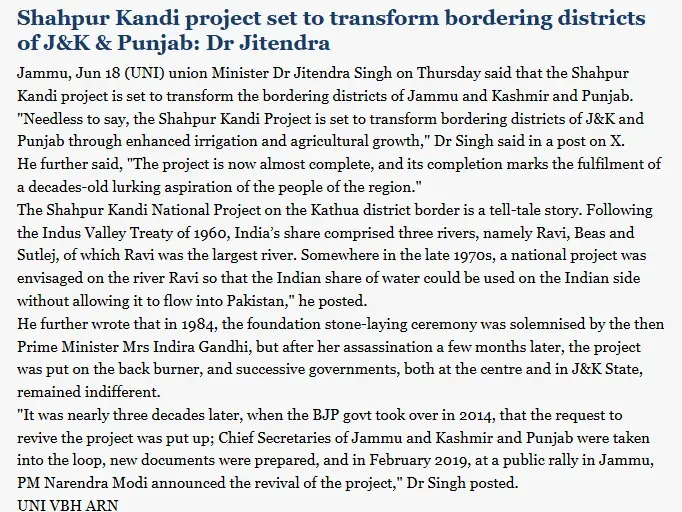
The Ravi River's waters are allocated to India under the Indus Waters Treaty of 1960, a bilateral agreement with Pakistan that earmarked the eastern rivers — Ravi, Beas and Sutlej — for Indian development. The Shahpur Kandi project is one of the key vehicles through which India seeks to translate that treaty entitlement into irrigation canals and electricity for border communities.
Policy Backdrop
The project was originally conceived in the early 1990s but remained stalled for decades due to inter-state water-sharing disputes between Jammu and Kashmir and Punjab. A bilateral agreement between the two state governments in 2018 broke the deadlock and allowed construction to resume. Since then, the project has been positioned within the broader infrastructure acceleration in Jammu and Kashmir that followed the region's reorganisation in 2019.
The Union government has consistently prioritised completion of long-pending irrigation and hydropower schemes on the eastern rivers to maximise India's utilisation of its treaty-allocated water share. The Shahpur Kandi project fits squarely within that policy thrust, alongside similar initiatives on the Ravi and other rivers in the northern belt.
Stakeholders and Impact
Farmers in Kathua and adjoining districts of Punjab stand to gain the most directly, with the project promising expanded irrigation coverage that could reduce dependence on rainfall and groundwater. Border communities in both the union territory and the neighbouring state are also expected to benefit from improved power availability once the hydropower component becomes operational.
The project carries strategic significance beyond agriculture: completing water infrastructure in the border belt is seen as part of a wider effort to strengthen economic integration and development in districts that have historically lagged behind more connected urban centres.
What's Next
Attention will now turn to official commissioning timelines, actual irrigation area brought under coverage, and the megawatt capacity delivered by the hydropower component once the project reaches full operation. Follow-up announcements on associated canal networks and distribution infrastructure in Kathua and neighbouring districts are likely to be watched closely by local stakeholders and policymakers alike. Dr. Jitendra Singh's framing of the project under #12YearsOfSeva suggests it may feature prominently in his constituency outreach in the months ahead.
Point of View
Tangible irrigation and power gains carry more electoral weight than policy statements, making this project a critical proof point for the ruling dispensation.
NationPress
18 Sept 2026
Frequently Asked Questions
What is the Shahpur Kandi project?
The Shahpur Kandi project is a multipurpose dam being built on the Ravi River to provide irrigation water and hydropower to border districts of Jammu and Kashmir and Punjab. It was originally planned in the early 1990s but was stalled for decades due to inter-state disputes before a 2018 agreement between J&K and Punjab allowed work to resume.
Which districts will benefit from the Shahpur Kandi dam?
Bordering districts of Jammu and Kashmir, including Kathua, and adjoining districts of Punjab are the primary beneficiaries, gaining expanded irrigation coverage and improved power supply from the hydropower component of the project.
Why was the Shahpur Kandi project stalled for so long?
The project was held up for decades by inter-state water-sharing disputes between Jammu and Kashmir and Punjab. A bilateral agreement signed by the two governments in 2018 resolved the deadlock and allowed construction to restart.
What is the Indus Waters Treaty and how does it relate to this project?
The Indus Waters Treaty is a 1960 agreement between India and Pakistan that allocated the waters of the eastern rivers — Ravi, Beas and Sutlej — to India. The Shahpur Kandi project is one of the key schemes through which India develops its share of the Ravi River's waters for domestic irrigation and power generation.
Why did Dr. Jitendra Singh post about the Shahpur Kandi project?
Dr. Jitendra Singh, the Union Minister of State for Science and Technology and MP from Kathua, shared the development on 19 June 2026 under his #12YearsOfSeva campaign, linking the project to his tenure representing the Kathua constituency, which stands to directly benefit from the dam.