Jitendra Singh lauds outgoing LBSNAA Director Taranikanti's reforms
Synopsis
Union Minister Dr. Jitendra Singh met outgoing LBSNAA Director Sriram Taranikanti on August 3, 2026, commending his curriculum and cultural reforms at India's apex IAS training academy in Mussoorie, framing the changes as aligned with Modi government priorities and 21st-century governance needs.
Key Takeaways
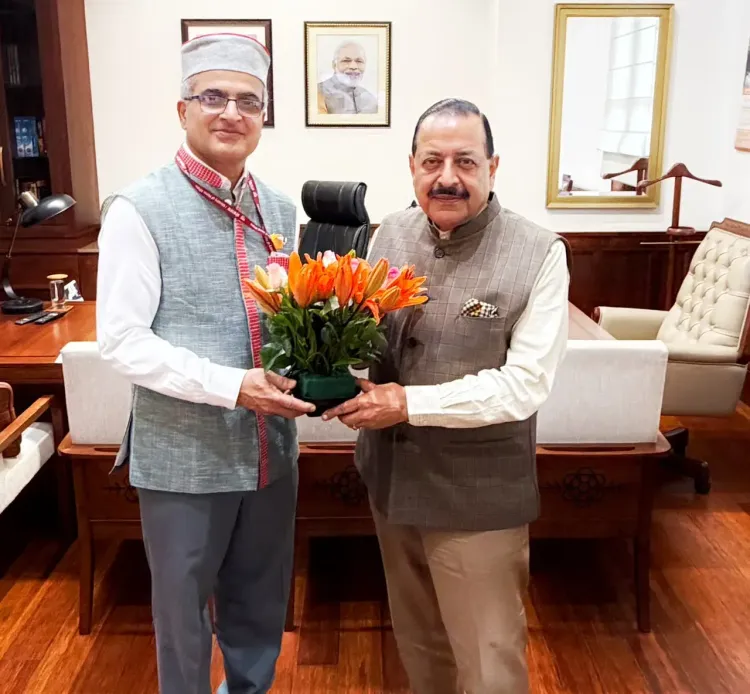
Jitendra Singh , Union Minister holding charge of Personnel, met outgoing LBSNAA Director Sh Sriram Taranikanti on August 3, 2026 in a courtesy call marking the end of his term.
The minister publicly praised Taranikanti's 'commitment and diligence' and credited him with reforms in both curriculum and institutional culture at the Mussoorie academy.
LBSNAA is India's premier residential training institution for IAS probationers and plays a foundational role in shaping civil-services values and competencies.
The reforms were characterised as aligned with the Narendra Modi government's national priorities and the governance demands of 21st-century India .
The transition comes within the broader arc of Mission Karmayogi , the government's 2020 framework to shift civil-services training toward role-based competency development.
The appointment of the next LBSNAA Director will determine whether the recent reforms are deepened or redirected.
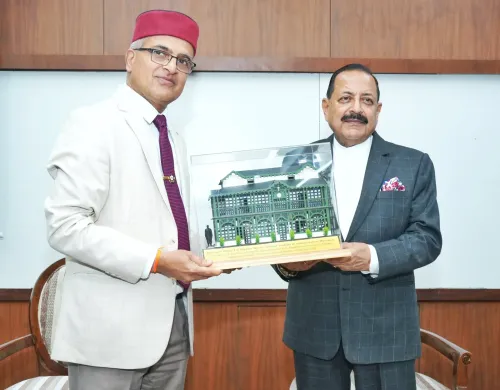
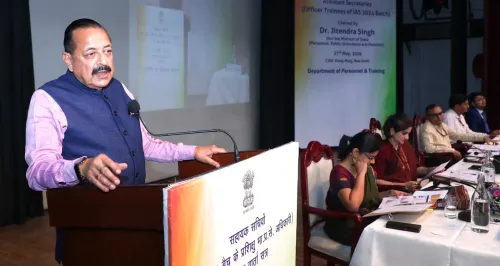
When the head of India's most storied civil-services academy completes a term, the transition is rarely just administrative — it signals a moment to take stock of how the country trains the officers who run it. Union Science and Technology Minister Dr. Jitendra Singh met outgoing Lal Bahadur Shastri National Academy of Administration (LBSNAA) Director Sh Sriram Taranikanti on Monday, August 3, 2026, in a courtesy call marking the conclusion of Taranikanti's tenure at the helm of India's premier IAS training institution in Mussoorie, Uttarakhand.
Dr. Singh, who also holds charge of the Ministry of Personnel, Public Grievances and Pensions — the ministry that oversees civil-services training — used the occasion to publicly recognise Taranikanti's stewardship. 'Must appreciate the commitment and diligence with which Sh Sriram Taranikanti served the Academy,' the minister wrote, adding that Taranikanti 'will be remembered for the reforms in curriculum and culture of the Academy initiated during his tenure as Director, which are in keeping with the nationalistic priorities of the Narendra Modi government and governance requirements of 21st century India.'
LBSNAA's role in shaping India's administrative backbone
LBSNAA, nestled in the hills of Mussoorie, is the foundational training ground for every Indian Administrative Service (IAS) probationer. What is taught here — and how — shapes the instincts, values, and decision-making frameworks that officers carry into decades of public service. Curriculum choices at the Academy are, in effect, a policy statement about the kind of governance the state intends to deliver.
Successive governments have periodically recalibrated LBSNAA's training modules to address emerging challenges: digital administration, federal coordination, and citizen-centric service delivery have all found their way into syllabi over the years. The post-2014 period saw renewed emphasis on aligning officer training with national-priority programmes, a momentum that continued through the tenure now concluding.
Mission Karmayogi and the broader reform arc
Taranikanti's directorship sat within a larger structural shift in how India approaches civil-services capacity building. In 2020, the government launched Mission Karmayogi — a sweeping framework to move officer training from rule-based to role-based competency development, with a stronger emphasis on outcomes and on-the-job learning. LBSNAA, as the apex residential training institution, has been a critical node in translating that framework into practice for IAS probationers.
Courtesy meetings between ministers and outgoing heads of training institutions are standard protocol in the central government, but the public acknowledgement of 'reforms in curriculum and culture' signals that the changes introduced during this tenure are expected to endure beyond the leadership transition.
The next appointment to the Director's chair at LBSNAA — and whether incoming leadership will deepen, extend, or reorient the reforms — is now the question that the civil-services community in Mussoorie, and in North Block, will be watching closely.
Point of View
Effectively signalling continuity expectations for whoever follows. The explicit linkage to 'nationalistic priorities' of the Modi government is notable: it positions LBSNAA's curriculum not as a technocratic exercise but as an expression of political-administrative philosophy. This fits a broader pattern since 2014 of the Centre using training institutions as soft levers to embed governance culture in the bureaucracy. The real test of Taranikanti's legacy will come when his successor is named and independent assessments of probationer outcomes under the revised curriculum become available.
NationPress
3 Aug 2026
Frequently Asked Questions
Who is Sriram Taranikanti and what was his role at LBSNAA?
Sriram Taranikanti is an Indian Administrative Service officer who served as Director of the Lal Bahadur Shastri National Academy of Administration in Mussoorie — India's apex training institution for IAS probationers. He completed his term as Director in August 2026.
What is LBSNAA and why is it important?
LBSNAA, or the Lal Bahadur Shastri National Academy of Administration, is a premier residential training academy located in Mussoorie, Uttarakhand. It is where all IAS probationers receive their foundational training, making it central to shaping India's administrative culture and governance capacity.
What reforms did Taranikanti introduce at LBSNAA?
Union Minister Dr. Jitendra Singh credited Taranikanti with reforms in both the curriculum and the institutional culture of LBSNAA, describing them as aligned with the Modi government's national priorities and 21st-century governance requirements. Specific details of the reforms have not been officially enumerated in public documents.
What is Mission Karmayogi and how does it relate to LBSNAA?
Mission Karmayogi, launched in 2020, is the central government's framework to restructure civil-services training from rule-based to role-based competency development. LBSNAA, as the apex IAS training institution, is a key institution in implementing this framework for new entrants to the service.
Why did Dr. Jitendra Singh meet the outgoing LBSNAA Director?
The meeting on August 3, 2026 was a standard courtesy call to mark the conclusion of Taranikanti's tenure as LBSNAA Director. Dr. Singh holds the Personnel portfolio, which oversees civil-services training, making such a meeting a routine part of leadership transitions at central training institutions.