Jitendra Singh leads DoPT e-waste drive under Swachhata Campaign 6.0
Synopsis
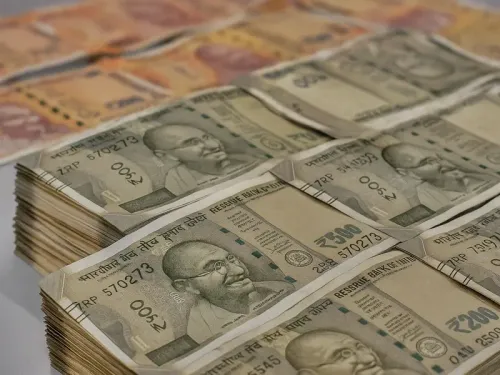
Union Minister Dr. Jitendra Singh participated in an e-waste disposal drive at DoPT headquarters under Special Swachhata Campaign 6.0, clearing 550-plus obsolete items worth Rs 9 lakh. The month-long campaign has already generated approximately ₹490 crore in scrap revenue across central ministries, with the final figure projected to exceed ₹1,000 crore by 31 October.
Key Takeaways
Jitendra Singh and Secretary DoPT Smt.
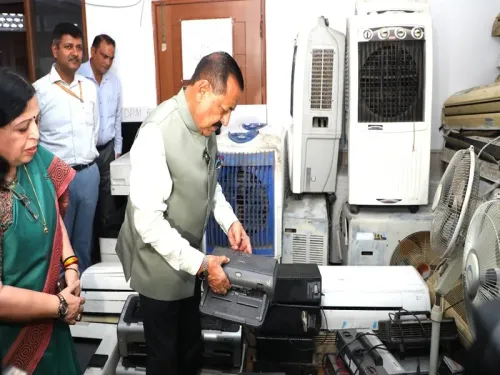
Rachna Shah led an e-waste disposal exercise at Kartavya Bhawan on 21 October 2026 .
Items disposed included 152 desktops, 35 printers, 52 air conditioners, 59 UPS units , and 217 miscellaneous items , with a base price of Rs 9 lakh .
Special Swachhata Campaign 6.0 runs from 2 October to 31 October 2026 , timed between Gandhi Jayanti and Patel Jayanti.
Approximately ₹490 crore has been generated through scrap disposal in the campaign's first 15–17 days across central ministries.
The final revenue is projected to exceed double ₹490 crore by 31 October .
The GeM Portal has been adopted for the disposal process, ensuring transparent and auditable transactions.
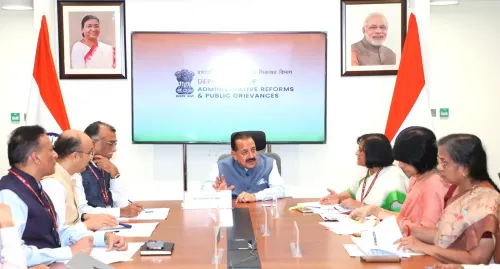
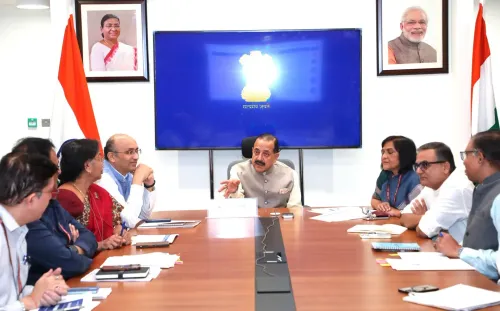
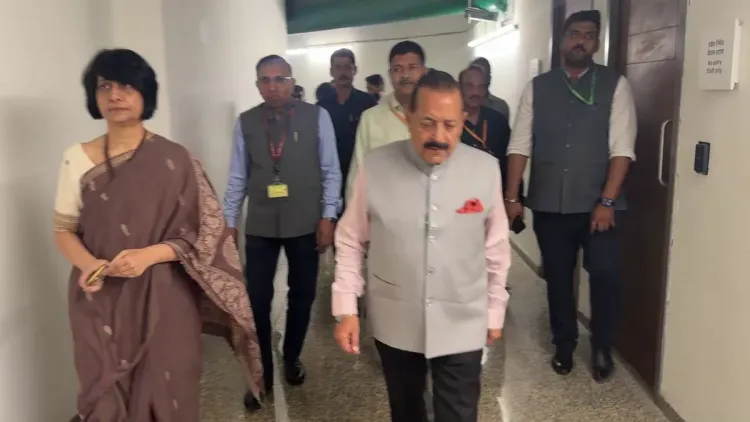
More than 550 pieces of obsolete government equipment — from ageing desktops to refrigerators — were formally disposed of at Kartavya Bhawan on Wednesday, 21 October 2026, as Union Minister Dr. Jitendra Singh joined the Department of Personnel and Training (DoPT) team for an e-waste disposal exercise under Special Swachhata Campaign 6.0.
The haul cleared in a single day tells the scale of the problem government offices routinely sit on: 152 desktops, 35 printers, 8 scanners, 3 photocopier machines, 59 UPS units, 52 air conditioners, 4 television sets, 5 refrigerators, 17 water dispensers, and 217 miscellaneous items — carrying a collective base price of Rs 9 lakh. The drive was led on the ground by Secretary DoPT Smt. Rachna Shah, with officers and staff participating across the board.
₹490 crore in 15 days — and counting
The day's activity sits inside a far bigger national campaign. Running from Gandhi Jayanti (2 October) to Patel Jayanti (31 October) — a deliberate bracketing of the month between two foundational nationalist anniversaries — Special Swachhata Campaign 6.0 was launched in direct response to a call by Prime Minister Narendra Modi. Within its first 15–17 days, central government ministries and departments have collectively generated approximately ₹490 crore from the disposal of scrap, according to Dr. Singh's post.
That figure is already striking. More striking still is the minister's projection: the tally is 'likely to be more than double by October 31.' If it holds, the campaign will have converted dead government inventory into over ₹1,000 crore in a single month.
GeM Portal: transparency baked into the disposal chain
The mechanism matters as much as the money. All disposals under the campaign are being routed through the Government e-Marketplace (GeM) Portal — the same digitised procurement platform that has reshaped how ministries buy goods and services. Applying GeM to the disposal side of the equation is a logical extension: it creates a documented, competitive, auditable trail that replaces the opacity of ad-hoc scrap sales. It is a quiet but consequential governance shift.
Special Swachhata Campaign: from Swachh Bharat to office-level accountability
Special Swachhata Campaigns are a recurring, institutionalised extension of the Swachh Bharat Mission, which PM Modi launched on 2 October 2014. Where Swachh Bharat targeted public spaces and open defecation, the Swachhata Campaigns have turned the lens inward — onto government offices themselves, clearing backlogs, pendency, and physical clutter. Version 6.0 marks the sixth iteration, a sign that what began as a symbolic push has become an annual governance ritual with measurable financial outcomes.
If the revenue projection holds through the month's end, October 2026 will stand as the most financially productive single campaign cycle in the series — a number the government will almost certainly cite as proof that disciplined housekeeping and digital transparency can unlock value hiding in plain sight inside bureaucratic stockrooms.
Point of View
If substantiated at close of campaign, would offer the Modi administration a politically convenient data point linking administrative discipline to tangible revenue recovery. The real test will be whether such drives trigger structural changes in inventory management or remain an annual reset.
NationPress
21 Oct 2026
Frequently Asked Questions
What is Special Swachhata Campaign 6.0?
Special Swachhata Campaign 6.0 is a month-long cleanliness and scrap disposal drive run across central government offices from 2 October to 31 October 2026 , launched in response to a call by Prime Minister Narendra Modi as part of the broader Swachh Bharat framework.
How much revenue has the Swachhata Campaign generated so far?
According to Union Minister Dr. Jitendra Singh , approximately ₹490 crore has been generated through scrap disposal across central ministries within the first 15–17 days of the campaign, with the final figure projected to more than double by 31 October 2026 .
What items were disposed of at DoPT headquarters on 21 October 2026?
The DoPT disposed of 152 desktops, 35 printers, 8 scanners, 3 photocopier machines, 59 UPS units, 52 air conditioners, 4 television sets, 5 refrigerators, 17 water dispensers , and 217 miscellaneous items , with a combined base price of Rs 9 lakh .
Why is the GeM Portal being used for government scrap disposal?
The Government e-Marketplace (GeM) Portal is being used to ensure transparent, competitive, and auditable disposal of obsolete government equipment, replacing ad-hoc scrap sales with a standardised digital process.
What is the connection between Swachhata Campaign and Swachh Bharat Mission?
Special Swachhata Campaigns are an institutionalised extension of the Swachh Bharat Mission — launched on 2 October 2014 — that directs the cleanliness mandate inward at government offices, targeting obsolete equipment, paperwork backlogs, and physical clutter to recover revenue and improve administrative efficiency.