PhD by default, not design: Jitendra Singh flags India's research quality gap
Synopsis
A Union Minister has said out loud what many in academia have long whispered: too many Indian PhDs are accidents of circumstance, not products of intellectual ambition. At RISE 2026 in Bengaluru, Jitendra Singh argued that a default-driven doctoral culture is costing India research quality — and that NEP 2020 must fix the mismatch before India's innovation aspirations ring hollow.
Key Takeaways
Jitendra Singh spoke at the RISE 2026 conclave in Bengaluru on 13 June , flagging a 'default PhD' problem in India's research ecosystem.
He argued that many PhD graduates are unemployable because they pursued doctoral studies as a fallback after failing competitive exams or professional admissions.
Singh credited NEP 2020 with laying the foundation for an aptitude-driven shift in higher education and career choices.
He predicted India will produce fewer but qualitatively stronger PhD graduates in the coming years.
India now hosts more than 2.3 lakh startups generating nearly 25 lakh jobs , ranking as the world's third-largest startup ecosystem .
Singh called on parents, educators and institutions to support research as a vocation, not a fallback.
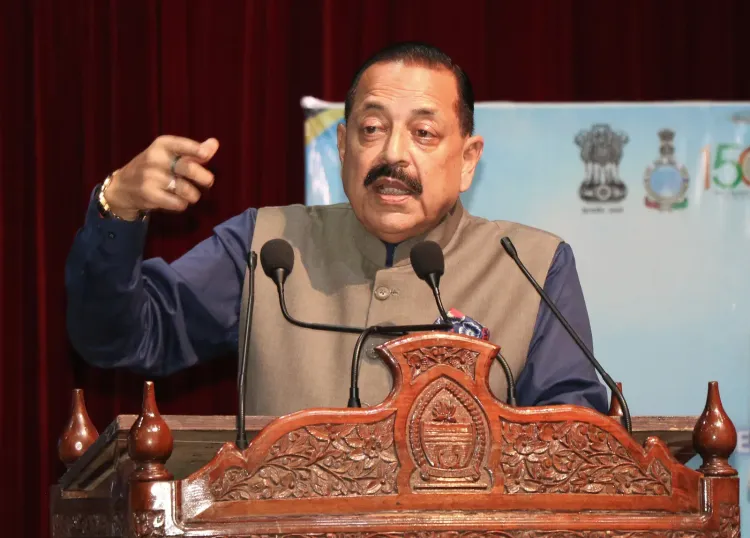
Union Minister of State (Independent Charge) for Science and Technology Jitendra Singh on Saturday, 13 June called out a systemic flaw in India's higher education pipeline, arguing that a significant share of doctoral students pursue PhD programmes as a fallback — not out of genuine aptitude or passion for research. He was speaking at the RISE 2026 conclave in Bengaluru.
The Core Concern: Default Doctorates
Singh said many PhD graduates who struggle to find employment were, in his assessment, not employable because they had entered doctoral programmes 'by default.' He described a pattern where students who could not secure admission to medical or engineering colleges, or who were unsuccessful in competitive examinations such as civil services, gravitated toward research as an alternative path rather than a chosen vocation.
'They neither became PhDs by choice, nor by aptitude, nor because of an attachment to the subject — but because they needed a job,' Singh said, characterising this as a trend that had weakened India's culture of research excellence.
What NEP 2020 Is Expected to Change
The Minister credited the National Education Policy (NEP) 2020 with laying the groundwork for a shift away from degree-centric thinking. According to Singh, the NEP's reforms are designed to encourage students to make career decisions based on interest and capability rather than social expectations or employment compulsions. He said India was gradually transitioning toward a system that prioritised aptitude, innovation and problem-solving over credential accumulation.
Notably, Singh predicted that India may eventually produce fewer PhD graduates in absolute numbers — but argued that those who do pursue doctoral studies will be 'qualitatively far superior' because they will be driven by genuine commitment to their disciplines.
The Cambridge Comparison
Drawing on an international reference point, Singh recalled a conversation with a former Vice-Chancellor of the University of Cambridge, who had praised the contributions of Indian students to research conducted abroad. He used this to underscore a structural contrast: in leading global research ecosystems, doctoral programmes are pursued predominantly by individuals deeply committed to academic inquiry — not by those seeking alternative career options.
India's Innovation Gains — and the Gap That Remains
Singh highlighted several markers of India's improving innovation standing. He said the country had emerged as the world's third-largest startup ecosystem, with more than 2.3 lakh startups generating nearly 25 lakh jobs. He also pointed to India's improved ranking in the Global Innovation Index, rising patent filings and growing indigenous research output as evidence of a shifting landscape.
However, he acknowledged that traditional perceptions of career success — rooted in professional degrees and government employment — continue to steer students and families away from unconventional paths in research, entrepreneurship and emerging technologies. This cultural inertia, he argued, remains one of the biggest obstacles to building a world-class research ecosystem.
The Call to Action
Singh urged parents, educators and academic institutions to actively support aptitude-driven career choices and foster environments where research is pursued with passion rather than compulsion. He framed India's ambition to become a global innovation leader as contingent on a fundamental shift in how doctoral education is perceived and pursued — prioritising quality over quantity in the country's research output.
Point of View
Not yet a proven outcome; its ability to rewire career aspirations at scale remains untested. Meanwhile, India's research-output numbers are rising, but citation impact and commercialisation rates lag peer economies. The real question is not how many fewer PhDs India produces, but whether the system being built can convert genuine aptitude into globally competitive research — and that requires investment in lab infrastructure, postdoctoral pathways and industry linkages that a policy document alone cannot deliver.
NationPress
13 Sept 2026
Frequently Asked Questions
What did Jitendra Singh say about PhD programmes in India?
Singh said many PhD holders in India pursued doctoral studies 'by default' — as a fallback after failing competitive exams or professional admissions — rather than out of genuine aptitude or passion. He argued this trend has weakened India's research culture and contributed to poor employability among some PhD graduates.
Where and when did Jitendra Singh make these remarks?
Singh made these remarks at the RISE 2026 conclave in Bengaluru on Saturday, 13 June, where he was speaking on the state of higher education and research in India.
How does NEP 2020 address the PhD quality problem?
According to Singh, the National Education Policy 2020 is designed to shift India's education system away from degree-centric thinking toward aptitude, innovation and problem-solving. The reforms are intended to encourage students to make career choices based on genuine interest rather than employment compulsion or social expectations.
What is India's current startup and innovation standing?
India is now the world's third-largest startup ecosystem, with more than 2.3 lakh startups generating nearly 25 lakh jobs, according to Singh. He also cited improvements in the Global Innovation Index ranking, rising patent filings and growing indigenous research output as positive indicators.
Will India produce fewer PhDs in the future?
Singh predicted that India may produce fewer PhD graduates in absolute numbers going forward, but argued that those who do pursue doctoral studies will be qualitatively stronger — driven by aptitude, commitment and genuine interest in research rather than a lack of other options.