J&K approves land for mobile towers in 12 underserved border areas under USOF
Synopsis
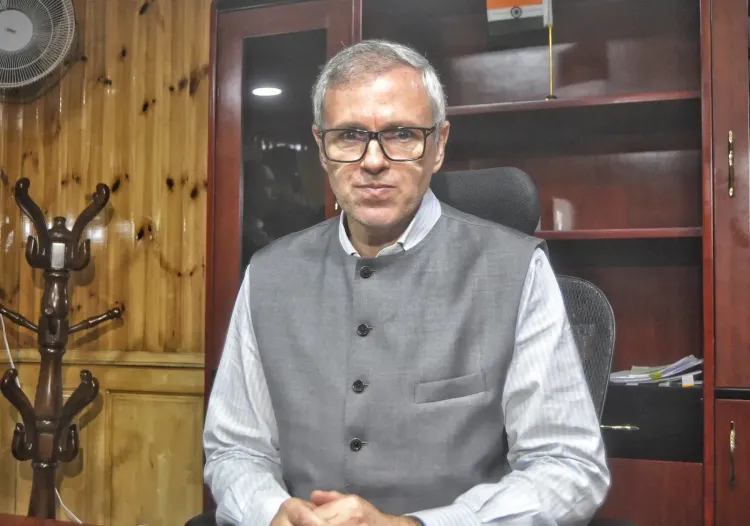
Chief Minister Omar Abdullah has announced J&K government approval for land to install BSNL mobile towers in 12 remote and border areas under USOF — a meaningful step for a union territory where 248 villages still have zero mobile coverage as of early 2026, and border communities routinely face communication blackouts.
Key Takeaways
The J&K government approved land for BSNL mobile towers in 12 underserved areas including Uri, Tangmarg, Karnah, Banihal and others under the Universal Service Obligation Fund (USOF) .
Chief Minister Omar Abdullah announced the decision on 6 October 2026 via a post on X .
As of early 2026 , 248 of J&K's 6,474 villages remain without mobile network coverage.
6,208 villages have 4G access; 3,704 have 5G , primarily in urban zones like Srinagar .
The initiative targets improved emergency communication, online education, and e-governance access in border and remote communities.
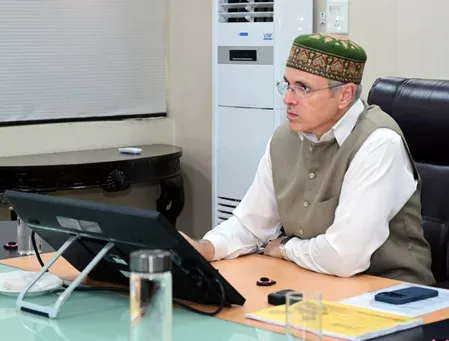
The Jammu and Kashmir government has approved the provision of land for the installation of mobile towers across 12 underserved and border areas of the union territory, Chief Minister Omar Abdullah announced on 6 October 2026. The move, backed by the Universal Service Obligation Fund (USOF), aims to expand high-speed telecom coverage in remote regions that have long remained on the margins of India's digital connectivity push.
Areas Covered Under the Approval
New BSNL mobile towers will come up in Uri, Tangmarg, Karnah, Kalakote, Kralpora, Basantgarh, Khour, Latti Marothi, Banihal, Pogal Paristan, Ramsoo, and Qila Darhal — a mix of remote valleys, high-altitude stretches, and sensitive border belts. Chief Minister Abdullah shared the decision in a post on X, stating: 'The government of Jammu and Kashmir has approved the provision of land for the installation of mobile towers in under served areas in Uri, Tangmarg, Karnah, Kalakote, Kralpora, Basantgarh, Khour, Latti Marothi, Banihal, Pogal Paristan, Ramsoo and Qila Darhal, under the Universal Service Obligation Fund (USOF).'
What This Means for Connectivity in J&K
According to data from early 2026, 248 of J&K's 6,474 villages remain without any mobile network coverage. Of the covered villages, 6,208 have 4G access, 3,704 have 5G services (primarily in urban zones such as Srinagar), 530 have 3G, and 6,030 have 2G. The new towers are expected to reduce the count of uncovered villages and improve network quality in those already on weaker signals.
BSNL currently carries the widest geographic footprint across remote valleys and border belts, making it the most relevant carrier for these underserved zones. Jio and Airtel offer stronger 4G and selective 5G service in urban hubs such as Srinagar, Jammu, Gulmarg, and Pahalgam.
Impact on Citizens and Border Communities
Chief Minister Abdullah said the initiative would 'strengthen connectivity in remote and border villages, support online education and access to e-governance services, improve emergency communication and bridge the digital divide.' For residents of border belts — who face recurring communication blackouts that hamper both everyday life and emergency response — the upgraded infrastructure could be transformative.
The move also carries a strategic dimension: stronger telecom infrastructure in border villages improves the Centre's ability to deliver digital public services and maintain communication lines in areas historically vulnerable to disruptions. This is the latest in a series of infrastructure pushes in J&K since the reorganisation of the state into a union territory in 2019.
Connectivity Rules for Visitors
It is worth noting that prepaid SIM cards issued outside J&K typically do not function within the union territory due to regional security regulations. Out-of-state travellers must obtain a local J&K prepaid SIM or a tourist SIM — available at major transit points including airports and railway stations — by completing KYC verification with an Aadhaar card or passport.
What Comes Next
The land allocation is the first formal step; tower installation timelines under USOF projects typically follow a tendering and construction phase that can span several months. With 248 villages still unconnected as of early 2026, advocates for digital inclusion will be watching whether the new approvals translate into on-ground coverage — and how quickly.
Point of View
Particularly in difficult terrain. With 248 villages still unconnected in J&K as of early 2026, land approval is only the first step in a multi-stage process that includes tendering, construction, and spectrum allocation. The strategic imperative is real — border belt connectivity directly affects emergency response and state presence — but whether this translates into live towers before the next policy cycle is the question worth watching.
NationPress
6 Oct 2026
Frequently Asked Questions
Which areas in J&K will get new mobile towers under this approval?
The J&K government approved land for BSNL mobile towers in 12 locations: Uri, Tangmarg, Karnah, Kalakote, Kralpora, Basantgarh, Khour, Latti Marothi, Banihal, Pogal Paristan, Ramsoo, and Qila Darhal. These are remote, high-altitude, and border areas currently underserved by mobile networks.
What is the Universal Service Obligation Fund (USOF)?
USOF is a government fund used to finance telecom infrastructure in areas that are commercially unviable for private operators to serve. It is administered by the Department of Telecommunications and has been used previously to expand mobile and broadband coverage in rural and border regions across India.
How many villages in J&K still lack mobile coverage?
As of early 2026, 248 of J&K's 6,474 villages have no mobile network coverage at all. Of the remaining villages, 6,208 have 4G access and 3,704 have 5G services, mostly in urban areas like Srinagar.
Why is connectivity in J&K's border areas strategically important?
Border villages in J&K face recurring communication gaps that affect emergency response, access to government services, and daily life. Stronger telecom infrastructure also enables the Centre to deliver digital public services and maintain communication lines in sensitive areas, which has been a policy priority since J&K's reorganisation as a union territory in 2019.
Can visitors from other states use their SIM cards in J&K?
Postpaid connections from Jio, Airtel, and BSNL generally work across J&K, but prepaid SIM cards issued outside the union territory typically do not, due to regional security regulations. Out-of-state travellers can purchase a local J&K prepaid or tourist SIM at airports and railway stations using Aadhaar or passport-based KYC.