Joshi highlights 22,000+ textbooks in 22 Indian languages under NEP
Synopsis
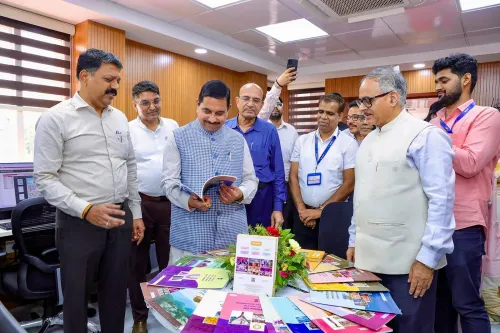
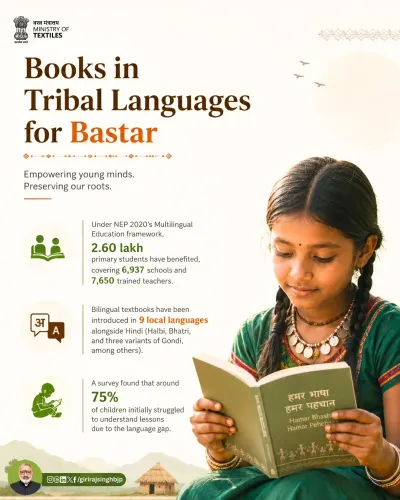
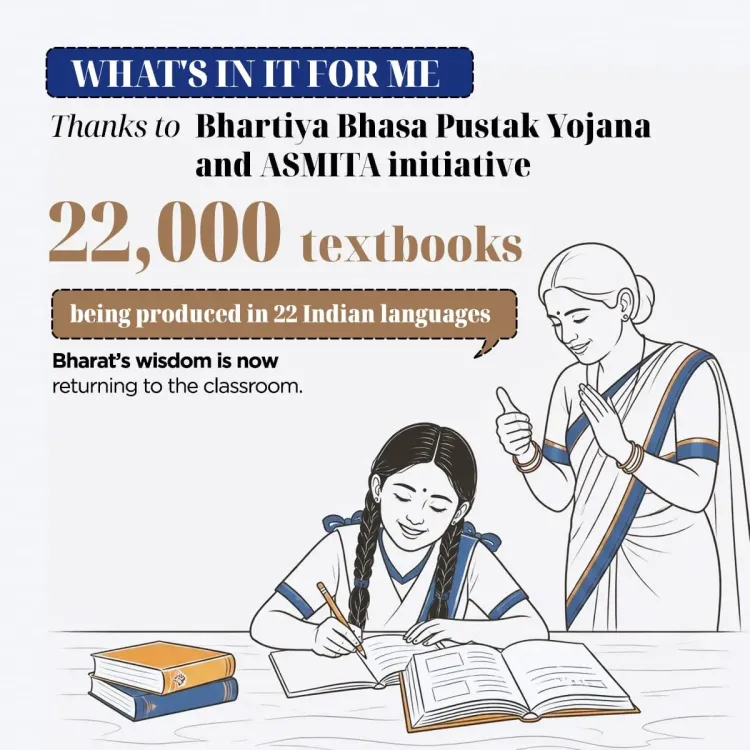
Union Minister Pralhad Joshi on 18 June 2026 highlighted the preparation of over 22,000 textbooks in 22 Indian languages under the Bharatiya Bhasha Pustak Yojana and ASMITA Yojana, citing fulfilment of NEP 2020's mother-tongue education mandate and the goal of preserving India's cultural heritage through accessible learning.
Key Takeaways
Over 22,000 textbooks are being developed across 22 Indian languages under two central schemes.
The schemes — Bharatiya Bhasha Pustak Yojana and ASMITA Yojana — are anchored in the National Education Policy 2020 .
NEP 2020 mandates mother-tongue instruction up to at least Class 5 , replacing the 1986 education policy framework.
Coordinated textbook translation by NCERT and UGC began in 2021-22 to operationalise NEP's language provisions.
State education boards and the Ministry of Education are the key agencies for translating production into classroom delivery.
The post was made under the hashtag #12YearsOfVikasBhiVirasatBhi , linking the initiative to the ruling party's governance narrative.
Union Consumer Affairs Minister Pralhad Joshi on Thursday, 18 June 2026, highlighted the ongoing preparation of over 22,000 textbooks in 22 Indian languages under the Bharatiya Bhasha Pustak Yojana and the ASMITA (Accelerated Scheme for Mother-tongue based Instruction and Teaching Advancement) Yojana, calling it a successful fulfilment of the vision embedded in the National Education Policy (NEP) 2020. The minister shared the update on X with the hashtag #12YearsOfVikasBhiVirasatBhi, framing the initiative as part of a broader development-with-heritage agenda.
Context
Posting in Kannada, Joshi stated that the two schemes are 'creating a golden opportunity for students to receive education in their mother tongues, which are intertwined with their unique cultural heritage.' He added that the initiative aims to 'simplify knowledge acquisition and make it accessible to every individual.' The post is notable coming from a minister whose portfolio spans consumer affairs and renewable energy — underscoring the BJP's broader communication strategy of amplifying NEP milestones across the cabinet.
Policy Backdrop
NEP 2020, approved by the Union Cabinet in July 2020, explicitly mandates instruction in the mother tongue or home language up to at least Class 5, and preferably until Class 8. This replaced the framework in place since 1986 and built upon the three-language formula first introduced under the National Policy on Education 1968. To operationalise these provisions, the Ministry of Education launched coordinated textbook translation and development projects through NCERT and UGC beginning in the 2021-22 academic year.
The Bharatiya Bhasha Pustak Yojana is a central scheme specifically designed to develop learning resources across all 22 scheduled Indian languages listed in the Eighth Schedule of the Constitution. The ASMITA Yojana, run under the Ministry of Education, targets the production and translation of high-quality study materials to support multilingual higher education across the country.
Stakeholders and Impact
The primary beneficiaries of these schemes are school and college students — particularly those from linguistic communities where English or Hindi has historically been the default medium of instruction, creating barriers to comprehension and academic performance. State education boards are key implementation partners, as the new multilingual textbooks must be integrated into their curricula for the initiatives to reach students at scale.
Proponents argue that mother-tongue instruction improves conceptual clarity and reduces dropout rates at the foundational level. Critics and education researchers have pointed to the challenge of ensuring quality and uniformity across such a large volume of translated materials in diverse languages.
What's Next
Attention will now turn to state-level adoption of the new multilingual textbooks for the 2026-27 academic session and further disclosures from the Ministry of Education on the pace and quality of ASMITA deliverables. The government's ability to move from textbook production to classroom deployment — and to train teachers in multilingual pedagogy — will determine whether the NEP's language vision translates into measurable learning outcomes.
Point of View
With a specific number attached. The use of the #12YearsOfVikasBhiVirasatBhi hashtag situates the textbook push within a broader BJP electoral narrative that pairs economic development with cultural pride. The fact that a minister outside the education portfolio is amplifying this milestone suggests a coordinated cabinet-wide communications effort ahead of what could be a politically significant academic cycle. The real test, however, lies not in the volume of books produced but in whether state governments — many outside the BJP's direct control — integrate them meaningfully into classrooms.
NationPress
17 Sept 2026
Frequently Asked Questions
What is the ASMITA Yojana in education?
ASMITA Yojana is a Ministry of Education scheme to produce and translate high-quality textbooks and study materials into Indian languages, supporting multilingual higher education under the NEP 2020 framework.
What is the Bharatiya Bhasha Pustak Yojana?
Bharatiya Bhasha Pustak Yojana is a central government scheme to develop learning resources in all 22 scheduled Indian languages, directly implementing the mother-tongue instruction mandate of NEP 2020.
How many textbooks are being made in Indian languages under NEP 2020?
According to Minister Pralhad Joshi's post on 18 June 2026, over 22,000 textbooks are being prepared across 22 Indian languages under the Bharatiya Bhasha Pustak Yojana and ASMITA Yojana.
What does NEP 2020 say about mother-tongue education?
NEP 2020, approved by the Union Cabinet in July 2020, mandates that instruction be provided in the student's mother tongue or home language up to at least Class 5, and preferably until Class 8.
Why is Pralhad Joshi talking about education when he is Consumer Affairs Minister?
Joshi's post appears to be part of a broader BJP cabinet communication effort to amplify NEP 2020 milestones, with multiple ministers sharing governance achievements under the party's development-and-heritage narrative.