Joshi calls for faster push on 500 GW and nuclear energy goals
Synopsis
Union Minister Pralhad Joshi amplified PM Modi's call to accelerate India's 500 GW non-fossil energy target while stressing equal urgency on nuclear goals, citing a recent fast breeder reactor technology milestone as a step toward energy self-reliance.
Key Takeaways
Minister Pralhad Joshi on June 10, 2026 shared PM Modi's call to accelerate India's 500 GW non-fossil fuel energy target.
The 500 GW goal was committed at COP26 in Glasgow in November 2021 and covers both renewable and nuclear capacity.
PM Modi highlighted a recent milestone in fast breeder reactor technology as evidence of India's nuclear self-reliance progress.
The Prototype Fast Breeder Reactor (PFBR) at Kalpakkam is central to India's three-stage indigenous nuclear programme.
The government's messaging positions solar and nuclear as complementary tracks, not competing priorities.
Progress on both fronts will be closely watched ahead of the 2030 target deadline and COP31 .
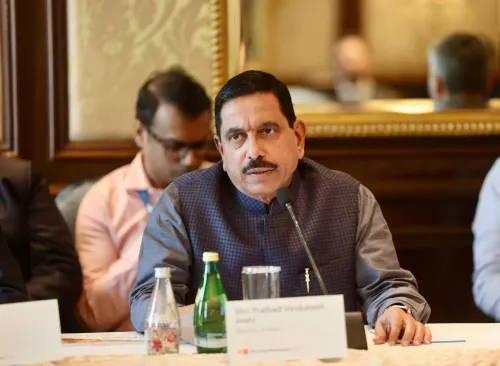
Union Consumer Affairs and New and Renewable Energy Minister Pralhad Joshi on Wednesday, June 10, 2026, shared a statement by Prime Minister Narendra Modi stressing the need to accelerate India's twin energy ambitions: reaching the 500 GW non-fossil fuel capacity target and advancing the country's nuclear energy programme, including progress in fast breeder reactor technology.
Context
Minister Joshi quoted Prime Minister Modi directly: 'We must accelerate our efforts to reach the 500 GW target. While progress in solar energy is moving swiftly, achieving our nuclear energy goals remains equally important.' The post also highlighted a recent demonstration of India's capabilities in fast breeder reactor technology, calling it a milestone toward self-reliance in nuclear energy.
The minister's amplification of the Prime Minister's words signals the government's intent to keep both renewable and nuclear energy tracks in public focus simultaneously, rather than allowing solar momentum to overshadow the slower-moving but strategically significant nuclear programme.
Policy Backdrop
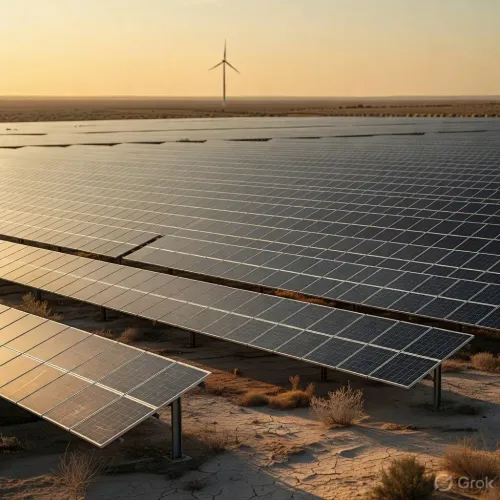
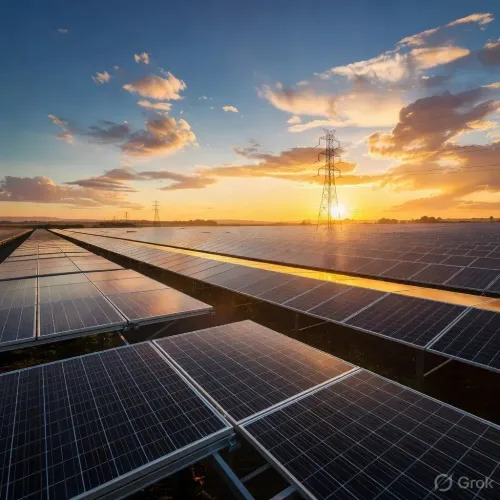
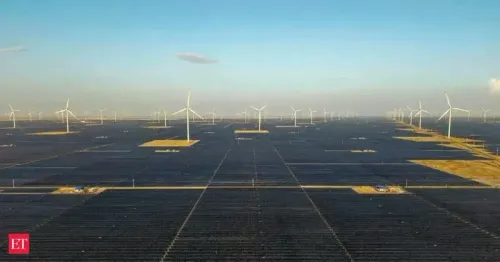
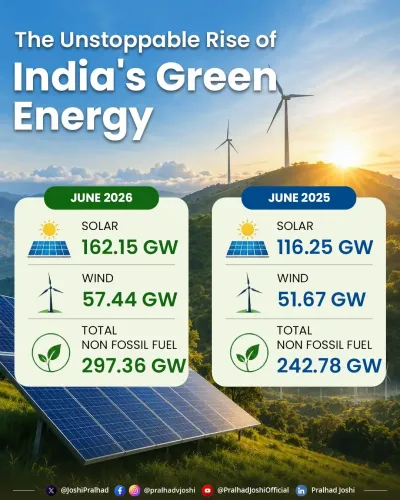
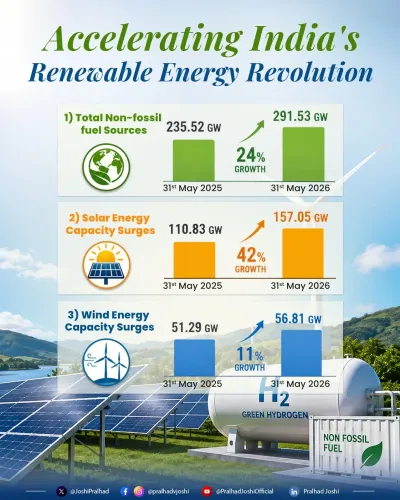
The 500 GW non-fossil fuel capacity commitment was announced by Prime Minister Modi at the COP26 climate summit in Glasgow in November 2021, forming a cornerstone of India's updated Nationally Determined Contribution. Solar and wind capacity additions have since moved at a brisk pace, but nuclear expansion has been comparatively gradual.
India's indigenous nuclear strategy follows a three-stage programme first outlined in the 1950s. The second stage centres on fast breeder reactors, which use spent fuel to breed more fissile material, eventually enabling the use of India's abundant thorium reserves in the third stage. The Prototype Fast Breeder Reactor (PFBR) at Kalpakkam, Tamil Nadu, is the flagship project of this second stage and has been under development for several years.
Progress on fast breeder technology also carries strategic weight under the Atmanirbhar Bharat framework, as India's nuclear sector was historically constrained by international technology-denial regimes following its nuclear tests.
Stakeholders and Impact
Renewable energy developers and the nuclear power sector are both directly implicated in the government's messaging. For the renewables industry, the 500 GW target represents a large and continuing pipeline of project opportunities. For the nuclear establishment, the government's public reaffirmation of fast breeder goals provides political backing for a programme that requires sustained, long-horizon investment.
Electricity consumers and industrial users stand to benefit from a diversified generation mix that combines variable solar and wind capacity with the baseload stability that nuclear plants provide. Energy security analysts have long argued that over-reliance on any single source — including solar — introduces systemic risk, a concern the Prime Minister's framing appears to address directly.
What's Next
Observers will watch for official updates on the operational status of the Prototype Fast Breeder Reactor at Kalpakkam, where the 'recent demonstration' referenced in the Prime Minister's statement is expected to be elaborated upon through formal government channels. Quarterly renewable capacity addition figures will also be closely tracked as the 2030 deadline approaches.
With COP31 on the horizon, India's ability to show simultaneous progress on solar scale-up and indigenous nuclear milestones will be central to its international climate and energy diplomacy. The government's dual-track messaging, amplified by a senior Cabinet minister, suggests both programmes will remain high-priority agenda items in the months ahead.
Point of View
Not treated as a separate, slower bureaucratic track. This dual-track narrative also serves a domestic political purpose, reinforcing the Atmanirbhar Bharat brand in a high-technology sector where indigenous capability has historically been a point of national pride. Internationally, the messaging positions India ahead of COP31 as a country pursuing both rapid renewables deployment and a credible long-term baseload strategy.
NationPress
26 Oct 2026
Frequently Asked Questions
What is India's 500 GW energy target?
India has committed to achieving 500 GW of non-fossil fuel electricity capacity by 2030 , a pledge made by PM Modi at the COP26 summit in Glasgow in November 2021 . The target includes solar, wind, and nuclear energy sources.
What is a fast breeder reactor and why does it matter for India?
A fast breeder reactor generates more fissile material than it consumes, making it central to India's three-stage nuclear programme . It allows India to eventually use its large thorium reserves for power generation, reducing dependence on imported uranium.
Where is India's Prototype Fast Breeder Reactor located?
The Prototype Fast Breeder Reactor (PFBR) is located at Kalpakkam in Tamil Nadu . It is the flagship project of the second stage of India's indigenous nuclear energy programme.
What did Pralhad Joshi say about nuclear energy?
On June 10, 2026 , Minister Pralhad Joshi shared a statement by PM Modi stressing that nuclear energy goals are 'equally important' to solar progress, and citing a recent fast breeder reactor milestone as a step toward energy self-reliance.
How does India plan to achieve energy self-reliance in nuclear power?
India's path to nuclear self-reliance runs through its three-stage indigenous programme , with fast breeder reactors as the second stage. Mastering this technology allows India to reduce dependence on imported fuel and eventually harness domestic thorium reserves under the Atmanirbhar Bharat framework.