Joshi hails record foodgrain output in 2025-26

Synopsis
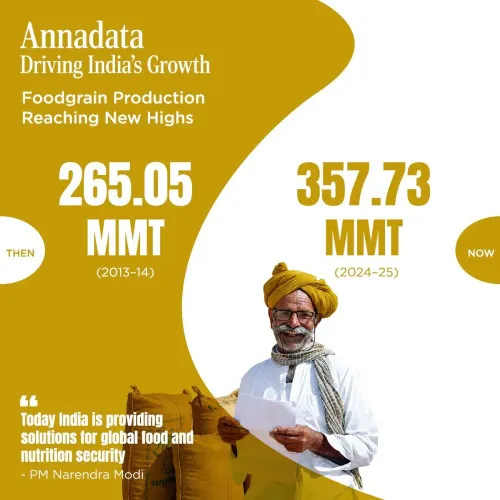
Union Minister Pralhad Joshi has hailed record foodgrain production in 2025-26, including historic rice and wheat output, attributing the milestone to PM Modi's farmer-centric policies and the Atmanirbhar Bharat agenda. The announcement underscores India's push for food self-sufficiency amid global supply pressures.
Key Takeaways
Union Consumer Affairs Minister Pralhad Joshi announced record foodgrain production in 2025–26 on June 11, 2026 .
The minister cited historic highs in both rice and wheat output as part of the overall production record.
The achievement was attributed to farmer-centric initiatives under Prime Minister Narendra Modi .
The announcement was framed within the Atmanirbhar Bharat self-reliance vision, first launched in May 2020 .
The Pradhan Mantri Kisan Samman Nidhi (PM-KISAN) scheme, operational since February 2019 , forms a key pillar of the government's farmer-support architecture.
Final official crop estimates from the Ministry of Agriculture for 2025–26 are awaited to confirm the record figures.
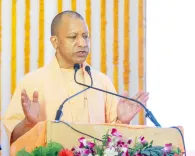
Union Consumer Affairs Minister Pralhad Joshi on Thursday, June 11, 2026, credited farmer-centric policies under Prime Minister Narendra Modi for what he described as record foodgrain production in 2025–26, including historic highs in rice and wheat output, calling it a milestone for India's food security and the Atmanirbhar Bharat vision.
Context
Posting on X, Minister Joshi wrote that 'India's farmers continue to power the nation's progress with their dedication and resilience.' He attributed the production achievement to 'farmer-centric initiatives' under Prime Minister Modi, framing it as evidence of the agricultural sector's strength. The post specifically highlighted record outputs in rice and wheat — the two staple crops that anchor India's public distribution system and procurement operations.
Policy Backdrop
India's pursuit of foodgrain self-sufficiency stretches back to the Green Revolution of the 1960s, when technology and irrigation transformed domestic output. The present administration has built on that base through direct-benefit transfers, including the Pradhan Mantri Kisan Samman Nidhi (PM-KISAN) income-support scheme launched in February 2019, which provides annual financial assistance to eligible farming households.
The broader Atmanirbhar Bharat Abhiyan, announced in May 2020, included dedicated packages for agriculture and food processing, explicitly framing higher domestic production as both a food-security imperative and a strategic-autonomy goal. Global supply disruptions since 2020 — including shocks to wheat and edible-oil markets — have reinforced the political salience of reducing import dependence and building domestic buffer stocks.
Stakeholders and Impact
The primary beneficiaries of sustained production growth are India's farming community — referred to in the post as annadatas (providers of food) — whose incomes and livelihoods are directly tied to procurement prices, yield improvements and market access. Higher foodgrain output also has downstream implications for the National Food Security Act beneficiaries who receive subsidised grain through the public distribution system, a portfolio that falls directly under Minister Joshi's remit at the Ministry of Consumer Affairs, Food and Public Distribution.
For the broader economy, strong agricultural output supports rural demand, moderates food inflation and reduces pressure on foreign-exchange reserves that would otherwise be spent on grain imports. The government's emphasis on rice and wheat records is particularly significant given that these two crops account for the bulk of procurement under the Minimum Support Price regime.
What's Next
The Ministry of Agriculture is expected to release final crop-production estimates for 2025–26, which will provide official, verified figures to substantiate the claims of record output. Any agriculture-related allocations or structural reforms in the next Union Budget will be closely watched as a signal of whether the government intends to deepen investment in the sector on the back of this reported momentum. The intersection of food security, farmer welfare and self-reliance is likely to remain a central plank of the ruling party's policy messaging ahead of future electoral cycles.
Point of View
The communication bridges two distinct narratives: agrarian dignity and national self-reliance. The timing matters too — with final crop estimates still pending official release, the announcement functions as a political pre-emption, shaping public perception before audited numbers arrive. This reflects a broader trend in Indian policy communication where ministerial social-media posts increasingly serve as the first layer of official narrative-setting.
NationPress
26 Oct 2026
Frequently Asked Questions
What is the record foodgrain production announced for India in 2025-26?
Union Minister Pralhad Joshi stated on June 11, 2026 that India achieved record foodgrain production in 2025-26, including historic highs in rice and wheat output, though final official figures from the Ministry of Agriculture are yet to be released.
What is Atmanirbhar Bharat and how does it relate to agriculture?
Atmanirbhar Bharat is a self-reliance campaign launched by the Modi government in May 2020. It included dedicated packages for agriculture and food processing, aiming to boost domestic production and reduce India's dependence on food imports.
What is PM-KISAN and who benefits from it?
PM-KISAN, or Pradhan Mantri Kisan Samman Nidhi, is a direct income-support scheme launched in February 2019 that provides annual financial assistance to eligible farming households across India.
Why is rice and wheat production important for India's food security?
Rice and wheat are India's two primary staple crops and form the backbone of the public distribution system. Record output in these crops strengthens buffer stocks, moderates food inflation and reduces the need for costly grain imports.
What is Pralhad Joshi's role in Indian agriculture policy?
Pralhad Joshi is the Union Minister of Consumer Affairs, Food and Public Distribution — a portfolio that oversees the public distribution system, procurement operations and food subsidy programmes — making agricultural output directly relevant to his ministerial responsibilities.