Joshi: Nadda, Jitendra Singh Meet Wangchuk, Fast Ends
Synopsis
Senior BJP leaders J P Nadda and Dr Jitendra Singh visited Sonam Wangchuk at Medanta Hospital, Gurugram, assuring him of decisive action on students' concerns. Wangchuk ended his fast following the assurance, with the government pledging strictest punishment for anyone compromising the futures of meritorious students.
Key Takeaways
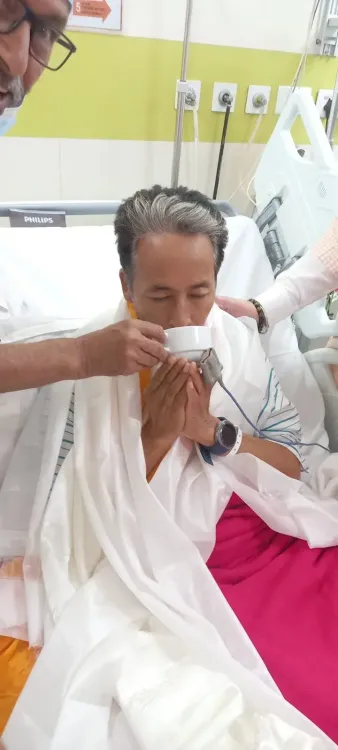
BJP national president J P Nadda and Union MoS Dr Jitendra Singh met Sonam Wangchuk at Medanta Hospital, Gurugram on 25 July 2026 .
Wangchuk ended his fast after receiving government assurances of 'meaningful dialogue and decisive action' on students' concerns.
The government pledged that 'no injustice is done to meritorious students' and that those who compromise student futures will face 'strictest punishment under the law.' The intervention reflects the government's broader pattern of high-level engagement with civil society figures protesting on youth and education issues.
A formal follow-up dialogue mechanism with student and regional representatives is expected as the next step.
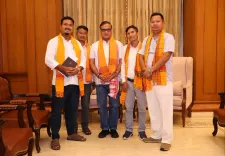
Union Consumer Affairs Minister Pralhad Joshi announced on Friday, 25 July 2026 that BJP president J P Nadda and Union Minister of State Dr Jitendra Singh visited Sonam Wangchuk at Medanta Hospital, Gurugram, assuring him of meaningful dialogue and decisive action on students' concerns, following which Wangchuk ended his fast.
Context
Sonam Wangchuk, the Ladakhi innovator and education reformer known for founding the SECMOL alternative school and championing regional youth causes, had been on a fast centred on concerns about the future of meritorious students. The fast drew national attention and prompted a high-level government response. Minister Joshi's post confirmed that Wangchuk 'ended his fast' after receiving the assurance from senior government representatives.
The meeting at Medanta Hospital in Gurugram, Haryana, brought together two of the ruling party's most senior figures — Nadda, the BJP national president, and Dr Jitendra Singh, who holds responsibilities linked to Jammu and Kashmir affairs — signalling the political weight the government attached to resolving the standoff.
Policy Backdrop
The government's stated commitment to protecting merit-based systems in education has been a recurring theme since the rollout of the National Education Policy 2020, which emphasised equity, quality and merit across schooling and higher education. Joshi's post underlined this continuity, quoting a firm government line: 'no injustice is done to meritorious students and that anyone found playing with the future of India's youth faces the strictest punishment under the law.'
The government has previously used high-level meetings and public assurances to address protests by civil society figures on youth, employment and education matters. Such interventions are typically followed by the establishment of formal dialogue mechanisms or administrative reviews.
Stakeholders and Impact
Wangchuk, who commands significant moral authority among Ladakhi youth and education advocates nationally, had used the fast as a pressure tool to secure a credible government commitment. His decision to end the fast after the hospital visit suggests the assurances offered by Nadda and Dr Jitendra Singh were considered substantive enough to pause the agitation.
For meritorious students — the constituency explicitly named in Joshi's post — the government's pledge of 'decisive action' and 'strictest punishment' for those who interfere with their futures carries direct implications for how examination and selection irregularities may be handled going forward. Ladakhi student groups and broader youth advocacy networks will be watching closely for concrete follow-through.
What's Next
The assurance of 'meaningful dialogue' points toward a formal follow-up mechanism, likely involving student or regional representatives and potentially administrative or legislative steps on exam integrity. PM Narendra Modi's government has framed youth welfare as a non-negotiable priority, and the resolution of Wangchuk's fast now creates a public accountability benchmark against which any subsequent inaction will be measured.
Whether the dialogue translates into structural reforms — on examination oversight, regional educational access, or legal accountability for those who compromise merit systems — will determine the lasting significance of this intervention.
Point of View
' the ruling party is reinforcing its law-and-order credentials on education integrity, a theme that has gained salience after examination irregularity controversies. The choice of Dr Jitendra Singh, with his J&K portfolio linkage, also suggests the government is conscious of the Ladakhi regional dimension embedded in Wangchuk's activism. The real test will be whether the 'meaningful dialogue' assurance produces verifiable institutional outcomes or remains a pressure-release valve with no structural follow-through.
NationPress
24 Jul 2026
Frequently Asked Questions
Why did Sonam Wangchuk go on a fast?
Sonam Wangchuk undertook a fast to press the government for decisive action on concerns affecting meritorious students. The specific triggers of his agitation are linked to broader anxieties around student welfare and educational fairness.
Who met Sonam Wangchuk at the hospital?
BJP national president J P Nadda and Union Minister of State Dr Jitendra Singh visited Wangchuk at Medanta Hospital in Gurugram, assuring him of meaningful dialogue and action on students' concerns.
Has Sonam Wangchuk ended his fast?
Yes. Wangchuk ended his fast following assurances from senior government representatives J P Nadda and Dr Jitendra Singh during their visit to Medanta Hospital, Gurugram.
What did the government promise regarding students' concerns?
The government assured that no injustice will be done to meritorious students and that anyone found interfering with the futures of India's youth will face the strictest punishment under the law.
What is Sonam Wangchuk known for?
Sonam Wangchuk is a Ladakhi innovator, engineer and education reformer who founded the SECMOL alternative school. He is widely recognised for his activism on regional development and youth issues.