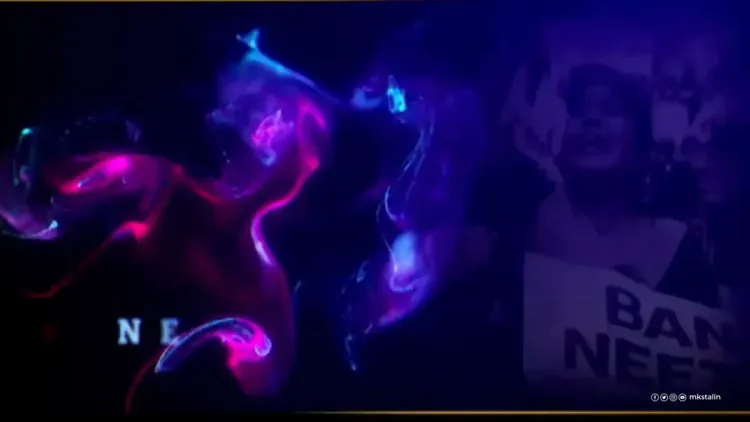
Stalin posts #BanNEET, renewing DMK's push to scrap exam
Synopsis
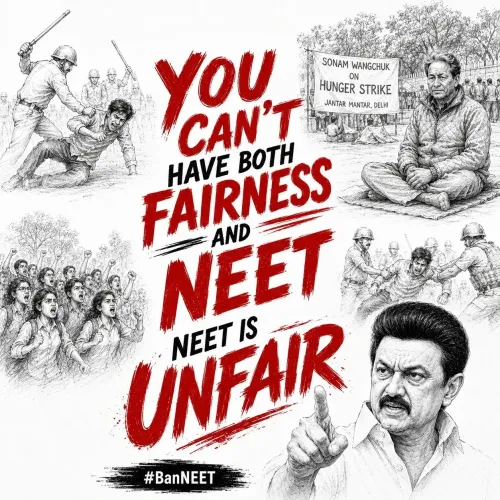
Tamil Nadu CM and DMK president M. K. Stalin posted #BanNEET on 25 July 2026, renewing his party's decade-long demand to abolish the centralised medical entrance test and restore state control over medical admissions, a cause rooted in Dravidian federalism and social justice.
Key Takeaways
Stalin posted #BanNEET on 25 July 2026 , signalling a fresh push against the centralised medical entrance exam.
The DMK has opposed NEET since at least 2016 , when a Supreme Court order made it mandatory for all medical admissions nationwide.
The Tamil Nadu Legislative Assembly passed NEET exemption bills in 2021 and 2022 ; both were returned without presidential assent.
The campaign centres on equity concerns: NEET is argued to favour CBSE -schooled and coaching-centre students over state-board and rural aspirants.
Possible next steps include a fresh exemption bill in the state assembly or renewed Supreme Court petitions challenging NEET's constitutional validity.
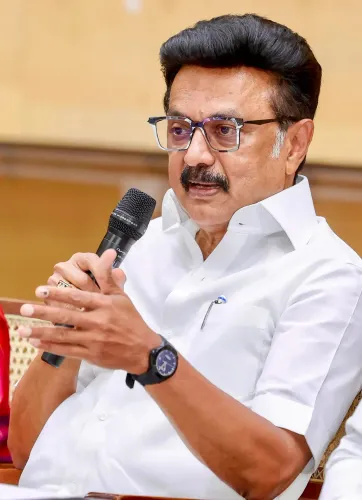
DMK president and Tamil Nadu Chief Minister M. K. Stalin posted the hashtag #BanNEET on X on Friday, 25 July 2026, rekindling his party's decade-long campaign to abolish the centralised medical entrance test and restore state control over admissions to Tamil Nadu's medical colleges.
Context
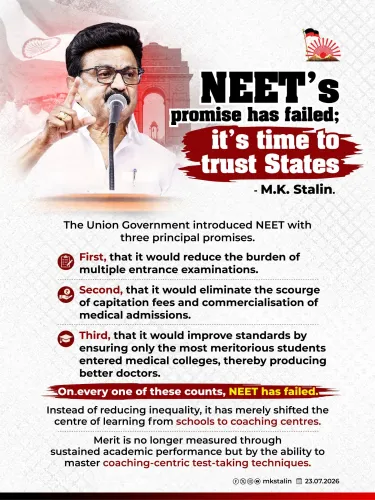
The single-hashtag post — #BanNEET — is a compressed but politically charged signal from the head of the ruling party in Tamil Nadu. Stalin has consistently framed the National Eligibility cum Entrance Test (NEET) as an instrument of centralisation that systematically disadvantages students from Tamil-medium and state-board backgrounds in favour of those from CBSE-affiliated schools and expensive private coaching centres.
The Dravida Munnetra Kazhagam (DMK) first made abolition of NEET a core electoral promise in its 2021 assembly election manifesto. The hashtag continues a pattern of periodic high-visibility mobilisation by Tamil Nadu's political leadership against national entrance tests perceived to erode federal principles enshrined in the Constitution.
Policy Backdrop
The roots of the dispute go back to a Supreme Court order in 2016 that made NEET mandatory for all medical admissions across India, overriding state-level entrance examinations. Tamil Nadu had its own admissions process that prioritised Class 12 board marks, a system widely seen as more equitable for rural and first-generation learners.
The Tamil Nadu Legislative Assembly passed a private member's bill in 2021 seeking a permanent exemption from NEET for state-run medical colleges. A second exemption bill was passed by the state legislature in 2022 and forwarded to the President of India for assent. Both bills were returned without presidential assent, leaving the legal impasse unresolved.
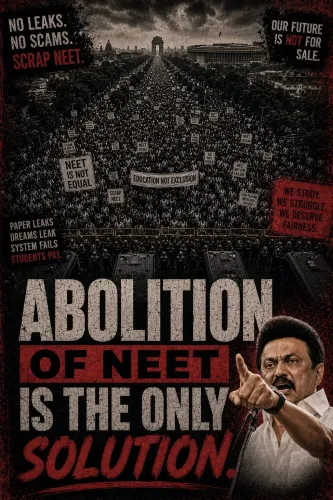
The National Testing Agency (NTA), the Union government body that conducts NEET nationwide, has faced recurring criticism over alleged paper leaks and administrative lapses in recent examination cycles, adding fresh fuel to demands for reform or outright abolition of the test.
Stakeholders and Impact
The primary stakeholders are Tamil Nadu's medical aspirants — particularly students from state-board schools, Tamil-medium institutions, and rural districts — who argue the NEET syllabus aligns more closely with CBSE curricula and the content taught in urban coaching academies. For this demographic, a state-board-marks-based admissions system historically offered a more accessible pathway into government medical colleges.
Broader stakeholders include the Union Ministry of Education, which defends NEET as a uniform quality benchmark, and medical institutions across the country that benefit from a single national pool of applicants. Civil society groups and student organisations in Tamil Nadu have periodically staged protests and hunger strikes over the issue, citing cases of student suicides linked to NEET pressure.
What's Next
Stalin's renewed public signal could precede fresh legislative action in the Tamil Nadu Assembly, a third exemption bill, or renewed legal petitions in the Supreme Court challenging NEET's constitutional validity on grounds of federalism. The post may also be timed to galvanise allied opposition parties at the national level ahead of any parliamentary session debate on education policy. The DMK's sustained pressure on this issue means the #BanNEET campaign is unlikely to recede until either a judicial ruling or a change in Union government policy provides a definitive resolution.
Point of View
Aimed at keeping NEET at the centre of Tamil Nadu's public discourse. It fits squarely within the DMK's long-running strategy of linking educational equity to Dravidian federalism, a frame that resonates deeply with the party's core constituency of state-board students and rural aspirants. The timing, absent a verified trigger, suggests the post may be preparatory groundwork for a legislative or legal move rather than a spontaneous reaction. Until the Union government amends the regulatory framework or the Supreme Court revisits its 2016 ruling, this cycle of state-level protest and central inaction is likely to repeat.
NationPress
24 Jul 2026
Frequently Asked Questions
What is #BanNEET and why is MK Stalin supporting it?
#BanNEET is a campaign demanding the abolition of the National Eligibility cum Entrance Test for medical admissions. Stalin and the DMK argue NEET disadvantages Tamil Nadu's state-board and rural students in favour of CBSE-schooled candidates and coaching-centre attendees.
Has Tamil Nadu ever been exempted from NEET?
No. The Tamil Nadu Legislative Assembly passed exemption bills in 2021 and 2022, but both were returned without presidential assent, leaving the state bound by the Supreme Court's 2016 order making NEET mandatory.
What is the DMK's official position on NEET?
The DMK's 2021 election manifesto committed to abolishing NEET. The party frames opposition to the exam as a matter of social justice and states' rights over education policy.
Who conducts NEET and can a state opt out?
NEET is conducted by the National Testing Agency under the Union government. States cannot unilaterally opt out; an exemption requires either a constitutional amendment, a presidential assent to a state bill, or a Supreme Court ruling.
What happens next in the NEET debate in Tamil Nadu?
Possible next steps include a fresh exemption bill in the Tamil Nadu Assembly, renewed Supreme Court petitions on federalism grounds, or coordinated pressure from opposition-ruled states seeking collective exemption.