Pralhad Joshi meets NCCF chief on Bihar rice procurement
Synopsis
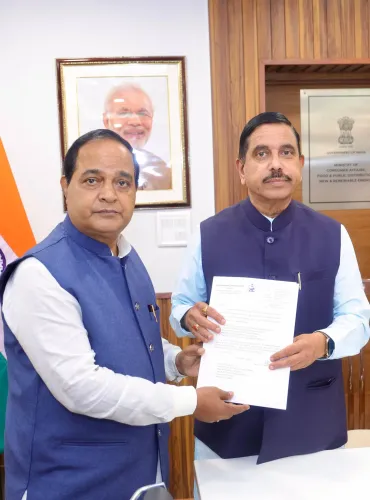
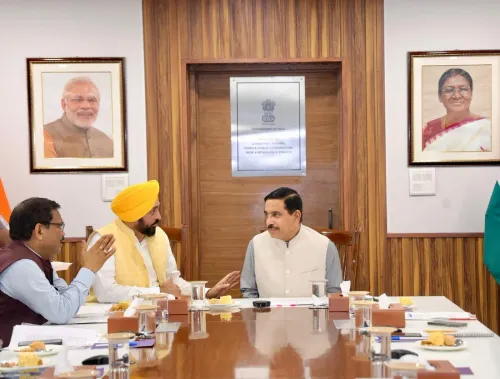
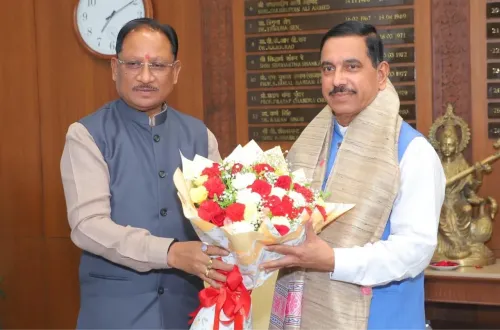
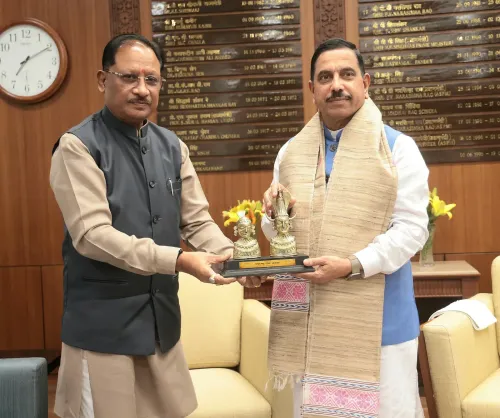
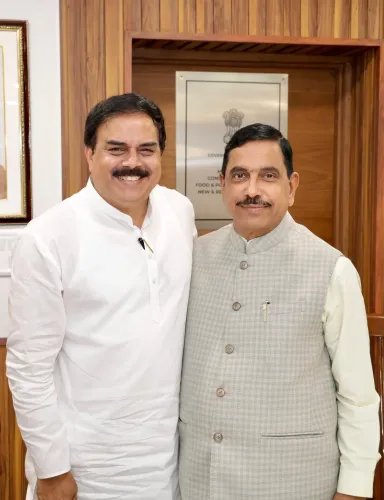
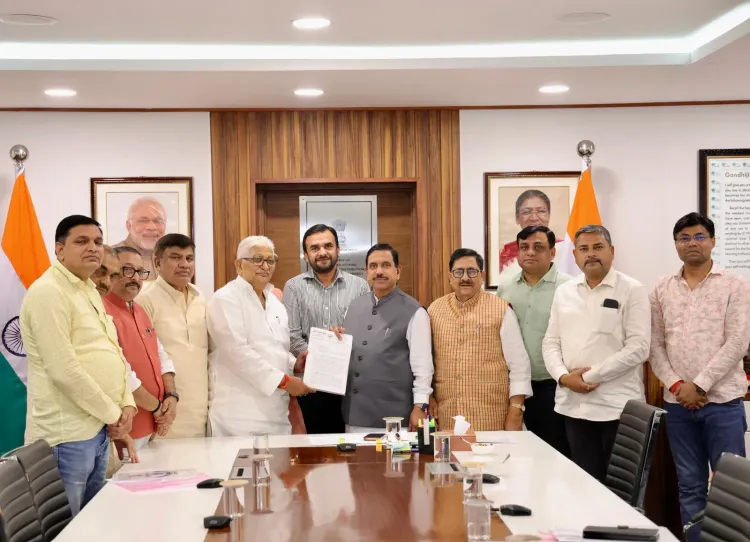
Union Consumer Affairs Minister Pralhad Joshi met NCCF Chairman Vishal Singh on 24 September to strengthen cooperative support in Bihar and ensure timely, efficient Custom Milled Rice movement into the Public Distribution System — keeping farmers and cooperatives at the centre of the agenda.
Key Takeaways
Union Minister Pralhad Joshi met NCCF India Chairman Vishal Singh on 24 September 2026 to discuss Bihar's cooperative and CMR logistics.
Custom Milled Rice (CMR) is procured from licensed millers under FCI guidelines and supplied to the Public Distribution System.
The discussion focused on strengthening Bihar's cooperative societies and ensuring smooth, timely CMR movement during the Kharif procurement window.
NCCF India is the national apex body for consumer cooperatives and a key link between central procurement mandates and state-level infrastructure.
The Ministry of Cooperation , created in July 2021 , formalised the push to integrate cooperatives into agricultural supply and welfare delivery chains.
Efficient CMR procurement directly affects paddy farmer payments and the reliability of subsidised grain supply across Bihar.
Bihar's farmers and cooperative societies moved to the centre of a high-level procurement conversation on Thursday, 24 September 2026, when Union Consumer Affairs Minister Pralhad Joshi sat down with National Cooperative Consumers' Federation of India (NCCF) Chairman Vishal Singh to work through the mechanics of Custom Milled Rice (CMR) movement — the arterial channel through which government-procured rice flows into the Public Distribution System.
What the CMR bottleneck means for Bihar's Kharif season
Custom Milled Rice is procured by government agencies from licensed millers under Food Corporation of India (FCI) guidelines, then routed into the PDS for subsidised distribution. Bihar has long been a key participant in this Decentralised Procurement Scheme, but coordinating timely milling, quality checks, and last-mile logistics across the state's dense network of small cooperative societies has remained a persistent operational challenge. Minister Joshi, posting on X after the meeting, emphasised 'coordinated efforts to ensure efficient procurement and delivery processes in the interest of farmers and cooperatives.'
The discussion with Chairman Vishal Singh centred on two concrete levers: strengthening institutional support for Bihar's cooperative societies and ensuring the CMR moves smoothly and on schedule — a signal that the ministry is paying close attention to the Kharif procurement window now opening across eastern India.
NCCF's role at the apex of cooperative supply chains
The NCCF India functions as the national apex body for consumer cooperatives, making it the natural bridge between central procurement directives and state-level cooperative infrastructure. Its Chairman's direct meeting with the minister underscores how seriously New Delhi is treating the integration of national federations into agricultural supply logistics — a push that gained formal momentum after the Ministry of Cooperation was carved out as a separate cabinet portfolio in July 2021.
That ministry's creation was explicitly aimed at deepening the cooperative movement's role in central welfare schemes. The FCI-linked CMR mechanism in Bihar fits squarely within that agenda: if cooperative societies can handle procurement and delivery efficiently, the government reduces dependence on private intermediaries and plugs the leakages that have long bedevilled eastern India's grain supply chains.
Farmers at the end of the chain
For paddy farmers in Bihar, the stakes are straightforward: delayed or disorganised CMR procurement means mills back up, payments slow, and the next sowing cycle gets squeezed. The minister's explicit framing — 'in the interest of farmers and cooperatives' — signals that the ministry is tracking this not merely as a logistics exercise but as a welfare outcome. Whether this meeting translates into formal procurement targets or agreements between NCCF and Bihar's state cooperative bodies is the detail to watch as the Kharif season progresses.
In a country where the PDS feeds hundreds of millions, getting the rice from the miller to the ration shop efficiently is not administrative routine — it is welfare policy in motion.
Point of View
Not just ideological alignment. Joshi's direct engagement with the NCCF apex body suggests the ministry is monitoring Kharif procurement timelines at the ministerial level, raising the political salience of what is ordinarily a bureaucratic supply-chain function. The framing around 'farmers and cooperatives' also signals messaging continuity ahead of any Bihar-specific agricultural policy announcements.
NationPress
25 Sept 2026
Frequently Asked Questions
What is Custom Milled Rice (CMR) and why does it matter?
Custom Milled Rice is rice that government agencies procure from licensed millers under FCI guidelines for supply through the Public Distribution System. It ensures subsidised foodgrain reaches ration shops across states like Bihar, directly affecting the food security of millions of households.
What is NCCF India and what does it do?
The National Cooperative Consumers' Federation of India (NCCF) is the national apex body for consumer cooperatives. It plays a key role in procurement and distribution, acting as a bridge between central government directives and state-level cooperative networks.
Why is Bihar important for rice procurement in India?
Bihar is a major participant in India's Decentralised Procurement Scheme and has a large network of cooperative societies involved in paddy procurement. Efficient CMR movement from Bihar is critical to keeping the eastern India PDS supply chain running smoothly during the Kharif season.
What did Minister Pralhad Joshi discuss with NCCF Chairman Vishal Singh?
Minister Joshi discussed strengthening support for cooperative societies in Bihar and ensuring the smooth, timely movement of Custom Milled Rice. The emphasis was on coordinated procurement and delivery processes in the interest of farmers and cooperatives.
What is the Ministry of Cooperation and when was it created?
The Ministry of Cooperation is a separate central government ministry created in July 2021 to deepen the cooperative movement's role in India's welfare and agricultural schemes. It aims to integrate cooperative institutions more closely with procurement and PDS supply chains.