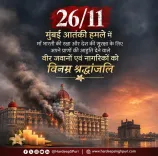
JP Nadda pays homage to 26/11 Mumbai attack martyrs
Synopsis
Union Health Minister J. P. Nadda paid homage on the 26/11 anniversary to soldiers, police and civilians killed in the 2008 Mumbai attacks, restating India's zero-tolerance policy and a pledge to deepen global counter-terror cooperation under Prime Minister Narendra Modi.
Key Takeaways
Union Health Minister J.
Nadda paid homage to soldiers, police personnel and civilians killed in the 26/11 Mumbai attacks.
He recalled that terrorists killed innocents in Mumbai on this day in 2008 and shamed humanity.
The 26/11 assaults ran from 26 to 29 November 2008 and killed 166 people.
Nadda said India's stance against terrorism under Prime Minister Narendra Modi is clear and firm.
He restated a zero-tolerance policy and a commitment to stronger global counter-terror cooperation.
India later upgraded coastal security and intelligence sharing after the 2008 attacks.
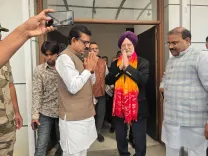
On the anniversary of one of India's darkest nights, Union Health Minister J. P. Nadda paid heartfelt homage to the soldiers, police personnel and innocent civilians killed in the 26/11 terrorist attacks in Mumbai. Recalling that on this day in 2008 terrorists murdered innocents and shamed humanity, he said India's stance against terrorism under Prime Minister Narendra Modi remains clear and firm.
In a post on X, Nadda offered a भावपूर्ण श्रद्धांजलि (heartfelt tribute) and a salute to all who made the supreme sacrifice in what he called a cowardly terrorist attack. He wrote that with a policy of 'zero tolerance', India is committed to strengthening global cooperation and coordination against terrorism.
The four days that scarred Mumbai
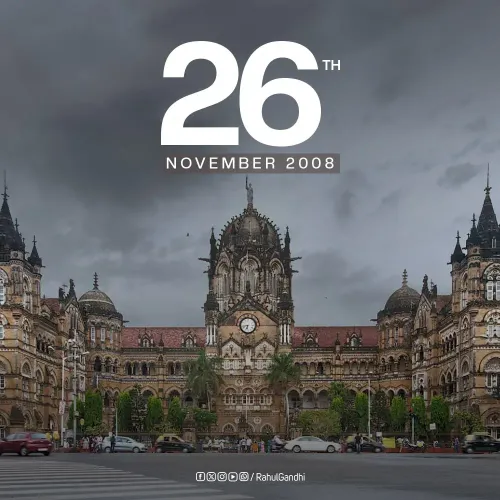
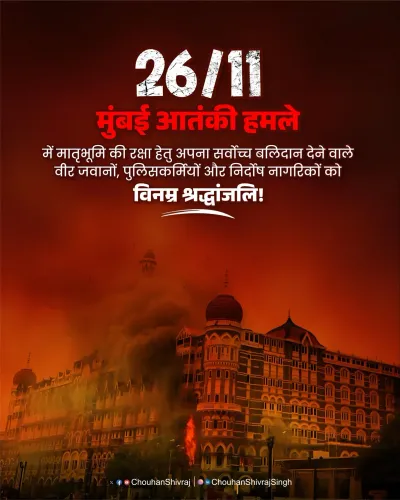
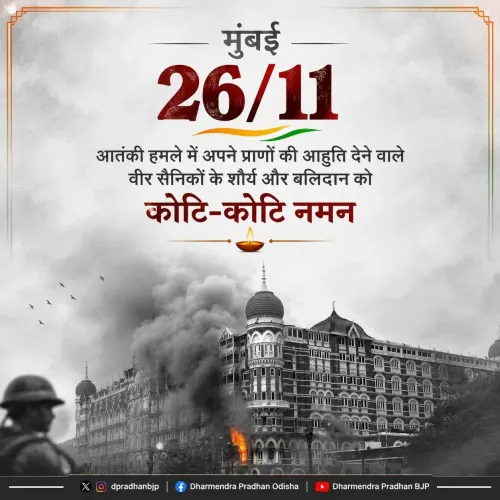
The assaults began on 26 November 2008 and stretched into 29 November. Coordinated teams of Lashkar-e-Taiba militants struck hotels, a railway terminus, a Jewish centre and other sites across the city. Official tallies put the dead at 166, among them security personnel and civilians, with many more wounded.
The date is marked each year as an official commemoration. Victims' families and security forces remain the people closest to that memory, and Nadda's message sits in that annual rhythm of remembrance.
Zero tolerance and the global pitch
Nadda tied the homage to policy. Under Modi's leadership, he said, India's line against terrorism has been unambiguous. The phrase he used — 'zero tolerance' — has been the government's stated doctrine on terror and cross-border threats since 2014.
That framing now travels beyond domestic speeches. New Delhi has repeatedly argued at multilateral tables that counter-terror cooperation must be tighter, intelligence must move faster, and safe havens must shrink. Nadda restated that commitment without adding new operational detail.
What changed on India's coasts after 2008
The attacks exposed gaps in coastal watch and in how agencies shared intelligence. In the years that followed, India rolled out coastal security upgrades and reforms in intelligence sharing. Those steps do not erase the night of 26/11. They are the institutional aftershock of it.
Successive governments have treated the anniversary as a moment to reaffirm continuity. The present administration pairs that remembrance with a pitch for international coordination — a dual track Nadda echoed on Thursday.
Homage on this date is not a closed chapter. It is a reminder that the names on Mumbai's memorials still set the terms of India's terror debate, at home and abroad.
Point of View
When ministers restate both grief and doctrine. The post does not announce a new scheme; it stitches remembrance to the government's long-running zero-tolerance line and to a call for tighter global coordination. That pairing has been the administration's public template since 2014: honour the dead, then argue that coastal, intelligence and diplomatic machinery must stay on a war footing. Watch for the same language at multilateral counter-terror meetings in the weeks around the anniversary.
NationPress
26 Nov 2026
Frequently Asked Questions
What did JP Nadda say on the 26/11 anniversary?
Union Health Minister J. P. Nadda paid heartfelt homage to soldiers, police personnel and innocent civilians killed in the 26/11 Mumbai attacks. He said terrorists had shamed humanity on this day in 2008 and that India, under Prime Minister Narendra Modi, maintains a clear and firm stance against terrorism with a zero-tolerance policy.
When did the 26/11 Mumbai attacks happen?
The attacks began on 26 November 2008 and continued until 29 November 2008. Militants struck multiple sites across Mumbai, including hotels and a railway terminus.
How many people were killed in the 26/11 Mumbai attacks?
Official tallies put the death toll at 166 people, including security personnel and civilians. Many more were injured during the four-day siege.
What is India's zero-tolerance policy on terrorism?
It is the stated doctrine of the government led by Prime Minister Narendra Modi since 2014, rejecting accommodation of terror and emphasising both domestic resolve and international cooperation. Nadda invoked that policy in his 26/11 tribute.
Who did JP Nadda pay tribute to on 26/11?
He paid tribute to the brave soldiers, police personnel and innocent civilians who made the supreme sacrifice in the 26/11 Mumbai terrorist attack. He also restated India's commitment to global cooperation against terrorism.